Leinster have mountain to climb after defeat by Wasps
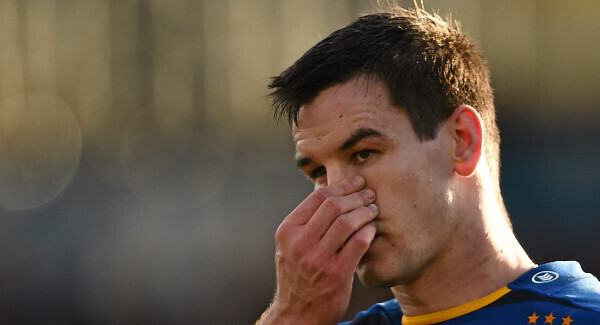
The tragic events in Paris on Friday night cast a long shadow over the opening round of European action with five games postponed across the Champions and Challenge Cups.
Leinster have mountain to climb after defeat by Wasps

With Ulster’s game in France against debutants Oyonnax one of those cancelled, it was left to Munster and Leinster to kickstart the post-World Cup revival of Irish rugby aspirations.

Of the two, Leinster faced the more difficult challenge in dealing with a Wasps side that has been transformed since the takeover of the club by Cork-born businessman Derek Richardson. At least new Leinster head coach Leo Cullen enjoyed the comfort of familiar surroundings at the RDS to mark his European debut at the helm.


With 15 of Ireland’s World Cup squad on board, Leinster had no shortage of talent but the lack of any recent game-time together under this new homegrown coaching regime must have been a concern coming in to the game.

That Leinster find themselves in the tournament’s most difficult pool is highlighted by the fact that Wasps were probably rated fourth in this grouping behind Toulon, Leinster, and Bath coming onto the opening round of matches. Not any more.

To win in Dublin by a margin of 27 points and manage to keep Leinster tryless for the entire game and pointless throughout the second half says everything about how much Wasps were in control.

Leinster already have a mountain to climb to make the quarter-finals and their game against Bath next weekend now becomes a must-win with those back-to-back contests against holders Toulon looming next month.

The thing that will rock Leinster most is their failure to threaten that Wasps tryline at any stage. A lot can be attributed to a complete lack of accuracy — they kicked two restarts and a penalty to the corner out on the full — along with a failure to compete at the breakdown against an excellent Wasps back row.

The initial soundings in that area were very promising but the loss of Sean O’Brien before half-time proved crucial, with former Wallaby George Smith and No 8 Nathan Hughes outstanding.

Richard Strauss and Mike McCarthy were also forced off due to injury by the 41st minute, which did nothing for Leinster’s set-piece proficiency with their scrum also in big trouble despite being able to spring an all-Irish front row of Cian Healy, Sean Cronin, and Tadhg Furlong off the bench.

From an attacking perspective Leinster looked predictable. A well-marshalled Wasps defensive effort dealt with their trademark wrap-arounds with ease. By the final quarter Leinster had run out of ideas.

The fact that New Zealand could afford to let Wasps full back Charles Piatau out of their World Cup squad shows you why they are world champions. He, along with fellow All Black Frank Halai and Christian Wade, was outstanding in the back three; the trio offer Wasps a new dimension. With Piatau due in Ulster next season, they will be kicking themselves that they missed the opportunity to get him to Belfast a year earlier.

This was a chastening experience for Leinster, not so much for the defeat itself but for the comprehensive man-ner of this loss. With so many of the squad looking to kickstart their season again after that shattering World Cup defeat to Argentina, their club season could be defined by what happens at the Rec next Saturday. It seems very early for that bridge to be crossed.

With Leicester Tigers securing an unexpected four-try bonus point in their win over Stade Francais at Welford Road on Friday night, Munster were on the back foot in Pool 4 from the off. It was absolutely necessary to match that result and points haul against Treviso in Thomond.

While home wins are crucial, bonus points will dictate who survives when the knockout phase of European competition resumes after the Six Nations. On that front Stade failed to pick up a losing bonus against the Tigers — a plus for Munster.

The appalling conditions in Limerick on Saturday evening, with galeforce winds and driving rain, were always going to make Munster’s task more difficult so to get the job done, in a game best forgotten, offered an encouraging start.

Treviso had lost their last 14 competitive games coming into this one and there was no evidence in the opening sequence of play to suggest they were about to stop the rot. With a BJ Botha try on the board after a mere four minutes and another disallowed within five more, when the Springbok knocked on in the act of scoring, it looked, despite playing against the wind, that Anthony Foley’s men were in for a canter.

The news that Botha has had his contract extended by Munster until June — it was due to expire on December 31 — offers a huge boost to the province. With Stephen Archer out injured for a protracted period and John Ryan more comfortable on the loose head side of the scrum, Botha’s contract extension, which required ratification from IRFU director of rugby David Nucafora, is both timely and welcome.

On the flip side, the sight of Mike Sherry being forced off the field with another knee injury is incredibly unfortunate after the two years of injury hell the talented hooker has already endured. All the more so given that in the period he was on the field he excelled. His ball-carrying was dynamic, his workrate superb, and, most impressive, his line-out-throwing in extremely testing conditions was immaculate. Hopefully this latest setback is not as serious as it appeared on first viewing.

The fact that only min- utes remained when Simon Zebo finally registered the all- important bonus-point fourth try was as much down to Mun- ster inaccuracy than anything Treviso brought to the table, even if they did offer a stubb- orn defensive blanket.

Munster’s trademark in this tournament, especially in Thomond, is a clinical efficiency in the opposition 22. While they misfired from a number of close-in lineout mauls, the forwards were still proficient enough to use that traditional platform as a launching pad for three of Munster’s four tries.

So while the post-Paul O’Connell era started in the most productive fashion possible, one suspects the management will be looking for an improvement in tactical awareness and execution for the more testing examination at the impressively revamped Stade Jean Bouin on Sunday.

Conditions dictated that very little was seen of new signing Francis Saili — it took 33 minutes before he received a pass. It was strange to see him — a strong runner and superb offloader — kick poorly in possession. Hopefully that was an aberration due to the conditions and not a sign of things to come. More pleasing was the excellence of Ian Keatley’s tactical kicking in the second half.

Assuming Munster’s visit to Paris goes ahead next week-end, in what is likely to be an emotionally charged affair, you can be sure Stade Francais will have more to offer, especially up front, than they showed against Leicester.

More in this section

Sport

Newsletter

Sign up to our daily sports bulletin, delivered straight to your inbox at 5pm. Subscribers also receive an exclusive email from our sports desk editors every Friday evening looking forward to the weekend's sporting action.

Cookie Policy Privacy Policy Brand Safety FAQ Help Contact Us Terms and Conditions

© Examiner Echo Group Limited