Minnows manage to defy the odds
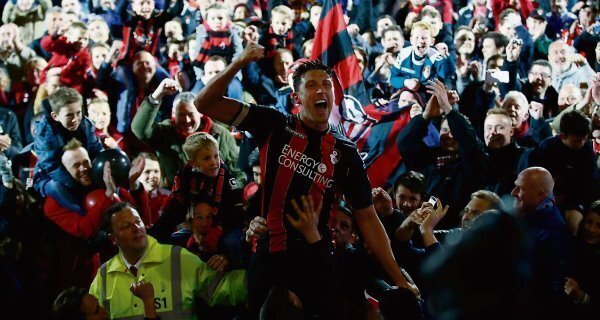
Bournemouth, Carpi, Frosinone, Gazelec…
Chances are you can place Bournemouth on a map, Carpi and Frosinone probably not and Gazelec you’ll definitely need to Google.
All of them are rank outsiders in football terms, places that have never known the big time, clubs that have mainly survived on shoestring budgets and the dedicated work of part-timers and volunteers.
This week all of them are celebrating promotion to the top-flight for the first time in their history.
Like Bournemouth in England, this is a fairytale story for Carpi, a textile town in the plains to the north of Bologna.
They once took part in the Italian championship, but that was over 90 years ago, before Serie A was invented. They only reached Serie B for the first time in 2013. Now they go up as champions, preparing for dream fixtures against Juventus, Milan and the rest.
The big disappointment for their supporters is that they won’t be allowed to take on the giants on home turf. The Stadio Cabassi is a typical small-town Italian stadium, owned by the council, perfectly safe and nicely sited in the town centre, but with a capacity of just over 4,000.
Carpi’s mayor is currently negotiating a two-year lease for the stadium down the road in Modena, the same ground where local rivals Sassuolo played for a season before moving into a newly refurbished privately-owned stadium up the road in Reggio.
It seems a shame that the reward for success is eviction and a loss of identity that helped sustain clubs when times were hard.
Frosinone face an even worse problem. Perennial also-rans from an inland town on the road between Rome and Naples, they have spent most of their history in the fourth tier of Italian football. Promoted to Serie A, it looks as if they will also be obliged to move, at least while ground improvements take place.
But in their case the proposed relocation is not half an hour’s drive away, but to Avellino, over 100 miles to the south. As both Frosinone and Avellino fans have a reputation which could politely be described as ‘lively’, this fairytale story could yet have an unpleasant twist to it.
If Carpi and Frosinone are in a state of shock, the fans of Gazelec are in dreamland.
Corsica has a proud football history, mainly thanks to Bastia, who once reached the Uefa Cup final. The other well-known club, at the opposite end of the island, is Ajaccio.
At least till now, because Gazelec are Ajaccio’s ‘other club’, and on a budget of €4.5 million have just achieved promotion to Ligue 1, where they will be tackling the billionaires of Monaco and Paris, as well as a long-awaited Corsican derby.
This truly is a case of Cinderella going to the ball. Gazelec have just two full-time administrative employees. Most of their staff are volunteers who earn their living outside football and use their holidays and spare time working for the club. Several of their players have come from the French semi-professional leagues.
They are genuinely a family club, with ownership and management passing from father to son. Their long-awaited new training ground, their sole investment in the last 15 years, was built by the club president Olivier Miniconi and sporting director Christophe Ettori.
Literally. They laid the turf together, on their hands and knees.
Gazelec are perhaps unique, but one of the nice things about a sport that is becoming more and more dominated by a few rich and powerful clubs, and the global TV market, is that outsiders are still coming through against the odds.
As well as Carpi and Frosinone in Italy, Girona are on the brink of a debut season in La Liga. In Germany, Darmstadt have made it into the top division for only the second time in their history. And Bournemouth are flying the flag for the outsiders in the Premier League.
It won’t change the fundamental arithmetic of success. But success can be measured by more than cash or trophies.
Carpi, Frosinone, Gazelec and the rest have earned a place in this season’s roll of honour.