Concussion rule simply unmanageable

If you’re not sitting comfortably on its utterance, the chances are you won’t be for several minutes. For starters, there’s usually nobody to contest the validity of the claim that follows. And can anybody really hear those words without thinking of Uncle Albert’s “during the war...” refrain?
When it’s a relatively young person making a stab at being nostalgic, it’s even more infuriating. What exactly do they have to be so misty-eyed about? But hear us on out on this one.
It’s so easy to forget now, in the professional age of rugby, that there was a time without tactical replacements. Up until October 1996, only injured players could be exchanged.
On my underage side, it often meant an under-performing player would have to suffer the compounded indignity of feigning an injury to be replaced.
It also meant taking one for the team, although I never saw anybody thanked for taking — or should that be faking — the fall.
Nobody minded going down when the team was comfortably ahead, and the shame was removed from such a devious act. Everybody did it — at the time we liked to think the English, French and southern hemisphere teams did it more so than us Irish — and it just demonstrated how archaic the rule was.
When it did change, in 1997, bookmakers were slow to cotton on and a group of us made a pretty penny on backing Keith Wood to be replaced in the opening Five Nations game against France.
Under the old rule, the hooker would have likely carried on but his attritional style meant he was a prime candidate to be spared the full 80 minutes.
Our cheer on Lansdowne Road’s North Terrace that February day wasn’t in keeping with a forgettable Irish performance.
Tactical substitutes have long been allowed in Gaelic games, but the new concussion proposal, before Congress this Saturday, brings us back to that period when you had to lie, as much as lie prone on the ground, to be substituted in rugby.
The motion calls for suspected concussion to be dealt with along the same lines as the abused blood sub rule.
A referee shall instruct a player who receives a serious blow to the head to leave the field for attention. He shall only be allowed to return to action when tests for concussion have proved negative.
Even for such a serious condition, it would be naive not to consider teams will take advantage if this comes into rule.
The fact a concussion sub, like a blood one, is outlined as temporary would provide managers with the opportunity not to touch their quota of regular substitutes. If it means getting a fresh pair of legs on the field or providing another option when the maximum number of changes have been made, then the chances are it will be availed of.
Would a player have the gumption to quibble about being used as a pawn? Isn’t it all about being a team player?
Perhaps more important is how challenging the rule would be to operate at club level. While there is at least one doctor at every county game, there is hardly anyone apart from the obligatory man and his dog at a lot of junior matches.
Yet, according to the rule, an assessment must be carried out on the player suspected of suffering concussion. Basic first aid experience doesn’t provide enough expertise to make such a judgement.
The onus placed on the referee to decide whether a player has received a serious knock to the head is also exacting. How liable is he or she if they don’t send that player to the sideline for treatment, when the player has actually suffered concussion?
There’s no doubt the motion’s heart is in the right place. Gaelic games isn’t so far removed from rugby to rule out the same troubling issues.
The case of Rory O’Carroll in the 2013 All-Ireland SFC final and recent situations involving Evan Regan and Shane McGrath highlight this is an ongoing concern.
However, the irony is, as concussion is such an en vogue topic, delegates will be encouraged to support the proposal perhaps without considering the GAA already has a guideline document on the matter, put together with Ruth Whelan, physiotherapy manager of the UPMC Beacon Hospital.
It states a player should be assessed by a doctor or registered healthcare practitioner on the field using standard emergency management principles. If there is none available, the player should be removed from the field of play and referred to a doctor urgently. In a nutshell, no chances are taken.
The document also remarks concussion symptoms may be delayed for several hours while “orientation tests (ie name, place, and person) have been shown to be an unreliable cognitive function test in the sporting situation”.
This motion leaves too much room for error, for abuse and places too much responsibility on the referee and management. Effectively it simply can’t be implemented but will that be lost in the stampede to be seen to do the right thing?
* Email: john.fogarty@examiner.ie
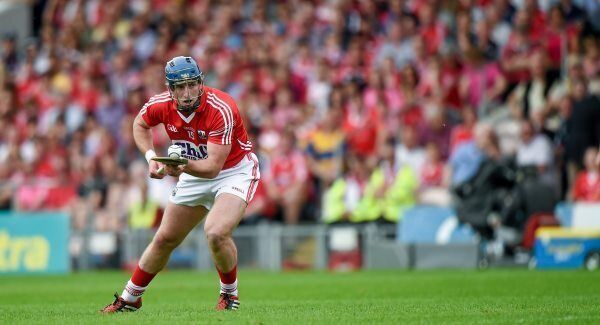
Patrick Horgan won’t be thanking Anthony Daly or Cyril Farrell if he gets a call from the Cork County Board over the next day or two alerting him to a retrospective disciplinary action against him.
The pair appointed themselves citing commissioners on RTÉ’s League Sunday when they highlighted the forward’s off-the-ball altercation with Jack Browne.
If Horgan faces a Central Competitions Control Committee charge, it’s almost certain we’ll see the return of that old phrase “trial by TV”.
But Farrell and Daly deserve more than a pass here. Just as it’s important that analysts highlight when players have been treated harshly, such as Farrell did regarding the Nowlan Park match, it’s also vital they point out where they have got off lightly.
Just as a red card isn’t always merited when shown, sometimes it is deserved when not brandished.
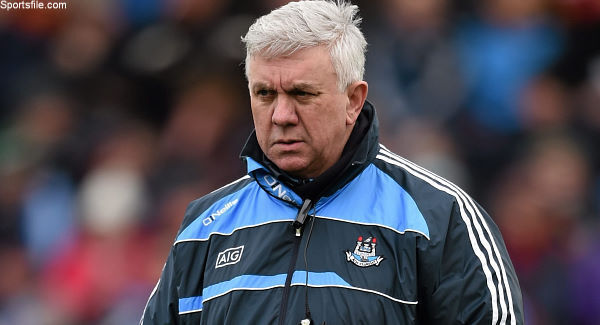
The combination of, inset right, Ger Cunningham with a proven panel of players has proven a perfect cocktail so far, but it’s of paramount importance for a Dublin team with its fair share of false dawns that nobody gets ahead of themselves.
Sunday’s win over Kilkenny was their sixth competitive game in 34 days. No other Division 1A team has had that concentration of matches. As is known at this stage, when Dublin have been training it’s been primarily ballwork while other counties have put more of a focus on physical preparations.
Then there’s the fact Cunningham hasn’t been as hindered by the Fitzgibbon Cup as other managers. While counties like Tipperary have only been able to muster 18 players at some training sessions, Dublin have been largely untaxed. For that reason alone, is it any wonder there’s been a spring in their step?