Did Shefflin dismissal play role in card proposal?
For this observer’s money, the sense of a dividing line was the most significant takeaway from the launch.
We don’t do existential introspection too well in this country — maybe you need Gauloises and Pernod for that — but Hurling 2020 has done a considerable service to the GAA if it helps to force people to abandon the notion that Gaelic football and hurling are essentially the same sport because they share some basics, like manpower and duration.
In the small print, what’s welcome about the refereeing recommendations is they underline the above point about difference.
Having a dedicated administrative framework for hurling officials is a common-sense move, and the committee was correct to call for that.
For some time there’s been a muted disquiet about officiating — not so muted from some counties — due to the narrowness of the pool of referees at the top level. This isn’t appropriate in any elite sport, but particularly one with a restricted number of participants at the top of the pyramid, because familiarity with officials... well, you saw how that worked out after this year’s All-Ireland final replay.
That leads us to another recommendation, the replacement player for a team-mate who picks up a second yellow card, which isn’t as welcome in this quarter.
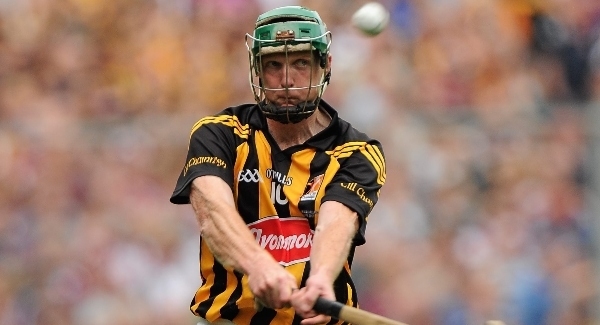
The committee will struggle to escape the suspicion the dismissal of Henry Shefflin for two yellow cards in Thurles two years ago against Cork is at the root of this recommendation: legislators always acknowledge the danger in making law based on an isolated case, and the subsequent rescinding of Shefflin’s dismissal seems thin grounds for a change of this magnitude.
Allowing managers to replace a player after a second yellow seems to be freeing up defenders in particular to punish marquee forwards on a rotated basis: if the murmurs from the Gaelic football world are to be believed, such skullduggery can be arranged by adroit managers, and this innovation could licence hurling defenders to take turns in collecting yellow cards.
Certainly this seems to be a charter to allow ‘reducers’ — the fabled one free tackle of the old First Division in soccer, when defenders were entitled to inflict GBH in the first few minutes without fear of sanction.
The penalty recommendation, one taker and one ‘keeper, was flagged in these pages before Christmas, and is welcome, though if that’s been done on the grounds of health and safety then one wonders about the forward who unleashes a full-force shot from three yards out: where is the duty of care in that case?
(A mischievous observer might inquire whether results from last season — 2014 — should come with an asterisk, of course, given we had at least three separate disciplinary frameworks operating in the course of those 12 months in hurling.)
The recommendations go to Central Council soon, but they may not be the most pressing matter on that agenda. The rolling debate about competitions being run off in a calendar year is expected to figure prominently on the agenda for that particular meeting, though of course that idea, however chimerical, can’t be separated from the Hurling 2020 proposals.
That’s because if you take both codes seriously then you run the risk of a Tipperary county football final replay scenario. If you separate the two — and yesterday was a step towards recognising that — then the scramble to finish everything before New Year’s Eve mightn’t be as acute.
Before signing off, though, a word of gratitude to Liam Sheedy and his committee: not only for making hard calls, but for inviting submissions from the public. The relevance of your disagreement is therefore index-linked to your participation.