Ciara Griffin: Closing the gap but Ireland’s next step is turning pressure into points
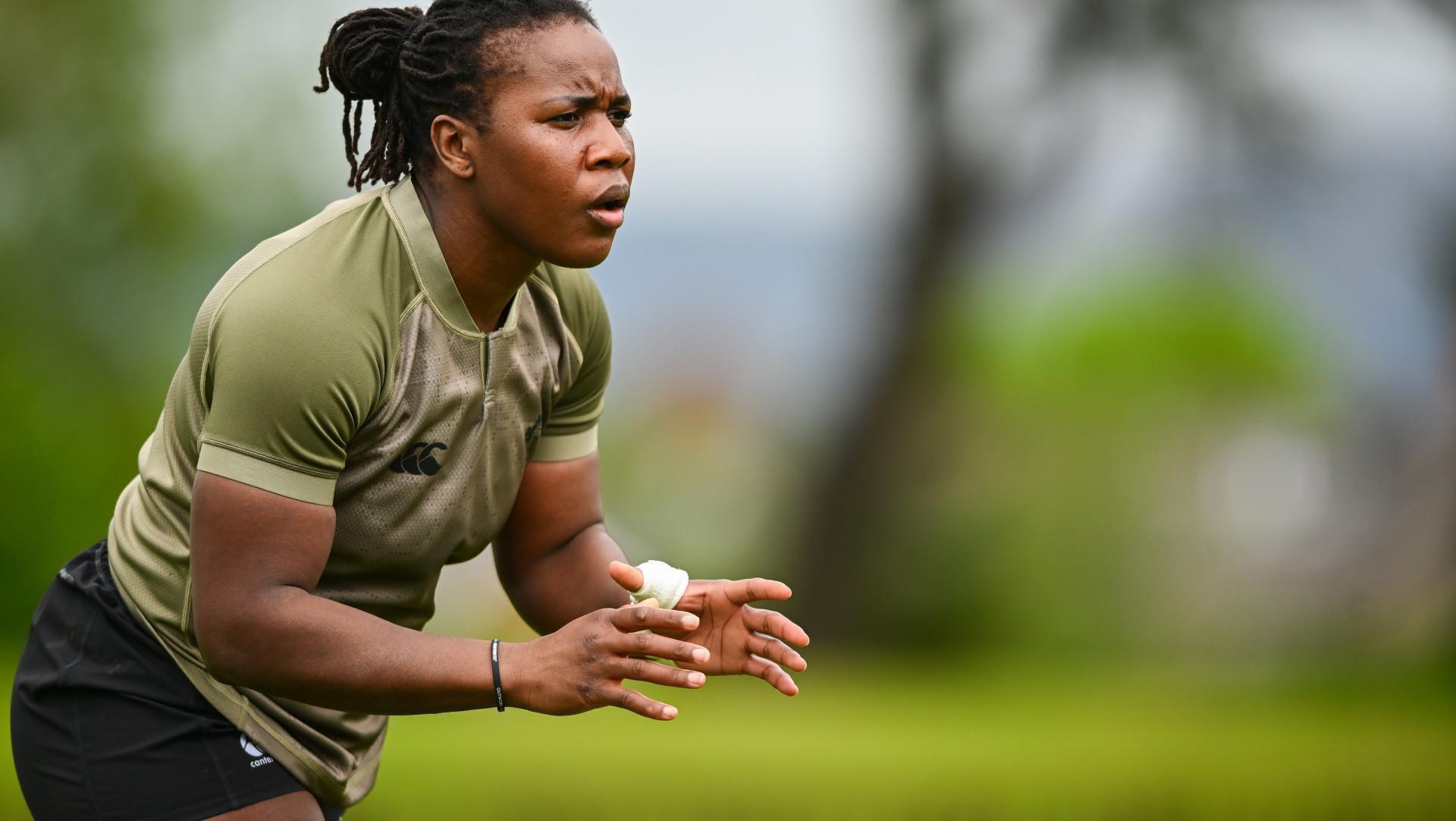
SAFE HANDS: Linda Djougang during an Ireland Women's Rugby captain's run at Pirrie Park in Belfast. Pic: Shauna Clinton/Sportsfile
Ireland return to Six Nations action Saturday night knowing an opportunity was left behind in Clermont against France, but also carrying the belief that they are edging closer to competing consistently with the elite sides in the tournament. Their 26-7 defeat at Stade Marcel Michelin hurt because, for long stretches, Scott Bemand’s side looked capable of producing a statement victory against one of Europe’s heavyweights.
The frustration for Ireland was not in their ability to create chances, but in what happened when they got there. They entered the French 22 on 12 occasions and came away with just seven points. France, by contrast, showed the ruthless efficiency that separates title contenders from chasing sides, scoring 26 points from only six entries into the Irish 22.
That contrast will have been impossible to ignore during Ireland’s review over the fallow week.
Physically, Ireland matched France. Structurally, they looked organised and composed. Their breakdown work disrupted French rhythm and their defensive line speed repeatedly forced errors. Yet the final clinical edge, the ability to convert pressure into points remains the last hurdle for this evolving Irish side.
This one in. Belfast presents the ideal opportunity to sharpen that edge. Wales will not arrive simply to make up the numbers. Under head coach Sean Lynn, they are beginning to build a clear defensive identity and have already shown they can frustrate top opposition. Wales were level with France at half-time earlier in the championship before the relentless defensive workload eventually caught up with them in the second half.
That experience will fuel Welsh motivation heading into this contest. They will want to prove they can sustain intensity for the full 80 minutes rather than fading after 50 or 60. Ireland, meanwhile, will see this as an opportunity to show that their attacking systems can finally translate territory and possession into scoreboard pressure.
The battle lines are obvious. Wales will look to suffocate Irish scoring opportunities. Ireland will want to prove a point by finally executing them. It has all the makings of a bruising contest, but it is one Ireland simply have to win if they are to maintain their pre-tournament goal of winning all of their home matches this championship.
Selection tells its own story about how Ireland intend to approach the game. Eve Higgins returns to the starting midfield alongside Aoife Dalton in a move that appears both tactical and strategic. Higgins offers Ireland a valuable second kicking option in open play, something that could become central to the game plan against an aggressive Welsh defensive line.
Ireland’s kicking strategy could be the key area that decides the contest. With multiple kicking distributors on the field and dangerous pace out wide through Beibhinn Parsons and Robyn O'Connor, Ireland are well equipped to apply territorial pressure. The blueprint appears straightforward: kick accurately, chase aggressively and then attack the breakdown through the likes of Dalton, Moloney-MacDonald and the Irish back row to force turnovers and regain possession in dangerous areas.
In theory, it makes perfect sense. In practice, it demands precision. One mistimed kick, one fractured chasing line or one defensive dog-leg and Wales suddenly have space to attack through dangerous runners like Jasmine Joyce and Hannah Dallavalle, players who thrive when defensive systems become disconnected.
Ireland’s urgency with ball in hand will also be crucial. Against France there were periods where promising attacks stalled through unforced handling errors, inaccurate support lines or poor decision-making in the final phase. Those moments are magnified at this level.
The encouraging aspect for Ireland is that the underlying framework is working.
Their defensive intensity has improved enormously over the past 12 months. Their set-piece is more stable. Their physicality no longer looks out of place against the top nations. The continued development of their young core has given this squad genuine momentum.
Few embodied that physical edge more against France than Dorothy Wall, who retains her starting place in the second row after a mammoth display in both attack and defence. Wall’s work rate around the breakdown and in the tight exchanges was one of Ireland’s biggest positives, and her ability to consistently win collisions will again be vital against a combative Welsh pack.
Elsewhere in the championship, attention will also turn to Italy against England and Scotland against France. Both England and France will view those fixtures as opportunities not only to build points difference but also to continue experimenting with combinations ahead of what many expect to be a championship decider next weekend.
England, in particular, look increasingly dangerous under new attack coach Emily Scarratt. The Red Roses’ attacking shape has evolved noticeably as the tournament has progressed, with greater width, faster tempo and more variation in how they use their back three.
The positional switch involving Ellie Kildunne has added another dimension entirely. Operating from the wing has made Kildunne even more destructive in broken-field situations while simultaneously allowing Emma Sing the opportunity to settle at full-back with elite experience around her.
Both players possess blistering pace and their counter-attacking threat creates enormous defensive stress for opposition teams.
For Ireland, though, the focus remains at home. The positives from France proved they are capable of competing physically and tactically with Europe’s best. This one is about taking the next step, reducing the errors, finishing opportunities and turning promise into points.
If they can finally add clinical execution to the foundations already in place, Ireland may yet discover that the gap to the top tier is smaller than many think.