Harnessing the power of Industry 4.0 to deliver real world results
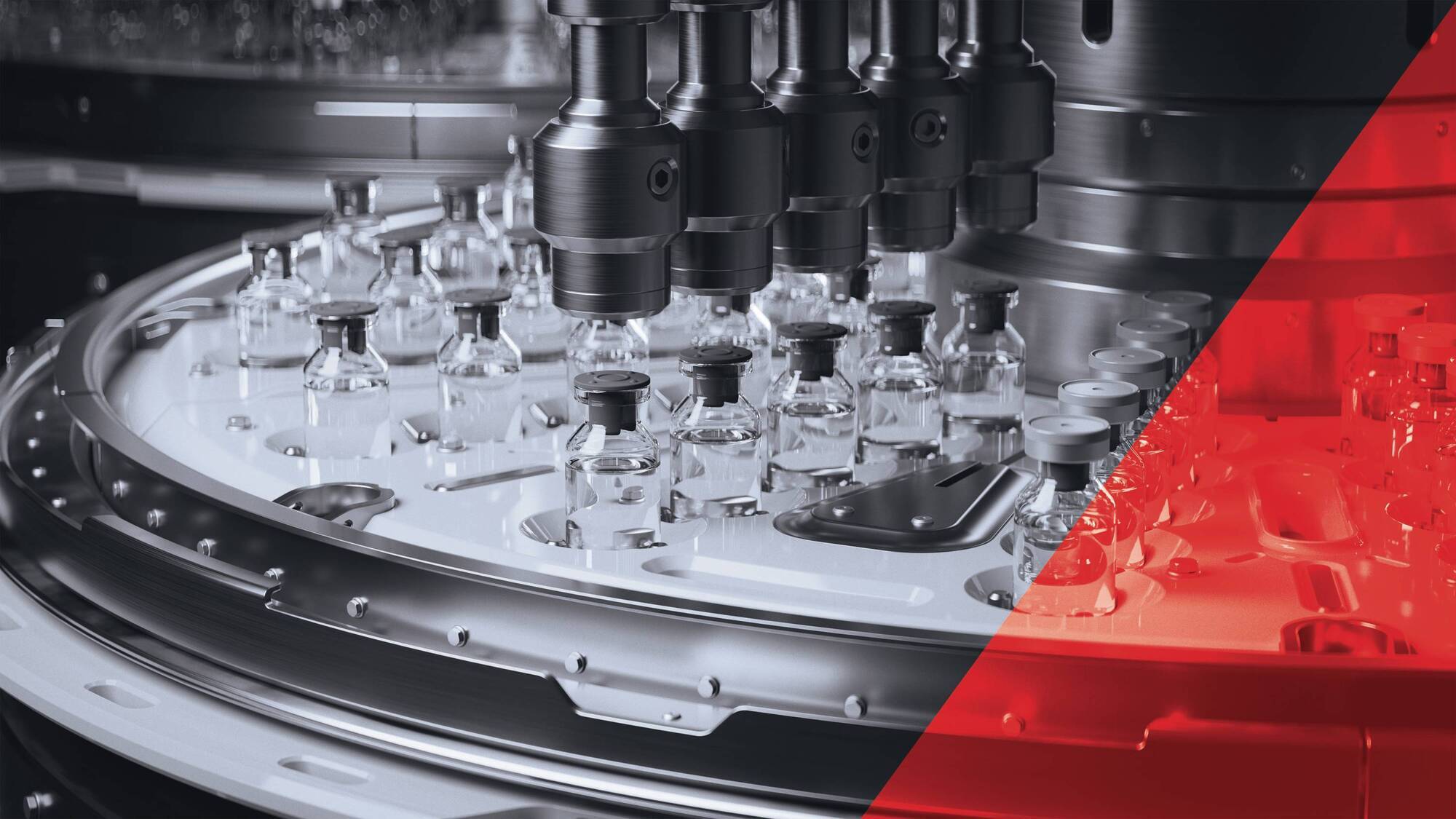
NeoDyne’s manufacturing execution systems (MES) delivers real-time data to give operators and supervisors visibility of production status, identifying bottlenecks, stoppages and areas of lost capacity. Photo: iStock
, managing director of NeoDyne's Integration & Digital Manufacturing (I&DM) business, outlines how getting more from skills, assets and data is giving innovative manufacturers an edge

Every industrial revolution is born of a challenge: how do we make things better?
In the late 18th century, Hargreaves and Cartwright answered that question by finding new ways to manufacture more efficiently. This was the first Industrial Revolution, a mechanical transformation – Industry 1.0.
Fast forward 250 years and we are asking the same question – only the tools have changed. Today, we find ourselves in another industrial revolution: a connected world of smart automation, data-driven insights, the Internet of Things (IoT) and artificial intelligence. This is the fourth Industrial Revolution, a digital transformation – Industry 4.0.
Ireland is well positioned to capitalise on this transformation. Decades of foreign direct investment, a strong multinational manufacturing base and a highly skilled workforce have created an environment in which manufacturing has thrived.
But continued growth is not without challenge. Conversations with customers, peers and suppliers consistently highlight access to skilled talent, housing constraints, infrastructure capacity and an increasingly uncertain geopolitical environment.
If Irish manufacturing is to continue to compete internationally, we cannot rely solely on adding more people, equipment and capacity. We need to extract greater value from the skills, assets and data we already have. Automation and digitalisation can help stretch that capability. That is where digital transformation puts Industry 4.0 into practice.
So, what does digital transformation mean in real terms? It means improving quality, reducing time to deliver, making better data-driven decisions and enabling highly skilled people to focus where their knowledge adds the most value.
This isn't simply about doing more with less. It is about doing more with what we know.
Industry 4.0 comes with plenty of technology buzzwords, but at its heart is a simple principle: understand the manufacturing process and use that knowledge to make better decisions. On factory floors in Ireland and around the world, NeoDyne is putting that principle into practice.
The foundation is data.
Connecting equipment is of limited value unless the data is clean, contextualised and tells us something meaningful about the manufacturing process.
Get that foundation right and the opportunities are clear. Production data can identify emerging issues, support predictive maintenance and highlight opportunities to improve a process. It can also provide the structured data needed for digital twins and AI.
Consider the manufacturing execution systems (MES) being deployed by NeoDyne. Real-time data gives operators and supervisors visibility of production status. Digital workflows improve quality and traceability facilitating easy and fast retrieval of batch records and minimising data entry errors. Measuring Overall Equipment Effectiveness (OEE) helps identify bottlenecks, stoppages and areas of lost capacity.
Together, these technologies address a bigger question: how do we get more value from the manufacturing assets and people we already have?
For manufacturers, that means starting with the problem, not the technology. Where is capacity being lost? Where are quality issues arising? Where are skilled people spending time on tasks that could be automated? Answer those questions first and the role of technology becomes much clearer.
The same principle applies to sustainability and AI. You cannot effectively improve what you cannot measure. Better equipment and energy data can help extend asset lifespan and reduce consumption and waste. Likewise, meaningful AI requires meaningful data; manufacturers investing in robust, contextualised data will be better positioned to exploit the opportunities AI presents.
But there is another consideration. I was fortunate to hear Andreas Ekström speak at an event last year, where he left me with a thought that has stuck with me: “what we gain in efficiency we might lose in learning.” Industry 4.0 should not aim to remove knowledge from manufacturing. It should aim to amplify it. Technology can tell us that a process is moving outside its expected operating range; engineering knowledge helps us understand why. AI can identify patterns across thousands of data points; domain knowledge helps us determine whether those patterns matter.
As a system integrator with a strong emphasis on graduate recruitment, we have a responsibility not only to develop technology solutions, but also the people capable of understanding and applying them.
Founded in Cork almost 30 years ago, NeoDyne has grown to a team of 250 across Ireland, the UK, the US, Romania and the Netherlands, combining traditional engineering expertise with automation, digital technologies and data capabilities.
That combination allows us to understand both the production environment and the technology required to transform it. It also means we can look at a manufacturing challenge from both sides: understanding the engineering problem first, then identifying where automation, digital technologies or better use of data can make a difference. That matters because the right solution is not always the newest technology; it is the one that solves the right problem.
Technology alone does not transform manufacturing. Real transformation happens where technology meets an understanding of the process; where data meets engineering experience; and where knowledge meets innovation.
So, 250 years on, we are back where we started: how do we make things better?
For Irish manufacturing, it means getting more from the skills, assets and data we already have, while continuing to develop the engineering knowledge and people behind them.
Unlike the anarchist in Blackadder the Third who may have wished to smash Hargreaves’ Spinning Jenny, the answer to the latest Industrial Revolution is neither to resist the technology nor expect it to provide all the answers.
Industry 4.0 gives us powerful new tools, but what matters is how we put them to work.
That is how Irish manufacturing can continue to punch above its weight.