State works closely with industry to give Irish manufacturing a boost
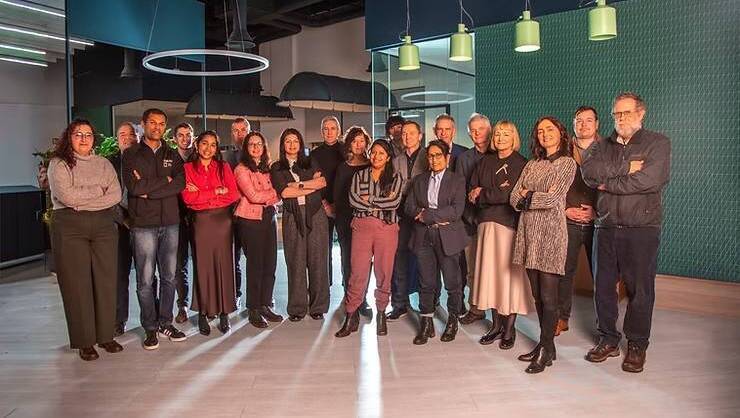
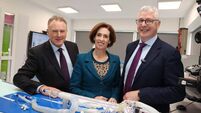
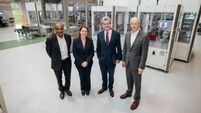
FactoryXChange (FXC), based at the Irish Manufacturing Research (IMR) in the National Science Park, Mullingar, Co Westmeath, is a national network of 17 partners in digital innovation, AI and robotics.
Manufacturing has long been one of the quiet powerhouses of the Irish economy. It employs more than 227,000 people, the vast majority outside Dublin, and encompasses everything from indigenous engineering businesses to some of the world's most sophisticated pharmaceutical, medtech and technology operations.
But manufacturing is changing. Automation, artificial intelligence, robotics and increasingly connected factories are transforming not only how products are made, but where companies choose to make them. For Ireland, the challenge is no longer simply attracting manufacturers. It is ensuring that companies already here, large and small, can keep pace with that change.
That was the thinking behind Ireland's Industry 4.0 Strategy, which placed digital transformation at the heart of the country's manufacturing ambitions. Several years on, the Department of Enterprise, Tourism and Employment (DETE) points to progress in helping manufacturers explore and adopt new technologies while reducing the risks involved.
DETE identifies three main achievements. First, the Industry 4.0 Strategy established digital transformation as a strategic priority for Irish manufacturing. It recognised that technologies such as automation, advanced analytics, robotics, IoT and digital twins would be central to maintaining productivity and competitiveness.
Second, it helped build a strong ecosystem connecting manufacturers with research institutions, technology centres and enterprise agencies. Organisations such as Irish Manufacturing Research, CONFIRM, I-Form, the Advanced Manufacturing Centre and Digital Manufacturing Ireland provide companies with access to expertise, technology and practical testing facilities.
Third, it helped position digital capability as part of Ireland's broader proposition as a location for advanced manufacturing investment. Ireland is competing globally for high-value manufacturing, and Ireland's ability to combine a skilled workforce, strong research capability and an increasingly digitally enabled manufacturing base is an important part of that proposition.
The next phase is about building on that foundation and ensuring that digital adoption translates into measurable improvements in productivity, resilience, sustainability and competitiveness across the manufacturing base. Ireland's Industry 4.0 Strategy was explicitly designed to support that transition.
Building on these achievements also means ensuring that smaller manufacturers are not left behind.
According to a spokesperson, this is an important priority.
“Digital transformation cannot simply be an advantage available to the largest companies with the biggest capital budgets. A more graduated approach is needed, allowing businesses to start where they are and build their digital capability over time,” a spokesperson says.
Companies should not have to make a major investment before understanding what technology can do for them. Digital readiness assessments, advisory services and ‘test before invest’ facilities can help businesses identify where technology can deliver the greatest return.
“This is also why organisations such as Digital Manufacturing Ireland are important. Their facilities allow both SMEs and larger manufacturers to explore and test technologies in a real manufacturing environment before deploying them on the factory floor,” the spokesperson added.
Once businesses have identified their first steps, a range of financial supports is available depending on their size and digital maturity.
For smaller companies, the Local Enterprise Offices provide supports including Digital for Business and the Grow Digital Voucher. The Grow Digital Voucher can provide up to €5,000, covering 50% of eligible investment in digital tools, including areas such as AI, software, cybersecurity and business systems.
For companies that are further along the journey, Enterprise Ireland provides a range of innovation and digitalisation supports, including the Digital Process Innovation Grant and the Digital Transition Fund. Companies can also access the European Digital Innovation Hubs, which provide expertise and ‘test before invest’ opportunities.
For manufacturers specifically, Future Manufacturing Ireland brings together technical expertise, research centres and enterprise agency supports.
The objective is to give businesses a clear pathway: assess their position, identify where technology can make a difference, test the solution and then scale it once the business case has been demonstrated.
Technology and skills have to move together. Digital transformation is not simply about installing new equipment or software; it is about ensuring people have the skills to use those technologies effectively.
Government is, therefore, taking a whole-of-government approach to digital and AI skills. Digital Ireland includes a strong focus on skills, while the Department of Further and Higher Education, Research, Innovation and Science is developing measures including a nationwide Digital and AI Skilling Campaign and a National Skills Observatory.
Within manufacturing, the enterprise agencies and the advanced manufacturing research and technology centres also have an important role. Centres such as IMR, CONFIRM and the Advanced Manufacturing Centre connect research and technology development with the skills and training needs of industry.
The goal is to ensure that workers are not displaced by the transformation, but are equipped to participate in it and benefit from the new opportunities it creates.
There is also strong collaboration through the European Digital Innovation Hubs. For example, FactoryXChange, led by Irish Manufacturing Research, is focused specifically on helping companies move towards the factories of the future.
These collaborations are important because they shorten the distance between a promising technology and a solution that works effectively in an industrial environment.
The spokesperson says: “Sustainability and productivity are increasingly linked and should be seen as two sides of the same competitiveness challenge.” Better data allows manufacturers to understand where energy and materials are being consumed and where waste is occurring. Sensors, automation and analytics can help optimise production processes, reduce downtime, improve energy efficiency and minimise material waste.
That can deliver both environmental and commercial benefits, which is particularly important as Ireland competes internationally on productivity and cost as well as sustainability. The future manufacturing model needs to be more productive, more resource-efficient and more resilient at the same time.
That broader approach is reflected in the evolution from Industry 4.0 towards what is increasingly described as Industry 5.0, where digitalisation is considered alongside sustainability, resilience, human-centred manufacturing and skills.
As international competition for advanced manufacturing investment intensifies, Ireland’s proposition is based on a combination of strengths rather than any one individual factor.
The country has a highly skilled workforce, a strong track record in attracting and retaining high-value FDI, deep expertise in sectors such as medtech and pharmaceuticals, a strong research and innovation ecosystem, and access to the EU market.
Ireland also has a substantial technology sector and a growing ecosystem around AI and digital technologies. Sixteen of the world’s top twenty global technology companies and eight leading providers of foundational AI models have their main EU establishment in Ireland, giving the country a particularly strong digital ecosystem.
The challenge is to keep improving. Ireland’s competitiveness cannot be taken for granted, which is why the Government’s Action Plan on Competitiveness and Productivity focuses on areas within domestic control, including infrastructure, skills, innovation, regulation, costs, SMEs and regional development.
Crucially, DETE approaches digital transformation in a measured fashion. According to a spokesperson, digital transformation does not mean that an entire factory has to be transformed overnight.
The starting point should be a real business problem: identify where time, energy, materials or productivity are being lost, and then consider whether digital technology can help address it.
“There is now a much stronger support ecosystem available to help manufacturers do this. Businesses can assess their digital readiness, access advisory support, test technologies before investing and access financial supports as they progress.” “Ultimately, the greater risk may be the risk of doing nothing. International competitors are adopting these technologies, while productivity and resilience are becoming increasingly important in a more uncertain global trading environment,” said the spokesperson.

CONNECT WITH US TODAY



Be the first to know the latest news and updates