'Reaching for net zero is exciting and transformational,' says Ørsted director
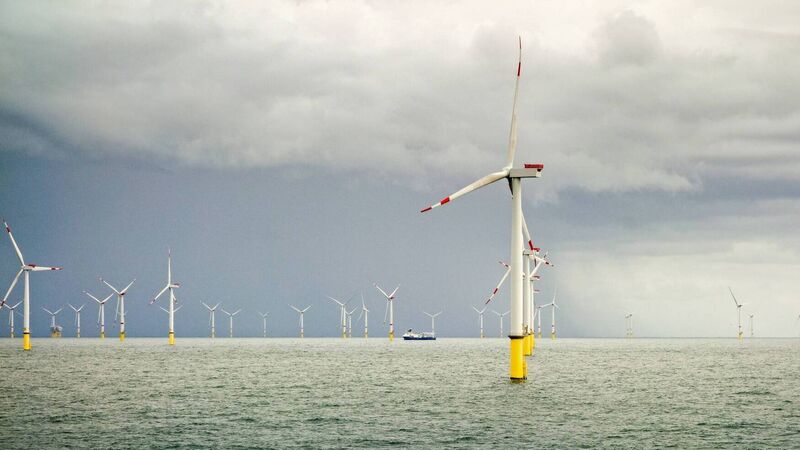
Ørsted has ambition to grow capacity significantly over the next decade to support the Irish government’s emission reduction targets.
TJ Hunter, senior director, Onshore Ireland and UK, Ørsted, speaks with Rita de Brún
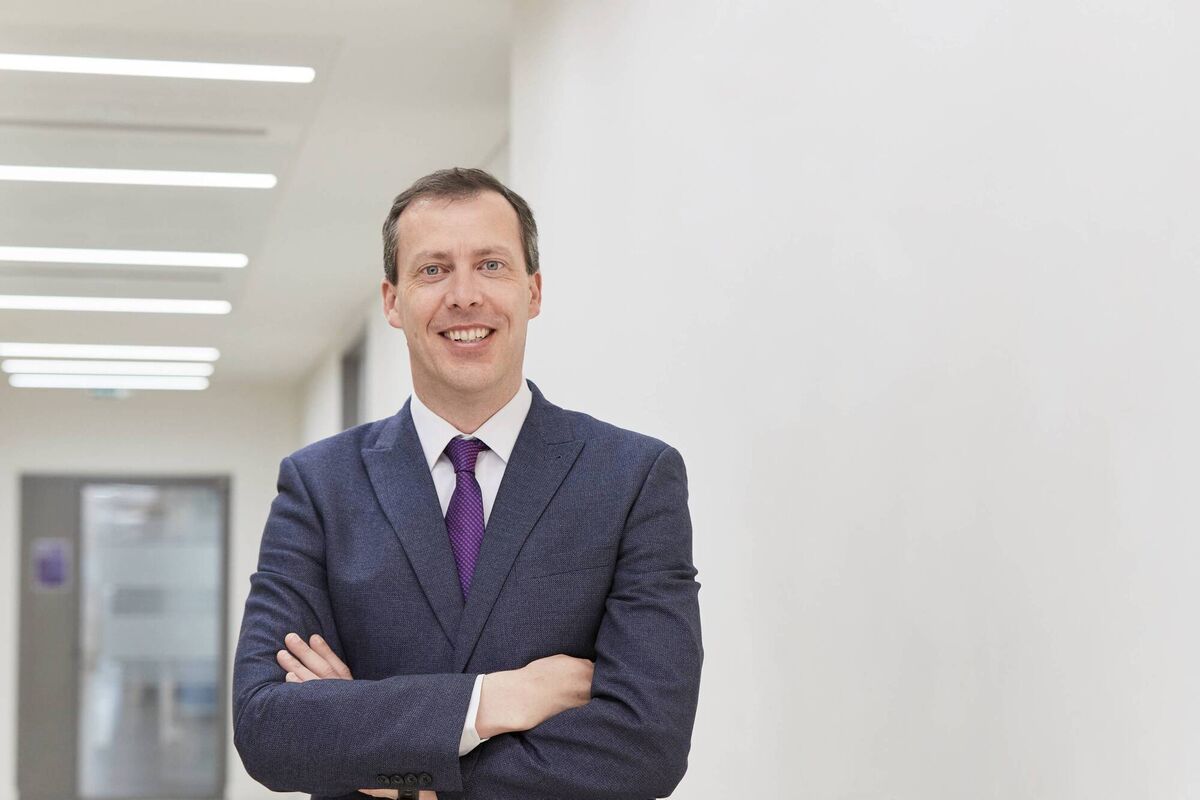
TJ Hunter was born and raised in Douglas. He is also senior director, Onshore Ireland and UK, with global renewable energy company Ørsted, the Danish company which has offices in Cork.
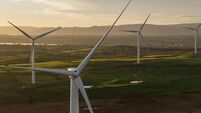
When we talk, he gets straight down to business: “Ireland has some big targets to hit,” he says. “By 2030, we need to hit 9GW of onshore wind, 8GW of solar and 5GW of offshore wind.
“In order to hit those, we need to have the planning system fully resourced and able to progress those planning applications. We need clearer timelines there. Offshore is going to be flowing in the first plannings for the ORESS 1 auction. Then, coming behind that, will be ORESS 2.1, which we’re going to participate in with our partner ESB.
“The government auctions need to be regular and clear, so the developers who build the electricity can invest. They need to help the projects get built and share some risk in doing that. In addition, we need the power grid to be able to take that power and bring it to wherever it is needed. What’s important is that we all need to work together in order to achieve the targets.”
How heavily does he professionally feel the weight of the climate crisis?
“It does weigh on me and the bulk of my career has been dedicated to renewable energy. While I firmly believe we need to clean that up, the burden is on all of us to try to achieve that, with the small things we do in daily life.
“But also, in some of the bigger structural things, that as a country we need to achieve. While I have an awareness of that responsibility, I’m also quite passionate about it, so on balance it does not feel like a burden to me.” What, professionally, gives him hope in his role?
“Developing energy projects is a challenging business,” he replies. “Quite often, you meet bumps in the road, be those policies, or other project related barriers. But, the reward is getting the projects across the line, seeing them built and seeing the contributions they make. So, while I don't go looking for hope, I do get great reward, both on a professional and a personal level, in that.
“Also, as a team, we get as much satisfaction from achieving our goals, as we do from the knowledge that we’re contributing to national targets.”
As for the significance of Ørsted partnering with ESB last year, to jointly develop an offshore wind portfolio, TJ Hunter says it’s indicative of a commitment to, and a vote of confidence in, Ireland.
“It’s also a reflection of Ireland’s efforts to have a stable environment in which to develop and in which to create jobs. The messages that the Irish Government is sending out align with Ørsted’s vision of creating a world that runs entirely on green energy. As that’s something nobody can achieve alone, we feel that partnering with the ESB, which has electrified Ireland for over a century, is a good fit for Ørsted.”
Does he believe net zero will be reached?
“I think we have to believe that we will achieve it,” he replies. “Collectively as a country, we’re working hard to achieve it. Also, having spent over 20 years in this industry, I've never before seen the collective direction and the will to achieve it, that I’m seeing right now. That collective will to try to achieve it, with a determination that has never been stronger, is something I find very heartening.
“Reaching for net zero is an exciting thing,” he continues. “It’s transformational. It’s good. It’s a positive thing and we should see the benefits of it.”
As for what it will take for Ireland to quit its dependency on fossil fuels, he says: “It’s a journey and won’t be changed overnight. As an island nation, Ireland has been very progressive to achieve what it has so far. For complex electrical reasons, it’s not easy for an island. But, Ireland has done a lot in this space and that has been recognised around the world.
“It’s not going to be a fast journey. We do need slow haste. We need to make sure that each step we take is the right one. That needs care. It needs the right policy. It needs the right support. It also needs engagement with all the stakeholders. As a country we’re doing this.
“While there is that over-reliance on fossil fuels, we can see where we need to get to, so as to reach net zero. We can see just some of the steps now. We can’t see all the barriers and the problems that we will have to surmount. But, we will get there.”
We talk more on Ireland being a country the rest of the world looks up to in this area: “While we’re not the top nation in terms of renewable generation, we are improving year on year and our ability as an island to take up to 80% renewable energy at a point in time, is very significant. The technical work being done to achieve that, is highly respected.”
How are we doing on investment?
“The Irish Government is taking strong integrated steps across all of their departments, to put together a plan that gives confidence, both for investors in energy and for foreign direct investors, who need green energy.
“The pieces of that puzzle are coming together. The consultations are there. Policy will be coming out and then we need to execute on that policy. That is critical. We need regular auctions. We need the grid built to get the energy to the right places. We need the planning system to work. Ideally the Planning and Development Bill 2023 needs to be concluded by summer recess. That will help, by seeing out clear timelines and more.”
As for Ørsted’s heavy investment in Ireland, he says: “We’ve invested over €700 million in Ireland to date in onshore projects alone. We’ve powered a quarter of a million homes. Cork is our onshore headquarters for Europe. We’ve over 100 people employed there. Then we’ve our joint venture with ESB for Offshore. We see a future in Ireland and with its solid regulatory foundation, offshore wind and onshore targets.
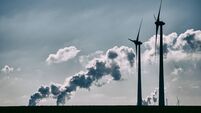
“Now is a really exciting and positive time for the renewable industry. But the reasons for that are anything but exciting or positive, when you have a war in Ukraine and a climate crisis. Security of supply is threatened as is our environment. So the positivity is couched in the fact that there are really serious reasons for why we are doing what we are doing.”
Despite the gravity as described, TJ Hunter’s enthusiasm and passion for his work is heartening. That his original qualification was in mechanical engineering plays a role in this. ‘Exciting’ is the one adjective he uses repeatedly to describe his area of work. He uses it to describe the green energy space. Also, the myriad ways energy is generated and transported both within Ireland and within Europe.
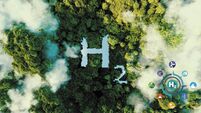
For him, it’s the technology perspective that seems to be particularly compelling: “We have fixed and floating offshore wind. We have the potential of hydrogen and other e-fuels. We have solar panel developments. It’s a massively exciting innovation space. We have set huge targets for ourselves as a country. Now we need the people with the skill sets to do it.”
That TJ Hunter is a proud Corkonian is wonderfully apparent as we speak: “On a personal level, I’m very proud of being able to build such a rewarding career in Cork. I’m proud too that much of the renewable energy development ecosystem is in Cork.
“Cork is very much a centre of excellence for renewable energy, in terms of development, operations and investment. I am very proud to have contributed to building that and to continue to build it.”