Visionary 20-year plan to ensure future of Irish marine resources
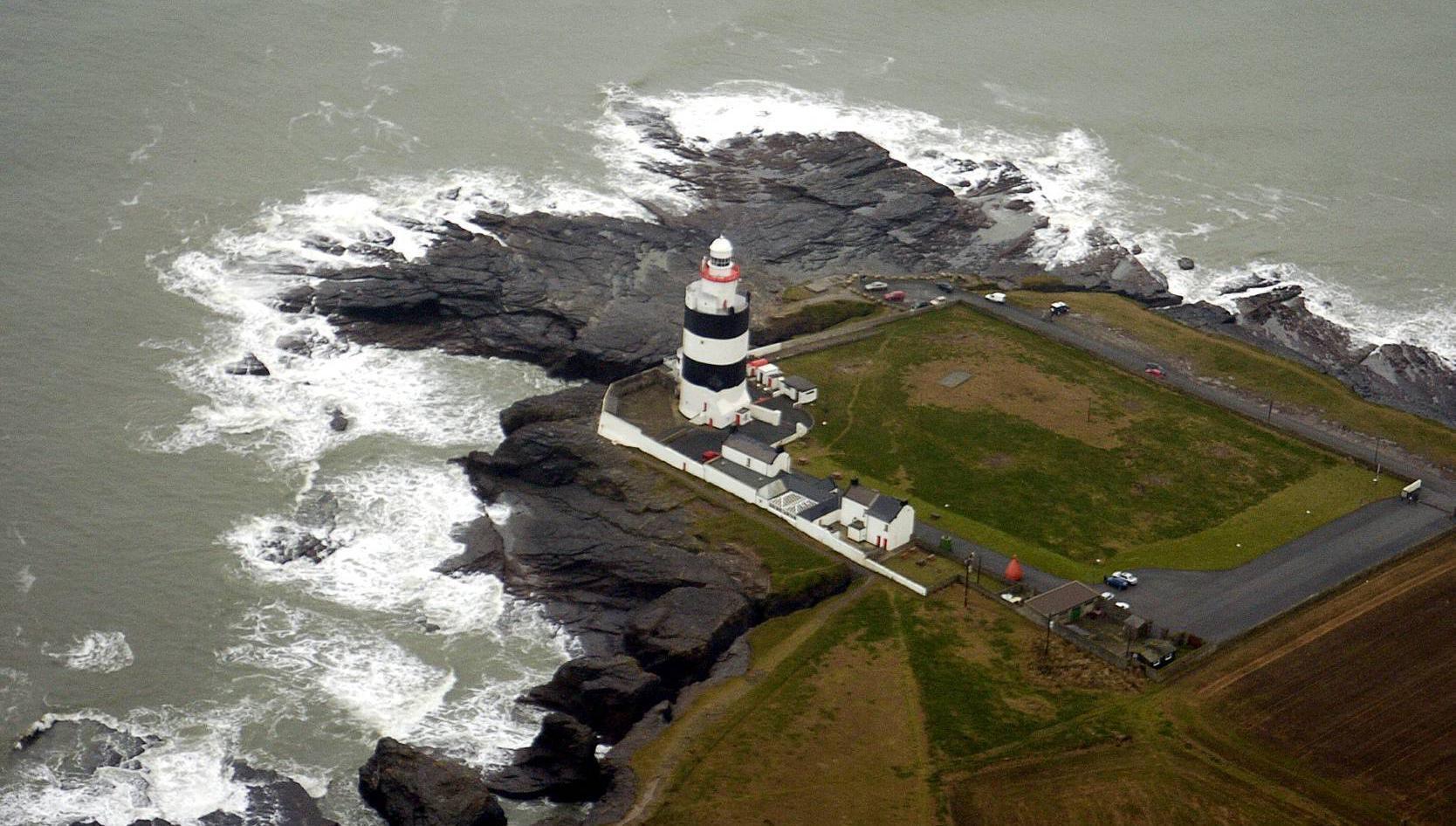
The new National Marine Planning Framework will help us deliver on our obligation to protect our Seas for future generations to enjoy the many benefits they offer. Hook Head Lighthouse, Co Wexford. Picture: Denis Minihane
, Minister of State with responsibility for Planning and Local Government, outlines an ambitious plan to safeguard Irish marine resources

A National Plan and new planning regime for the Maritime Area – striking a balance between the environment, the economy and our personal wellbeing.
Over the next year, with the introduction of the National Marine Planning Framework, and the Marine Planning and Development Management Bill, we will experience a change in how we manage our maritime area. This is a historic development; providing a new way of looking at our relationship with the seas that surround us and as Minister for Planning and Local Government, I am proud to be leading this programme of modernisation.

Our maritime area is seven times the landmass of Ireland, over 490,000 square kilometres of some of the most productive and diverse resources in the world. When we take our seabed into account, Ireland is one of the largest countries in the EU and our coastline of 7500KM is longer than that of many European countries. Ireland’s coast and seas possess environmental and social treasures: a diverse ecosystem, a range of recreational opportunities such as fishing, sailing and surfing, important parts of the tourist mix offered by coastal counties.
Our national maritime area also holds great economic value. In 2019, Ireland’s ocean economy provided employment for over 34,000 full-time equivalents, a 13% rise on the previous year. It had a turnover of €6.2 billion through activities such as seafood and tourism. Huge economic opportunities in areas such as renewable energy - critical to Ireland’s clean, decarbonised future – remain untapped in our waters.
While we live through the emergency that Covid-19 has brought to these shores, many people have found solace and joy in our Seas. Our mental and physical health are enhanced by spending time at the coast and in the water. This must be remembered when managing development activity in our maritime area. How can the ocean wealth be harnessed not only to aid economic recovery and balanced regional development but also to enhance our well-being?

I recognise how special our maritime area is and I am determined, when planning for the future of Our Seas, that we strike the right balance between the three, sometimes competing, pillars of sustainable development - protecting the health of the ocean, enhancing our social engagement with the sea; developing a thriving maritime economy. I believe there is a way these pillars can coexist – through proper, conscientious long-term planning working in tandem with a robust, fair and transparent licencing regime.
The Government has drafted Ireland’s first-ever National Marine Spatial Plan – called the National Marine Planning Framework (NMPF). The NMPF outlines our proposed approach to managing Ireland’s marine activities to ensure the sustainable use of marine resources up to 2040. This single framework, bringing together all marine-based human activities, presents our vision, objectives and planning policies for each activity. Those activities include offshore renewable energy; fisheries; ports, harbours and shipping; safety at sea; sport and recreation; tourism; and wastewater treatment and disposal – all important and all deserving of protection, support and development.
Licensing of these activities will now occur within a bigger picture map, that balances the development of these activities with the health of the ocean.
The NMPF will be finalised at the end of 2020, and will be the key decision-making tool for Government departments, State agencies, regulatory authorities and policymakers for decisions on marine activities. Decisions will include planning applications, policies, projects and strategies.
I mentioned that this Framework will be coupled with a new licensing regime. This will be introduced through the Marine Planning and Development Management Bill, which the Government has given priority status to in the Programme for Government. This Bill will legislate for a single State consent system for the entire maritime area (replacing foreshore leases and licenses) *. Streamlining the development management process for activities and developments will eliminate unnecessary duplication where currently they are assessed under both foreshore and planning regimes.

Our objective is to reduce the regulatory burden so that marine users (regulators, applicants for consents and others) should have greater certainty regarding what can happen and where. The new licensing process will be streamlined, more transparent and will introduce certainty to a system that has often appeared confused. I believe that certainty attracts and reassures investors and investment benefits our communities - economically, socially and environmentally. I am also acutely aware of the potential of our extensive offshore renewable energy resources one activity that meets both our economic – job creation, cheaper electricity, a product we can sell overseas - and our environmental ambitions – decarbonisation, renewable source of energy. The Bill will play a critical role in enabling this relatively new industry.
It has been said we haven’t inherited the Earth from our parents rather we have borrowed it from our children. It is our obligation to protect our Seas so that future generations can enjoy and benefit from what we enjoy and benefit from. It is a challenge to balance what activities should happen where and when they should happen, while at all times holding protection and nurture of our Seas at the forefront of every decision, however the Government and I, are ready for the challenge. When implemented, I am certain that the National Marine Planning Framework and the Marine Development Management Bill will enshrine a system in law and in practice that will protect Ireland’s greatest resource, enhance our enjoyment while also establishing a clear roadmap for Ireland’s energy security and decarbonised future.
*The 1933 Foreshore Act will still apply to fisheries related consent i.e. aquaculture and fisheries harbours.

The draft NMPF is the Government’s proposed approach to managing Ireland’s marine activities and ensuring sustainable use of marine resources to 2040. The draft framework, bringing together all marine-based human activities, articulates the Government’s vision, objectives and planning policies for each activity. It outlines how they will interact with each other in an ocean space that is under increasing spatial pressure.
The finalised NMPF will be the key decision-making tool for Government departments, State agencies, regulatory authorities and policy makers for decisions on marine activities. Decisions will include planning applications as well as policies, projects and strategies.
The finalised framework will be a parallel document to the National Planning Framework, which provides a high-level guide to terrestrial planning and development over the next 20 years.
Effective management of marine resources: Long-term forward planning for Ireland’s maritime area will contribute to the effective management of marine activities and more sustainable use of our marine resources.
Clarification of objectives and priorities for maritime area: The framework will provide a clear direction for managing our seas, clarifying objectives and priorities. It will direct decision-makers, users and stakeholders towards more strategic and efficient use of marine resources. It will inform decisions about the current and future development of the maritime area, aiming to integrate needs.
Coordinated planning decisions: The finalised framework will ensure coordinated planning decisions, consistent with the Government’s vision and objectives. Marine users, including regulators, applicants for consent and interested persons, should find that the reformed marine planning system will reduce the regulatory burden on them by giving them more certainty regarding what can happen and where, thereby speeding up the licensing process.
Marine users should also feel more confident that decisions made on applications for projects will be robust in the face of challenge, provided they are made in accordance with the policy framework set out in the framework.
The document sets out sectoral objectives and planning policies relating to 16 different sectors/activities:
· AquacultureÂ
· Defence and securityÂ
· Energy – Carbon Capture and StorageÂ
· Energy – Offshore Gas StorageÂ
· Energy – TransmissionÂ
· Energy – PetroleumÂ
· Energy – Offshore Renewable EnergyÂ
· FisheriesÂ
· Marine Aggregates and MiningÂ
· Ports, Harbours and Shipping
 · Safety at SeaÂ
· Seaweed HarvestingÂ
· Sport and RecreationÂ
· TelecommunicationsÂ
· TourismÂ
· Waste Water Treatment and DisposalÂ
The framework will cover Ireland’s maritime area, including internal waters (sea area), territorial seas, the exclusive economic zone and the continental shelf. It comprises approximately 490,000 km² and extends from mean high water mark at the coast seaward to in excess of 200 nautical miles in parts.
Ireland’s maritime area is seven times the size of its landmass. When the seabed is included, Ireland is one of the largest EU countries. Its 7,500km of coastline is longer than that of most EU countries. Seventy-five per cent of Ireland’s population live in coastal counties. In 2018, Ireland’s ocean economy had a turnover of €6.2 billion. It provided employment for 34,132 full-time equivalents and saw a 13% increase in employment on 2016 figures.
The finalised framework, due to be adopted in late 2020, will outline the Government’s approach to managing Ireland’s marine activities and ensuring sustainable use of marine resources to 2040.
Part 5 of the Planning and Development (Amendment) Act 2018 provides that a maritime spatial plan (that is, the framework) is to be reviewed at least once every six years.
Yes. The draft framework contains a commitment to regional or sub-national plans in future planning cycles. These will be more localised and will potentially be more empowering for coastal communities throughout Ireland. At least three regional plans will be developed.
The forthcoming Marine Planning and Development Management Bill, due to be published shortly, will aim to modernise elements of the marine development management and enforcement systems. It will provide for:
· A single State consent system for the entire maritime area, replacing foreshore leases and licenses, which are limited to the territorial sea. Â
· Statutory marine planning guidelines and an enhanced statutory basis for marine forward planning. Â
· Elimination of unnecessary duplication of development management processes (including environmental assessments) for activities or developments that are currently assessed under both the foreshore and planning regimes. Â
· A single development management process for the maritime area for activities and developments - to be administered by An Bord Pleanála/local authorities, as appropriate - to development type and location.Â
· Provision for strengthened enforcement and compliance of State consents and development management.

The draft framework contains a number of Overarching Marine Planning Policies aimed at requiring marine regulators and decision-makers to take account of climate action when considering any proposal for marine use or activity (including, for example, ports development, aquaculture, shipping etc.).
Among the draft framework’s planning policies is that preference be given to proposals for offshore wind farms (including enabling projects and infrastructure) in areas identified as designated zones for offshore wind. This zoning process will be set out in the Marine Planning and Development Management Bill.
The draft NMPF reiterates the Government’s Climate Action Plan’s commitment to a major shift away from oil combustion within heat and transport sectors towards renewables in the coming decade.
All public bodies that have a role in making policies, plans or programmes relevant to the maritime area, or have a role in regulating activity or development in the maritime area, are statutorily obliged to support and implement the objectives and policies of the NMPF (when adopted).
This means in practice that in assessing and deciding on any application for a lease, license or consent, a public body must ensure consistency with the NMPF’s objectives. It also means that where a public body is introducing a new policy proposal or plan (e.g. a sectoral marine action plan) that policy document must also contribute to the achievement of the NMPF’s objectives and policies.
Chapter 2 of the draft framework sets out how the NMPF will interact with terrestrial forward plans at national, regional and county level. The chapters on Overarching Marine Planning Policies and Sectoral Marine Planning Policies contain extensive referencing and signposting on how the NMPF should be implemented, who will implement it and how it interacts with other strategic plans, policies and development management processes.
The finalised framework is expected to be adopted in late 2020.
While some countries have had systems of maritime planning for a couple of decades, marine spatial planning is a relatively new approach across most of the EU. The Maritime Spatial Planning (MSP) Directive 2014/89/EU established a framework for maritime spatial planning. It was adopted in July 2014. The Directive obliges all coastal member states to establish maritime spatial plans by 2021.
The Directive requires member states to use their maritime spatial plans to contribute to the sustainable development of energy sectors at sea, of maritime transport, and of the fisheries and aquaculture sectors, and to the preservation, protection and improvement of the environment, including resilience to climate change impacts. However, it also allows member states to pursue other objectives such as the promotion of sustainable tourism and the sustainable extraction of raw materials.

For further information, see:Â Department of Planning, Housing and Local Government