Offshore wind set to boost Ireland's clean economy
As Ireland enters an exciting new era for sustainable energy generation with real potential to reduce Ireland's dependence on fossil fuels, we talk to Minister for Communications, Climate Action and Environment, , about what could be a particularly exciting new era for the marine sector.

What’s exciting is the scale of opportunity for our country; our sea area is seven times our land area. If you look at the map of where the windy places are in the world, the North East Atlantic, where we are, jumps out.Â
What’s really exciting is that in the last five years the cost of offshore wind has started to come down dramatically, and that’s where you’re putting the turbines onto the seabed. The prospect of floating wind turbines is also becoming economically viable.
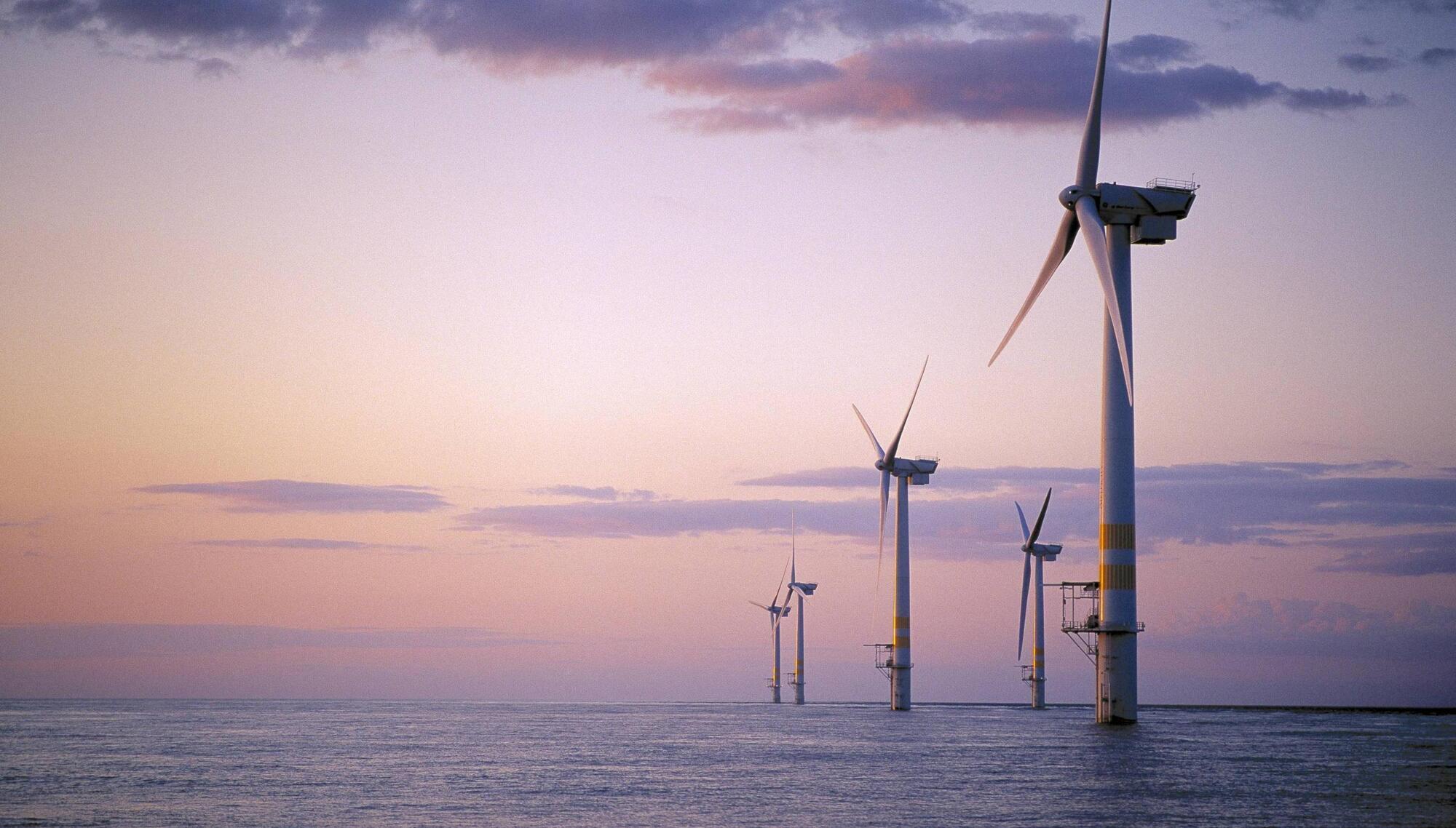
For the Irish Sea, we could put in up to about 5GW of wind power, hopefully over the next decade. That would be mostly on the seabed. That’s as much power as we’re using at the moment. Those turbines could almost power the country on their own if they were running at full tilt.

The real prospect then in the northwest, west, and south, where the water becomes deeper more quickly, is the possibility of offshore floating wind. There we’ve set a target into the next decade of 30GW of power, that’s six times what we’re using at the moment. It’s a huge investment that makes sense because we have such a comparative advantage by being such a windy location. We also have expertise in our grid. Eirgrid are probably a world leader now in how you integrate renewable power into an energy system. We’ve everything to gain.
You’re right. With wind comes waves, it’s a very harsh environment. But these are very big machines. They are built to withstand the environment. There are already floating wind farms operating at sea, off the coasts of Scotland and Portugal, which are yielding some of the highest performance ratings of wind farms in the world. The Norwegian government is also involved in this area - they’re issuing a licensing round shortly, and they have similar waters to us.
The key to it will be getting good planning legislation so you do this in an organised way, so that the licensing, the planning and the grid connections are all done in a really clear, fair way with proper consultation. If you do that it makes it easier to invest in the project and that will bring the cost down. That’s the first step.
Once you get that legislation you have auctions, so that you get companies to bid in, to help develop it so that brings the cost down.
Then thirdly, at the same time as we build these new grid connections, we’re looking at using High Voltage Direct Current cables. They’ve a huge advantage because they can ship power over very long distance with very few losses. So at the same time as we’re doing this planning and the auctions, we’ll be building the interconnector between Ireland and France. That means that when we’re going full tilt and the wind is strong, we can export some of that to France, and when it’s calm here we can import from France, so it’s a balancing system. This is the new energy system of the future and this is the low-cost energy system. This is the future of renewables at scale.

Energy storage will also be part of the solution. Similar to interconnection, proven technologies such as pumped hydro and newer technologies, such as green hydrogen, can utilise excess electricity produced in high-wind periods and release that energy when needed. Green hydrogen is a particularly flexible fuel which can be used directly in difficult-to-decarbonise energy sectors such as heating and transport, as well as being used for reconversion to electricity as needed.
Not that far, because you also need to ship the power ashore. The ones off the east coast would be more visible than those off the west coast. We already have them. People can already see the Arklow Banks turbines from the beaches in Brittas Bay or Ballymoney. This is happening in Wales, the North Sea, The French coast and the Baltic.
We do have to make sure we get the planning right, to minimise the visual disturbance, but also protect the environment and consider the impact on migrating bird species. I think this can be done in the right way with the right planning, while developing the resource. This has to be done in conjunction with the wildlife NGOs and the National Parks and Wildlife Service. We have to be very careful.
We don’t have as many competing other uses, like military uses or shipping lanes. Even our fisheries tend to be further out, so we’ve certain advantages compared to other locations. There has to be proper consultation and you have to show by example, show people where this has worked successfully. We also have to careful about bringing power ashore in a way that doesn’t disturb communities. All that planning has to be done and that’s one of the most critical parts of the whole project.
If we look at what’s happened in the UK, which is probably the most advanced in this, they have managed to do it without huge disruption.
What’s really important is that this will allow to build a renewable sustainable resource right here in Ireland. It will give us energy security, and it will also help us to reduce our carbon emissions. Over the next decade, we will be electrifying our transport and other systems and we will need electric power from sustainable resources to do that. Offshore wind is a win-win for Ireland.
For more, see:Â Department of Communications, Climate Action and Environment

Ireland’s maritime area is about seven times our land area, and from a renewable energy perspective, one of the most energy-intensive in the EU. Such is the area’s scale and energy potential, it could power our entire energy system, and provide a pathway to our 2030 and 2050 climate goals.

In addition, it can also be developed as a valuable export market with tangible benefits to both local marine users and neighbouring coastal communities.
The cost of generating electricity from offshore wind is rapidly becoming competitive with fossil fuel generation, but in the meantime, the technology will require State support until reaching maturity.
A condition of this support will be that offshore wind farm operators contribute directly towards a community benefit fund in accordance with the size of the wind farm developed.
Potentially, many millions of euro annually could become available for investment in coastal communities, with possible beneficiaries including local sports clubs, festivals and projects that support sustainable goals including education, energy efficiency, sustainable energy and climate action initiatives.
Communities will also benefit in a number of indirect ways, beginning with the construction stage, which can last for two years or more, and will bring significant regional employment.
While regional ports are already experiencing inward investment in anticipation of the significant upgrading works required, smaller ports will also see the creation of long-term, high-value jobs, as these ports are often more closely located to the wind farm sites themselves, and will be required for ongoing operation and maintenance.
Government is also considering how citizens could be provided with suitable opportunities to invest and own stakes in renewable infrastructure in Ireland.Â
Ireland has already carried out extensive mapping of our waters through the INFOMAR  programme which will provide data and knowledge to support the developing ORE sector.
While the main drive to develop offshore energy in Ireland is rooted in the pursuit of secure, low-emission and renewable power, this is not sought at the expense of wider ecological and environmental impacts. In accordance with international best practice, all potential development sites will be subject to long-term and comprehensive environmental surveys to ensure that the impact to wildlife and the surrounding habitat is minimised.
In the coming years, the first offshore wind developments are expected to be along the East Coast, where the demand for electricity is nearby. The Programme for Government established a 2030 ambition of 5GW for this area, which, at peak production, would be sufficient to meet the State’s current peak electrical demand, significantly contributing to our 2030 target of 70% renewable electricity. Given that electricity consumption is expected to grow dramatically this decade with the increasing electrification of both transport and heat via electric vehicles and heat pumps, this additional demand can easily be met from the potential of the South-West and West coasts and the maturing of floating wind and energy storage technologies. The quantity of wind energy possible in these areas is not only enough to decarbonise our entire energy system, but also enough to develop a significant green energy export market via electrical interconnectors and green hydrogen.
 A key planning objective will be to ensure an inclusive process of engagement and consensus building across society and with local communities.
This objective is not without its challenges, for example, the Government is aware of the challenge surrounding the sustainable co-existence of the Offshore Renewable Energy (ORE) industry and the Irish fishing industry.
The Government, through the Marine Planning and Policy Development (MPPD) team, in the Department of Housing, Planning and Local Government has identified a need for effective liaison between the Fisheries and ORE sectors.Â
In order to facilitate this effective liaison, a working group of representatives from both sectors will be established, as well as relevant Public Sector organisations, in order to facilitate discussion on the interaction of the fishing and offshore renewable energy industries.
In addition, the Government is currently considering the development of a detailed ‘Coastal Partnership Pilot’ at community level with their associated marine areas. Considerations include the incorporation of regional and gender balanced representation, while utilising expertise from coastal communities, academia, environmental sectors and business sectors where required.
A frequent concern identified during the public consultation process was the potential visual impact, particularly offshore wind, and the need to ensure proper public engagement and consultation around the planned sites of future projects. Permission for such development must be informed by inclusion of a visualisation assessment and consultation with communities with the aim of minimising visual impact.
Ireland’s marine waters are home to a rich and diverse range of species and habitats.
Our marine territory contains a rich variety of physical habitats and associated species, ranging from shallow inshore reefs and sandbanks to canyons, seamounts, troughs and coldwater coral reefs in deeper waters.
The development of the offshore renewable energy sector in Ireland cuts across a wide range of sectors from consenting, licensing and infrastructure, to energy markets and international cooperation on renewable energy. A wide range of State bodies and activities will interact with the sustainable development of offshore renewables. A range of environmental policies will ensure that proposed activity in Ireland’s Maritime Area must be compliant with prevailing regulations, specifying that developers must consult the public bodies responsible for the activity being proposed where necessary.
Offshore renewable energy offers the potential for significant environmental benefits through mitigating greenhouse gas emissions from energy production.
By displacing fossil fuel generation, offshore technologies have positive impacts on air quality by reducing the discharge of harmful or toxic emissions into the environment.
Offshore renewable energy projects can have a wide range of positive synergies including the co-location of aquaculture activities with offshore wind; reliance on ports in facilitating the necessary development of both offshore renewable generation and grid infrastructure; and potential protections for biodiversity through developments serving as de-facto no-take zones.
Arrangements are being made at present to include provisions in the Marine Planning and Development Management Bill to provide for a system of designation of Strategic Marine Activity Zones.
The proposed designation process will include multiple opportunities for public engagement and consultation and all proposed zonings, including ORE developments, will be subject to full environmental assessment.

For more, see:Â Department of Communications, Climate Action and Environment