Youghal’s new museums reawakening a vibrant past
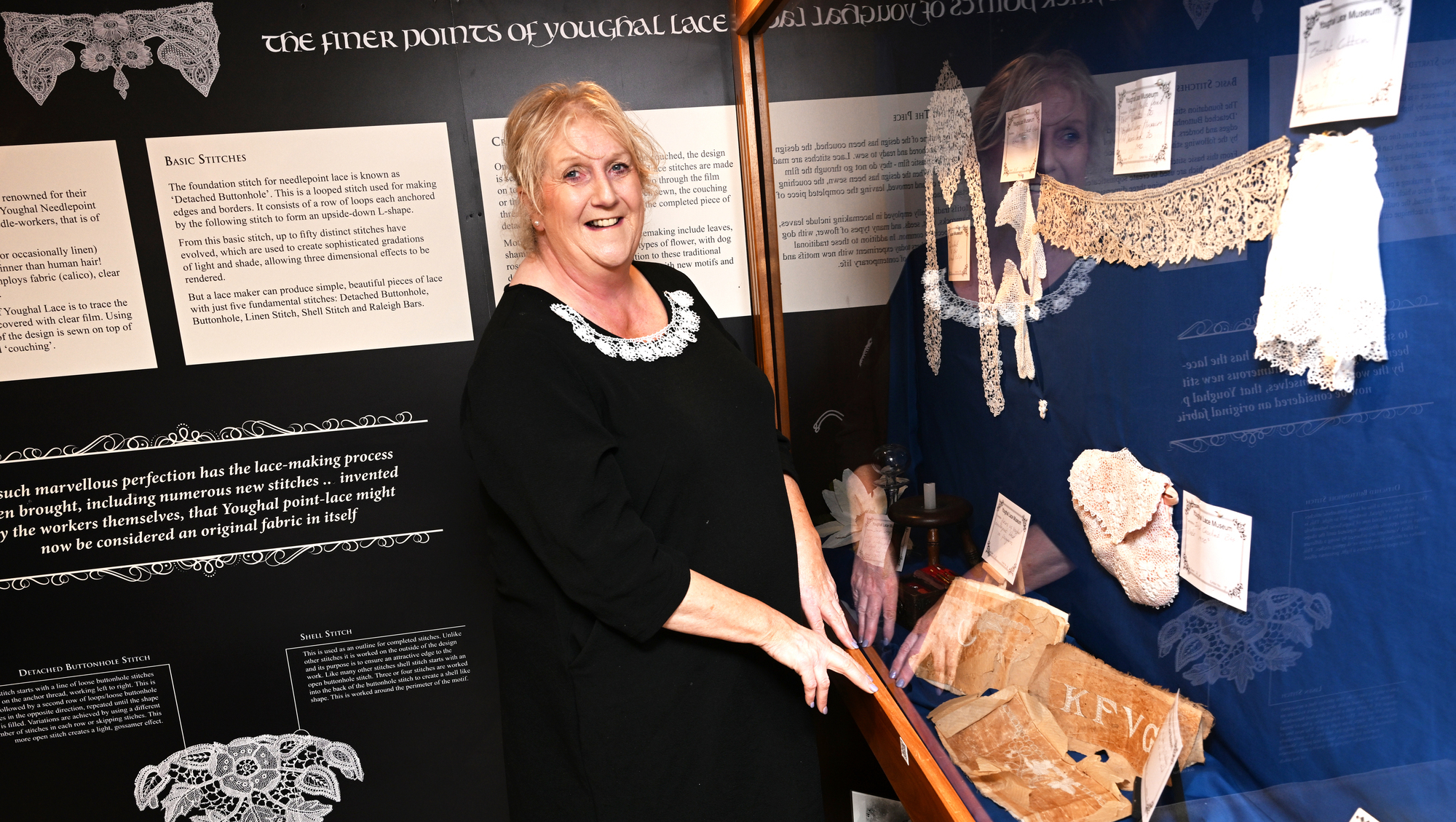
Kay Curtin at Youghal Lace Museum at North Main Street, Youghal, Co Cork. Picture: Larry Cummins
The past is very much part of Youghal’s future as the town continues to harness its exceptional history through a series of new ‘boutique style’ museums.
Joining the famous Clock Gate tower and the 800 year-old St Mary’s Collegiate Church, Youghal’s historic role in the evolution of film, photography and the lace industry is documented in two new venues.
An initial dedication to the 126-year-old wooden schooner, the Kathleen and May, was eventually jettisoned after Fáilte Ireland decided against funding its relocation to the town.
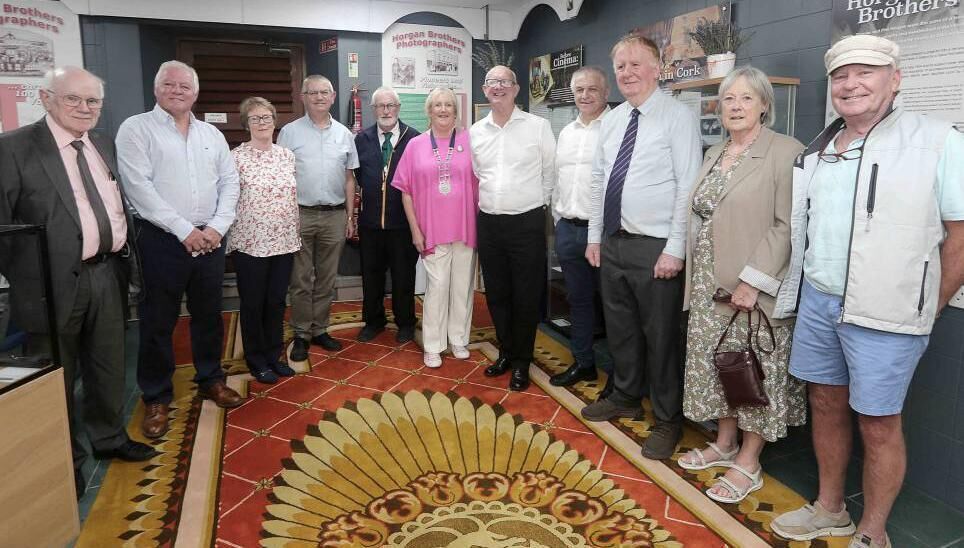
Meanwhile local photojournalist Michael Hussey had floated honouring Youghal’s ingenious Horgan brothers also “and so a second museum emerged”, recalls Youghal Museums spokesperson, Bryan Mohally.
Sometimes known as the ‘Irish Lumières’, the three brothers pioneered early film and photography. They also created the world’s earliest animation clip by animating the clock tower to spin and dance while inverted, using stop-motion technique and a still photograph.
Often surpassing their French counterparts, their inventiveness and tireless dedication placed Youghal at the forefront of the emergent technology.
Supported by the Youghal Business Alliance, the group acquired a former butcher shop at 75 North Main Street on a ‘permanent loan’ basis.
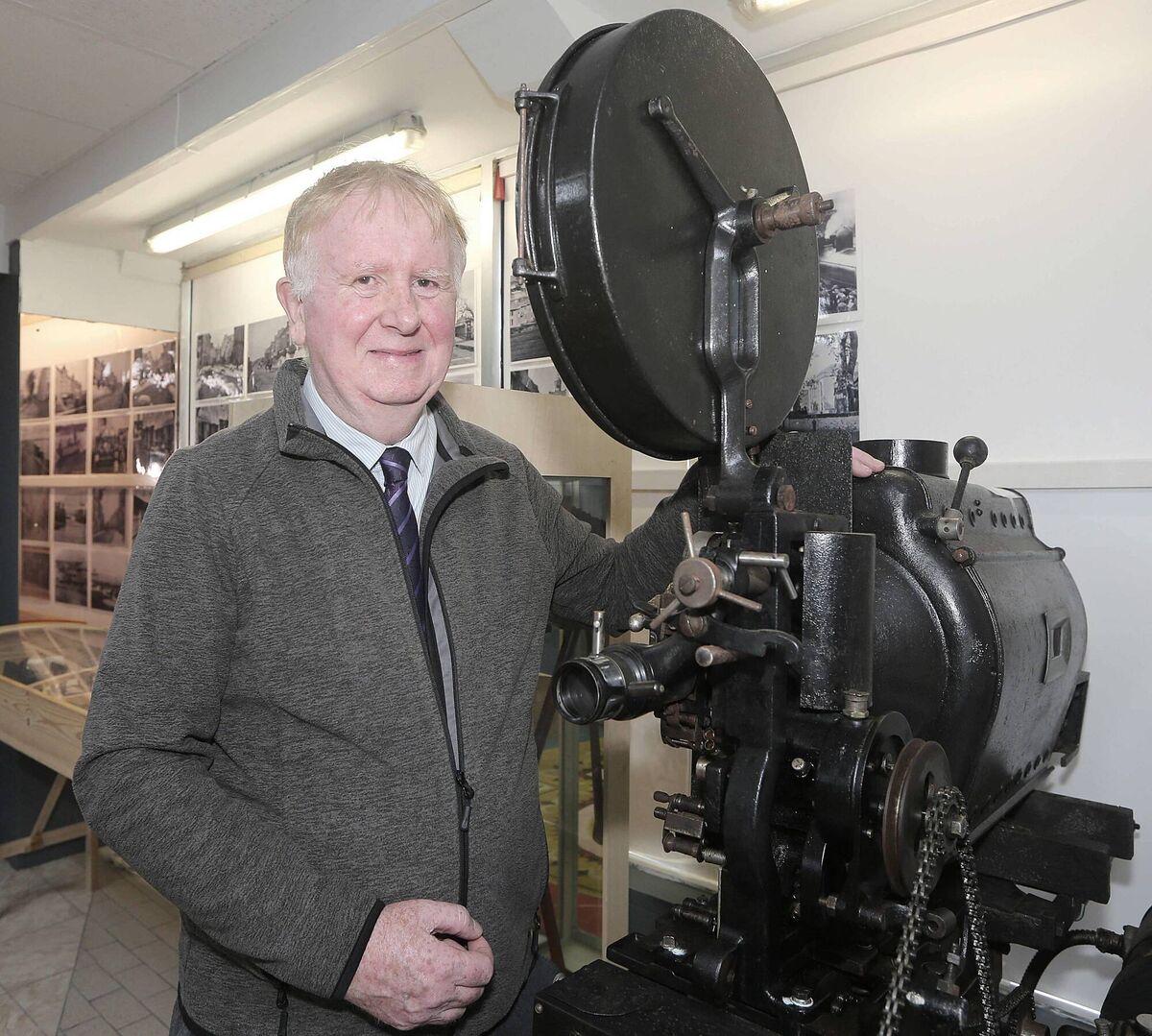
A voluntary effort renovated the premises within three months as the intimate space was readied to replace fillet with film and loin chops with lenses!
The museum opened in June 2024 and continues to enjoy great success, with over 200 exhibits tagged and documented under the watchful eye of curator Ed Guiry.
The displays, varied and valuable, date from the 1800’s to the 1990’s and from plate cameras to their modern day digital equivalent.
Many of the exhibits hail from the vast collection of west Waterford donor Andy Kelly, while others arrived from within and beyond Ireland’s shores.
“We have vintage movie cameras and projectors from well-known collector Patrick MacCoole in Limerick and a 19th century Edwardian studio set gifted to us from the Manfred Romboy Museum in Germany”, says Ed.
The variety further includes magic lanterns, nine lens tin plate cameras and even a secret mini-camera of the type discreetly operated by such spy luminaries as James Bond!
Many of the exhibits dispense audio information through a QR code, with Ed or the volunteer staff equally well versed.
Compact but not cluttered, information boards tracing such events as the 1954 filming of Moby Dick scenes in Youghal and the history of local cinema surround enrich the observer..
Audiences frequently enjoy documentaries, lectures and slide shows, while a collection of home movies regularly feeds the appetite for nostalgia as the past lives on.
A hundred metres along North Main Street, the Youghal Lace museum opened last year.
Again, the quality defies limited space, amidst a soothing serenity.
Formerly an electrical repair shop, the property belongs to architect Paddy Quinlan, who arrived from Clonmel with his family, bought the building and lives overhead.
Paddy gifted the premises along a similar arrangement to that of the Film and Photography museum and conducted much of its transformation himself.
“It was an obvious theme, given Youghal’s association with lace predates the 1800’s”, Bryan informs, who says the museums are “as much about creating awareness of the town’s past amongst the townspeople as being tourism ventures”.
Glass cabinets present a captivating experience through artefacts, vintage photos and information panels.
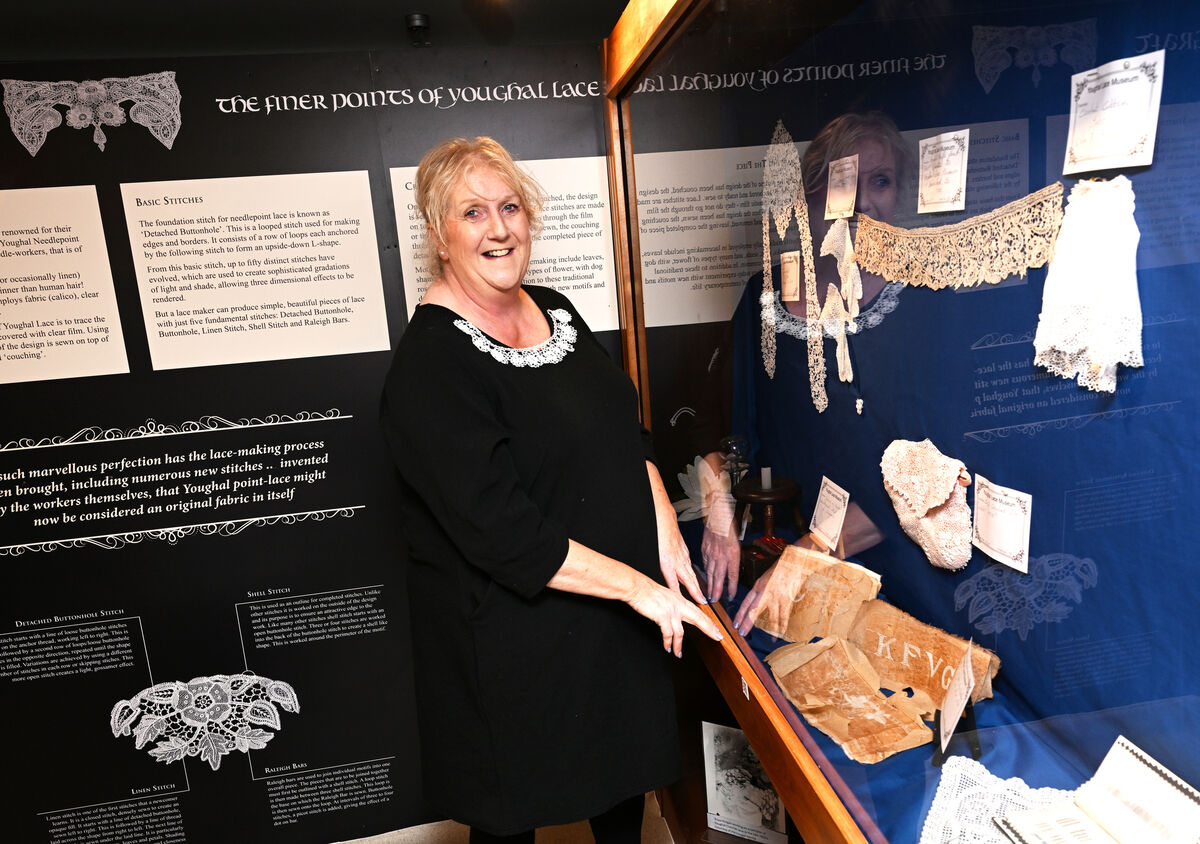
They reveal how Presentation Sister Mary Anne Smith introduced lace making to her school during the Famine, bringing vital cash to impoverished families and boosting the local economy by £1,000 annually.
A convent lace school opened in 1852 and by 1854 was employing 120 girls, whose work was retailing nationally and internationally.
A young, skilled lace maker could earn more than her father might earn as a casual labourer.
“Historically, Youghal has been associated with both needlepoint and crochet lace, but was best renowned for its highly skilled needlepoint work”, says museum curator Kay Curtin, who also owns Kay Flowers, next door.
The exhibits exquisitely trace the deft skills required to execute both lace types, with their various stitching types, while motifs traditionally featured leaves, shamrocks, fruit, seeds and many types of flower.
As the historical tale unfolds, it echoes to such displays as a crochet lace wedding dress adorned with Youghal lace patterns, a locally sourced lace doily, believed to date from the early 1900’s, a Victorian sewing box, a crochet cotton collar worn by judges and an opera bag.
Further displays include an 1850 miniature stool with a candle inserted through its middle. The flame was reflected off a nearby bulb shaped glass to create illumination for lace making.
Nearby, another mannequin wears a donated wedding dress, that belonged to an impoverished Irish American family circa 1920.
The museum staff are sourced from volunteers and the Community Employment scheme, and exude exemplary interest in their field and knowledge of it.
CE worker Megan Whyte says visitor numbers are rapidly increasing across every demographic, while the visitor book bears a multitude of compliments from many nationalities. “We also get a lot of students in, who are doing lace projects or studies”, she states.
The success in both quarters has motivated the Youghal Museum group to reach into Youghal’s past and extract further themes. “Research is presently underway for a ‘Pioneering Women of Youghal’ museum”, reveals Bryan. “There’s an astonishing amount of history to celebrate in this town.”
Both museums offer free entry, but accept voluntary donations.
Opening hours are normally Thursday, Friday and Saturday from noon to 4 pm. Alternative times and private visits are considered, depending on staff availability. Volunteers, of any duration are eagerly sought.
Film and Photography Museum: through https://www.facebook.com/groups/1141573063415344
Lace Museum: Kay Curtin on 086 887 4449; kaycurtin44@gmail.com