Why living and working in China feels like home for the Irish
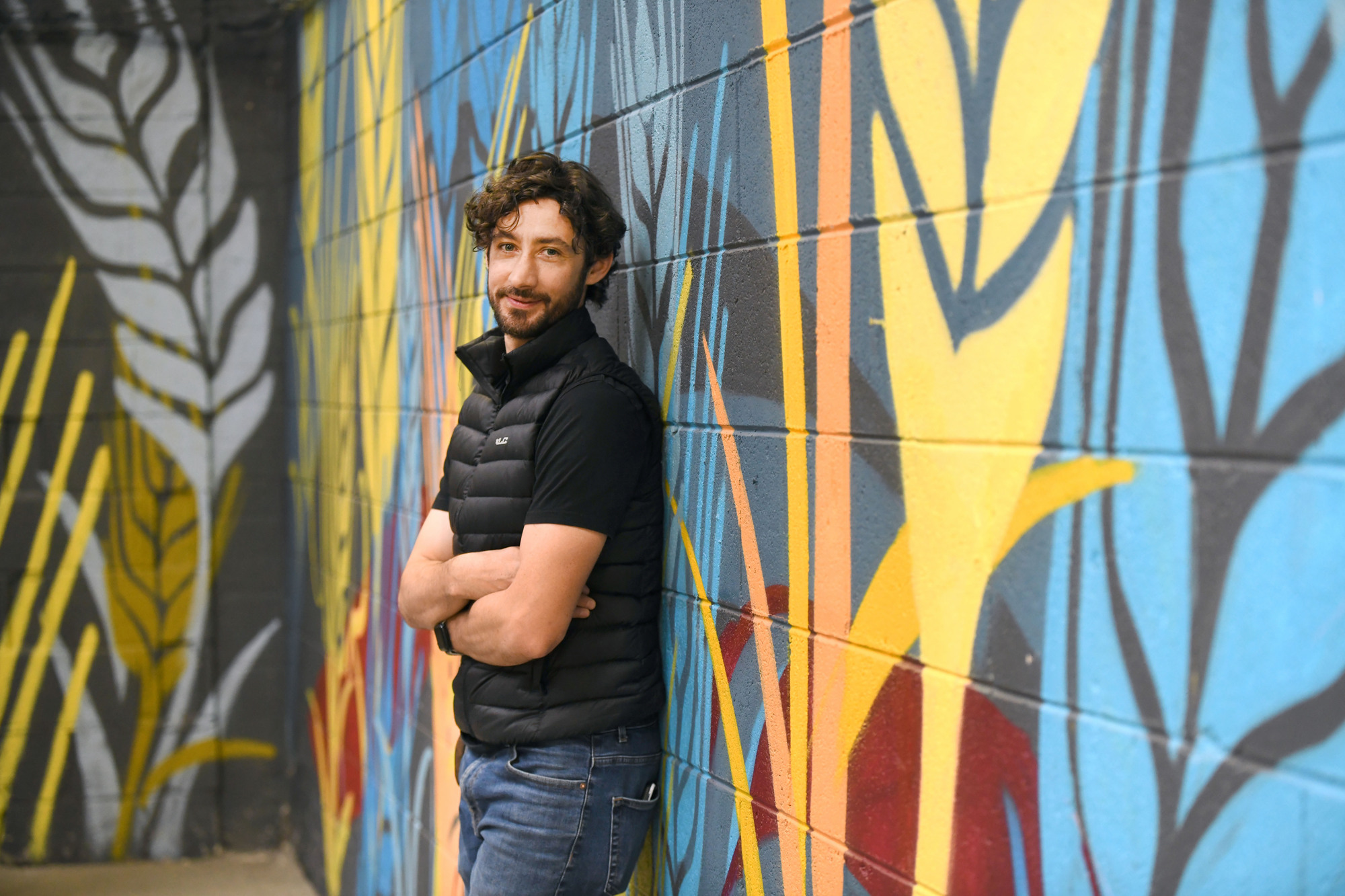
Enda Winters, now a distillery manager with Teelings in Dublin, has fond memories of his time living and working in China. Photo: Moya Nolan
Enda Winters had always wanted to travel to China. He studied mathematics in Trinity, but the lure of Asia was very strong. At the time, there was a visa programme assisting Irish people get work in China which enabled him to get a position in an insurance company in Beijing.
“I was parachuted into the IT department after an induction programme in DCU — I was already learning Chinese and had spent two summers in Taiwan, so I jumped at the chance,” says Winters.

While the actual job was not for him, the China bug was well and truly bitten. Winters returned to Ireland where he met his girlfriend, an American. Visa problems were rearing their heads and they decided to head out to China together.
“I really missed the energy of the place. So, I put out feelers and discovered there was a job going at the Irish embassy. As it happens my flight was delayed but I managed to throw on a suit and rock up to the interview just in time. And I got the job.”
Winters was now employed as the office manager, as an intermediary between the diplomatic staff and the local staff.
“This was my dream job — granted I was not using my mathematical skillsets, but I loved working in the embassy, the ambassador became a good friend and there was a great team working there.”
Winters found his social time was divided between locals and expats, notably Irish expats.
“The GAA is very big in Beijing and I was involved in the GAA football. We travelled around China and Asia in tournaments. I was friends with the Chinese colleagues in the embassy but it was harder to make Chinese friends outside of work.”

Enda’s girlfriend, now his wife, Lauren McCarthy, did not have any Chinese and that meant China wasn’t as big of a passion for her.
“I just love the language and worked really hard at becoming fluent,” says Winters.
Winters stayed at the embassy for three years but a change in ambassador offered him a new opportunity. A friend had launched his own business brewing beer in Beijing, building a microbrewery. Winters had just started home brewing beer and was very interested in the science as well as the taste.
Winters was offered a job to join the company and he jumped in. He also put all his savings into the project. His friend was American with a Chinese wife. They began their business in a tiny bar and Winters undertook a masters in 'Master and Distilling' online.
“It was an amazing time. I got my qualifications and was learning literally on the job — and the business was growing like crazy. We opened new bars, started building a factory, and looked at further distribution.”
Sadly, despite taking on private equity and the initial growth, Covid was largely responsible for killing off the business. Winters lost his savings but is sanguine about the learning experience.
“You know, starting up a business in China is an amazing experience. The sky is the limit, after all China has a billion people in its population. Failing was sore but I had new skills.”
On his return to Ireland, Winters found a job with Teelings as distillery manager in Dublin. All up, he spent 15 years in Asia, mostly in China, which he loved from start to finish.
“It’s a different culture to work in China — one funny difference is that your Chinese colleagues will ask you outright what salary you are on, that does not happen at home.”
Winters is happy to be back in Ireland now; his parents are getting that little bit older and he wants to be around for them.
“But I do miss the food and the communal eating experience. Chinese food is meant to be shared. I don’t think I’ll ever get China out of my system,” says Winters.
Like other Irish people working in China, it almost happened by accident for Brian Lalor. He had studied manufacturing technology in UL, but found the work practice not to his liking. Instead, he decided he wanted to see the world and applied for a one-year visa for Australia.

However, on his way there he stopped off to visit a friend in Indonesia, decided he liked it there and began teaching instead.
Teaching was definitely more appealing to him than manufacturing and he subsequently moved to Vietnam, where he had the opportunity to study education and education leadership.
“Living in Hanoi was super and there were a lot of Irish people there — I was part of a group that set up the Viet Celts and played in many Asian Gaelic Games over the years,” says Lalor.
Later Lalor moved to China in 2014 and has spent the last ten years working as a deputy headmaster in the Xi'an Liangjiang International School in Xi'an, capital of Northwest China's Shaanxi province.
Life is good for Lalor, his American wife and three children. The eldest daughter can speak Chinese easily but while Lalor has mastered Vietnamese and Indonesian, he finds perhaps his age has finally caught up and his Chinese is a bit rusty. He has retired from Gaelic games now too as old sports injuries have called time.
Living in Xi’an, which boasts a population of 10 million, does not have the same Irish expat population enjoyed by other larger hubs such as Shanghai, Dubai or Hong Kong.
“There is a cracking Irish pub here though,” says Lalor. “Xi’an means Western Peace and was once the capital of China during the Tang Dynasty. This city is also famous for the Terracotta Army.”

In place of sports, Lalor is interested in poetry and preaching. He was part of a poetry club, both writing and speaking, and is also involved in the local Christian friendship church.
“I preach sometimes, although it can take a month to actually write a sermon. The audience is fabulous, very multicultural as Xi’an is part of the Belt and Road programme which attracts many international students.”
The weather can be similar to Ireland and the day Lalor is interviewed it is cold and wet, although the province does enjoy warm summers.
“We have a good life here and are busy with the kids in different sports, most football, and also hanging out with their friends. We are not affected by the cost of living and can enjoy a comfortable standard of living. That is not to say that we might not come home at some stage, maybe when the children are of college age,” says Lalor.
Lalor has a mixture of expat and local Chinese friends, but really appreciates the opportunity for education and professional growth.
“I’m the kind of person who believes if it ain’t broke, don’t fix it — we are happy here and may never leave,” he says.
Enda Meade and fellow international educator Brian Lalor were friends in the University of Limerick 22 years ago, indeed they shared rooms at college. Now they are both working in China and met up for the first-time last week since their UL days.
It certainly wasn’t the plan according to Meade. He took off to Spain after college, working for a number of years abroad including in Congo and Australia, before landing in Hangzhou in China where he now works as an international educator teaching the International Baccalaureate (IB) curriculum to grade three students, who are around the eight-year-old mark.

His students are mostly Chinese children with international passports. Their shared language is English which is fortunate for Meade as his Chinese is rudimentary.
Back in UL, he did a degree in European Studies, majoring in French and History, but Asia was not on his radar, at least not initially. When he first moved to Spain originally it was only seen as a temporary move but he enjoyed the language, worked on yachts and bars and eventually did his TEFL certificate which led him into teaching.
He met his Filipino wife while travelling but visas have not been kind to them. During Covid he would not enter the Philippines where she was living and for two years, they had an enforced separation. Ireland has also been slow to grant her a Visa, despite their marriage and 11-year-old son. As a result, they are building in the Philippines and plan to retire there in the future.
In 2011 they moved to China. The breadth of his travels had made him curious about Asia.
“The views of the Western world on China are very different to when living in this country, but here is a very good place to live if you are prepared to make the leap. People are very friendly and helpful. The language is difficult and ordering online can be tricky too — but people will help and are glad to be asked.”
Differences between the Irish and Chinese can be summed up in queue observances which the Chinese do not honour.
Meade is a soccer man which is not as popular as GAA in some parts of China, but his big love is music. He is part of a traditional Irish band with a twist called The Mother Folkers, which is a three-piece folk band who met in Suzhou, China, with a repertoire that also includes Gypsy Jazz and popular music.

“We just released our album — Ballads, Bottles & Blackouts — and played gigs in Singapore, but it is hard to get together as the lead singer lives in Sweden and the fiddle player lives in Shanghai,” says Meade.
Meade also plays in a band with some of his fellow teachers where he plays percussion, guitar and piano.
“There is not so much live music here in Hangzhou — but back in Shanghai there were lots including local Chinese bands.”
He is also signed up for a mini World Cup next month in soccer, so he’ll wear the green, white and orange for that. And he loves doing half marathons.
“We are very happy living here. For one thing it is so safe. My wife could walk home at 2am in the morning and she’d be totally safe. The local Chinese are very patient – even with my Athlone-accented attempts at Chinese.”
Another plus point is the amazing and inexpensive public transport systems. “The high-speed trains travel at 300km per hour.” Finally, at a Patrick’s Day celebration some years ago, Meade sported a green hat. This created huge merriment in his friends and others — as wearing a green hat means that your partner is unfaithful.
“I didn’t make that mistake again — no green hats for me,” says Meade.