How to choose the best and most energy-efficient washing machine 
Looking for the ultimate eco-washer that will save you money? Here's your laundry list for a cleaner planet — and spotless garments
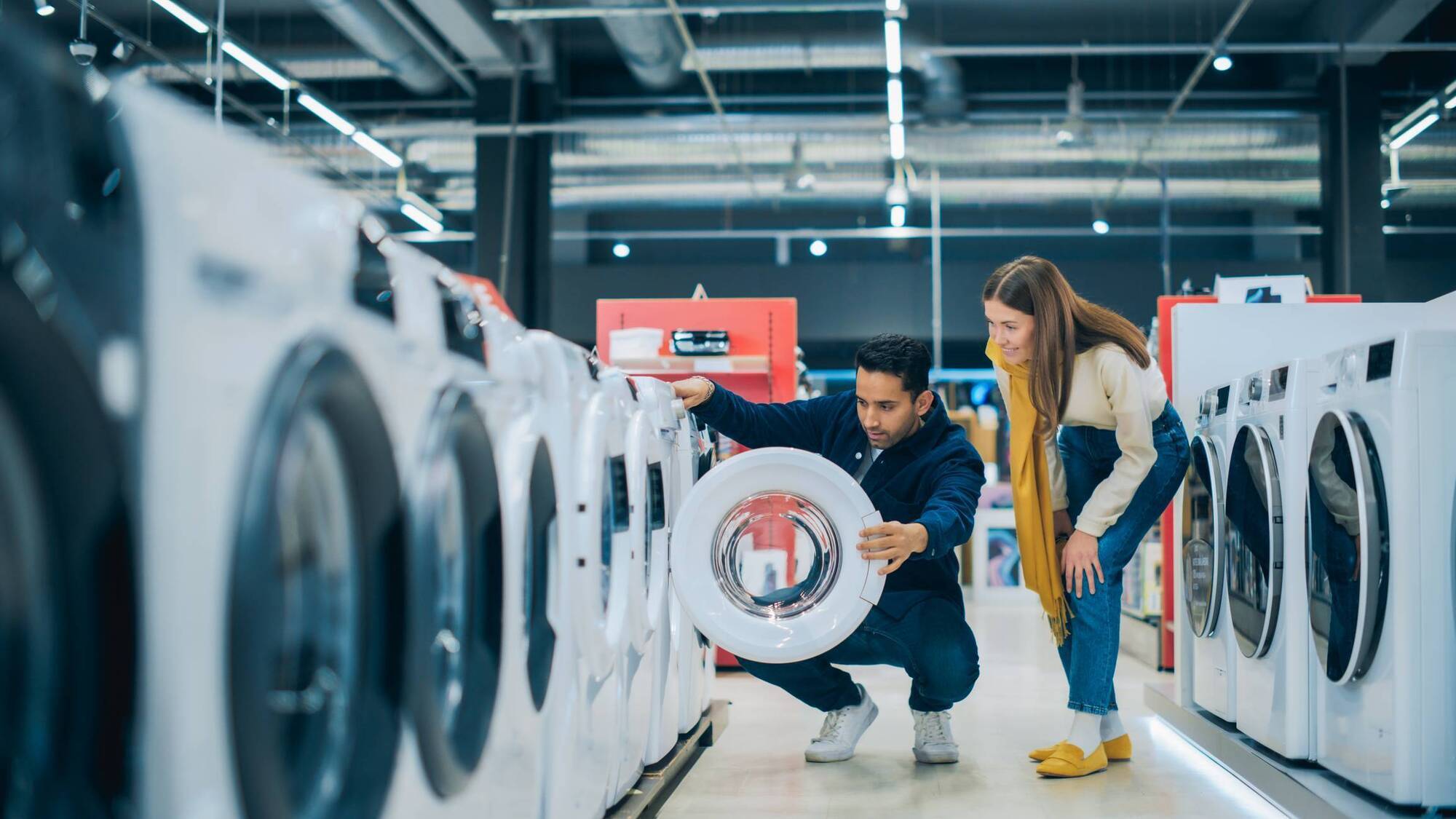
When choosing a new washing machine, you can look forward to a load of energy-saving technology at your fingertips once you know what to look for. File picture

When choosing a new washing machine, you can look forward to a load of energy-saving technology at your fingertips once you know what to look for. File picture

As those Black Friday and Christmas/New Year sales loom, this is the perfect time to start researching large appliances if you’re fitting out a home or replacing flagging white goods. When choosing a new washing machine, you can look forward to energy-saving technology at your fingertips once you know what to look for.

First of all, consider the EU Energy Label. This will carry a QR code, and the rating will be expressed on the latest scale of A-G. The kWh demand shown on the label is based on 100 cycles, so you can just divide the kWh figure by 100 to get an idea of what the machine would use for an Eco 40-60 cycle.

What’s an Eco 40-60 cycle? That’s a regulatory name; it doesn’t mean we are running our eco-cycles at 60C or even 40C. In reality, a modern, energy-efficient washing machine will have an eco-cycle running at 30C or even 20C.

The kWh per 100 cycles given on the energy label is just a weighted average. Happily, you may find your washing machine does even better on its eco-cycle than its EU Energy Label suggests.

Machines that carried the older EU labels were packed with “A++” ratings, with different performance in kWh based on the old system of 220 washes. I regularly still find washing machines online from major retailers that should be flagged with A-G ratings, but continue to use these extinct ratings from the old EU Energy Label pre-March 2021.

This discrepancy, deliberately given or not, can be confusing at best and misleading at worst for a buyer. It’s impossible to perfectly convert the old rating to the new one, as the metrics surrounding the number of cycles, the water usage and eco-settings have changed. 

Follow up using the full model number on an “A+” rated machine to get that correct EU Energy Label. An AI-managed Google search is very useful for doing this, or use the QR code to bypass the retailer’s ancient description to go straight to the manufacturer’s technical specifications.

Looking at our new EU Energy Label, a “B” energy rating in a 10kg machine on the up-to-date A-G scale is not a “B” rating in a 7kg machine on the A-G scale. Washing machines on the A-G scale are rated in their class using their capacity (7kg, 8kg, and so on). The larger machine, despite carrying the same letter rating, will likely use more water and power than the smaller one on a comparable Eco 40-60 cycle.

Check the kWhs per 100 cycles. When shopping for machines with an identical kg capacity, also go straight to the kWh per 100 cycles, as this will give you more granular information than the A-G bands. Don’t buy a smaller machine than you need. Running it repeatedly to cover your loads will just blow through imagined savings. 8kg is perfect for a typical family of three to four, with 9kg-10kg machines a better choice for a larger household.

With our increasing use of dedicated drying rooms, outdoor lines, long cycle heat-pump dryers (two to three hours) and dehumidifiers, the drier our laundry comes out of the machine, the better. Look for machines with at least a 1400rpm spin speed to wring out as much water as possible. Pushing up the RPMs uses mechanics rather than heat, only very slightly increasing the energy demand. 

Now, while we’re looking at that kWh demand per 100 cycles for most machines, keep in mind that whenever you change the settings on the machine, there’s likely an energy consequence coming. Let’s face it. We can’t be a dedicated eco-warrior of the laundry room every day. 

Eco settings work because they use extended time over heat to allow detergents to break down dirt and stains. Half-loads and super-quick settings are notorious for increasing energy use, but these settings are widely used in the scramble of typical family life with teens looking for their best jeans in less than the five-to-seven hours of a truly environmentally friendly wash and separate dry. 

Don’t defer to super-quick cycles for delicate clothes. The increased agitation in the drum and high spin speeds can be too aggressive in the haste to deliver — potentially damaging fragile garments.

Some brands pride themselves on delivering energy efficiency across these more problematic cycles by weighing the load and reducing the water in the drum (that must be heated to do the load). Heating water can account for 80% or more of the power needed to run a cycle. We want a machine that optimises both heat and water to match individual loads for even energy-intensive cycle choices (preferably by just pushing one button).

Dig a little deeper into the energy demands of non-eco-cycles given by the entire spec sheet and sensor performance that can save you money outside the Eco 40-60 the machine was actually rated on. Machines that work with you, automatically adjusting water and time, are a winner for real life. 

This resource tracking technology extends to budget brands like Beko and Hisense, so don’t presume it’s confined to the top-priced German machines.

Money-saving

Another way to save money on running your next machine is to use a machine with a 20-minute steam cycle where you don’t have to fully wash clothes at all. A steam-refresh feature (LG, Beko, Hotpoint and AEG have these models) injects hot steam into the drum and gently tumbles the clothes, killing odour-causing bacteria and teasing out the fibres. It’s very useful for perking up work suits that are machine washable, jeans and outerwear between full washes.

The addition of steam to a traditional wash (termed steam-hygiene) has many benefits, but it’s not generally an inexpensive cycle. However, it can reduce potential allergens, bacteria and dust mites in your load without using super high temperatures that can stress materials. 

Steam also relaxes materials, reducing wrinkling and the need for ironing. If a machine has a steam-refresh setting, it will usually also have a steam-hygiene capability to use on wet washes.

There’s no point buying new technology and then blithely ignoring its potential. The EcoDesign stipulation for Eco 40-60 has been compulsory since 2021, and in practice most machines are engineered to handle a 20C wash with the right detergent. 

Now, there are some loads that should be washed at relatively hot temperatures, including bedding — but for just about everything else, try a cool wash on an eco-setting to get the most efficient performance from your machine.

At least once a month, do a 60C cycle to clean the drum, deploying either a commercial product to clean the system right through to the pipes like Calgon, or a dose of your standard detergent. Once a week, wipe out the seals of any muck with a hot, soapy cloth, and check the filters for any debris (yes, a washing machine has a filter — establish its location and handling using your instruction PDF downloaded from the internet if you’ve binned the manual).

Finally, I would urge you not to wash the joy out of shopping for a washing machine by being neurotic about kWhs and eco smarts. Today’s washing machine, whether it costs €350 or €1,500, is nothing short of a feature-rich, design wonder.

The small kWh difference between a “B” rated machine and a “C” rated machine in terms of energy efficiency is not worth worrying about (looking at the kWh per 100 loads, you might find a low “B” against a high-scoring “C”). Examine the machine overall for all its features, balance this against your lifestyle demands, and buy the one that you think handles well, has clear build quality, looks good and that you like the best.

More in this section

Property & Home

Newsletter

Sign up for our weekly update on residential property and planning news as well the latest trends in homes and gardens.

Cookie Policy Privacy Policy Brand Safety FAQ Help Contact Us Terms and Conditions

© Examiner Echo Group Limited