The spare room in my tiny house is my office, guest room, music studio and hobby space
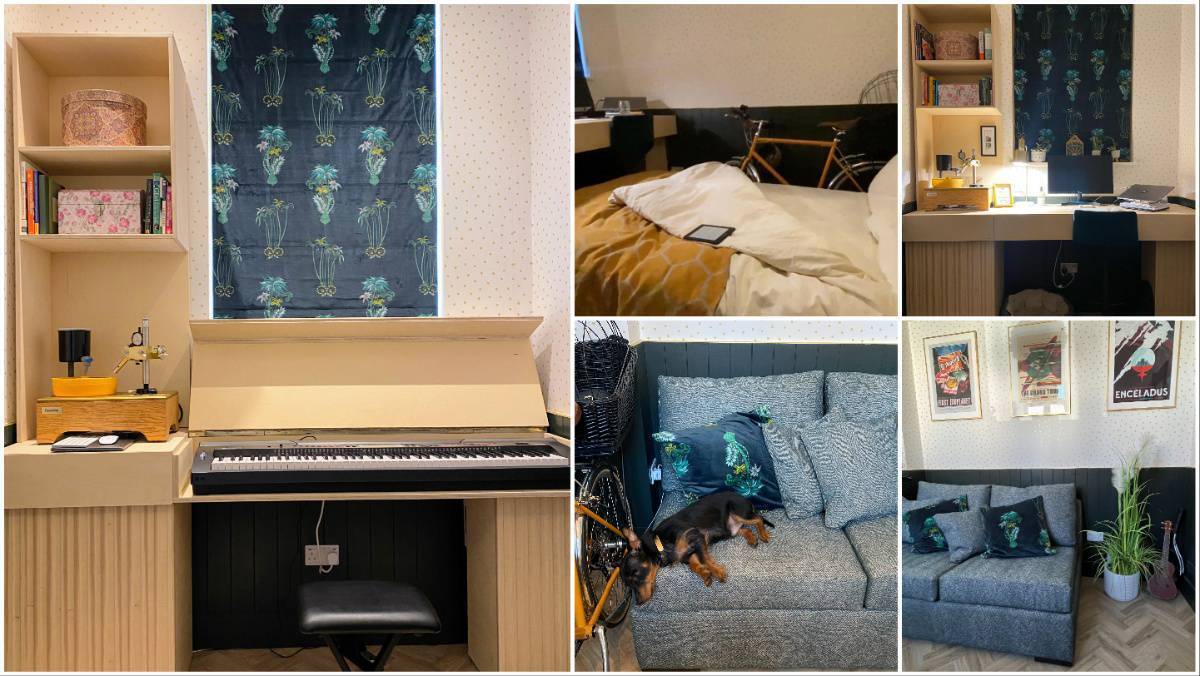
Jennifer Sheahan's hard-working spare room.
I am an awful divil for a hobby. I abandon most of them, but I love trying new things, and some of them stick. I played every sport as a child, and a few instruments, and sang, and danced, and tried acting, and at one point took up flying trapeze as a teenager. I am a restless creature, and I like to have entertainment at my disposal.
So when I was designing my spare room, I needed to make it work hard to satisfy the needs of my myriad hobbies. Currently, it does four jobs. By day, it is an office.
During frequent weekends, it is a spare room to host friends or family. In the evenings, it often turns into a piano room. And when I have spare time, it is a lapidary studio, my most enduring and eccentric hobby where I cut and polish gemstones.
My point is, hobbies are an important part of life. They’re good for you. And if you have one (or some), you should spend time designing the right space to pursue it.
Here are the important lessons I have learned from designing my own room and from designing hobby spaces for clients in their existing homes.
Most hobbies have a set-up tax — the amount of faff between deciding to do the thing and actually doing the thing.
If your sewing machine lives in the attic and the fabric lives under the bed and the good scissors have migrated to the kitchen (a punishable offence), your tax is twenty minutes at either end. The effort to go and sew something is too high. You will watch telly instead.
So the important design question is: how fast can I start, and how fast can I stop? Anything that lowers the tax — a fold-down surface, a trolley on wheels, a drawer that holds the whole kit together rather than scattered across three rooms — is a worthwhile investment. Design for easy set-up and take-down.
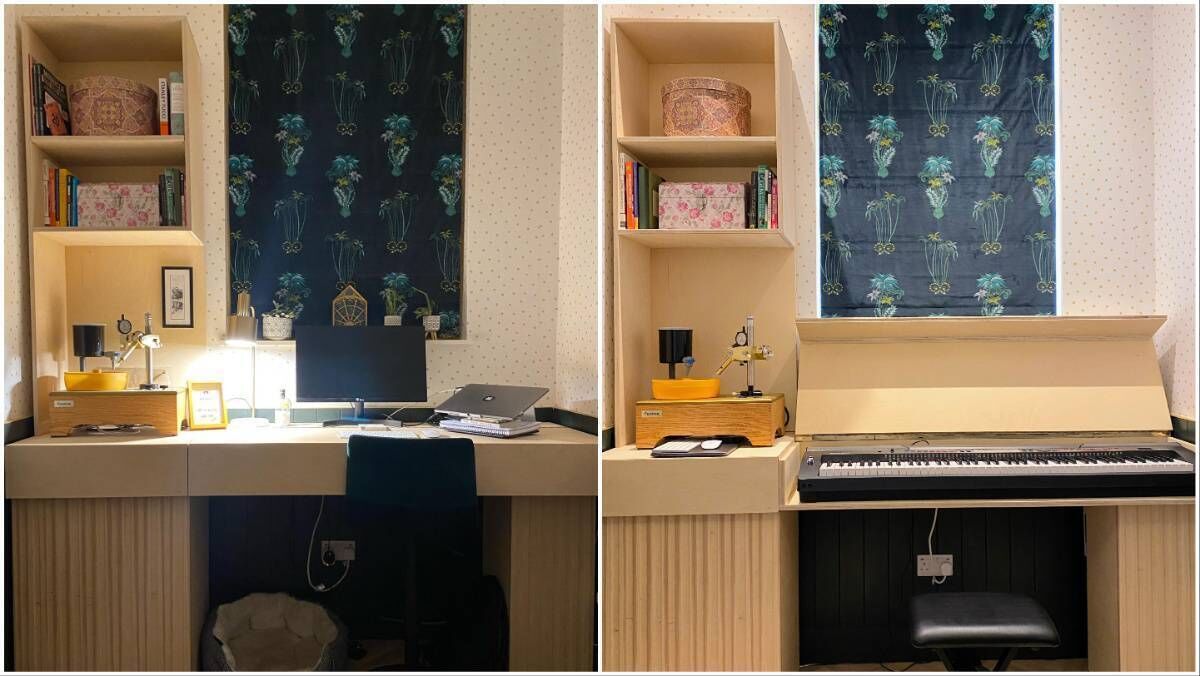
The heart of my room is a desk that Borien Studio built for me. It is a bit higher than a standard desk.
One corner is designed to fit my lapidary machine, with space to move around and assess angles, and a hinged lamp. It drains through a length of rubber tubing into a bucket on the floor when needed. (Cutting stone makes a slurry of water and grit.)
The surface of the desk is a hinged lid, and under the lid is my 88-key electric piano. It comes up when I want it and disappears when I do not. During the day, the lid is closed and holds my laptop and stationery.
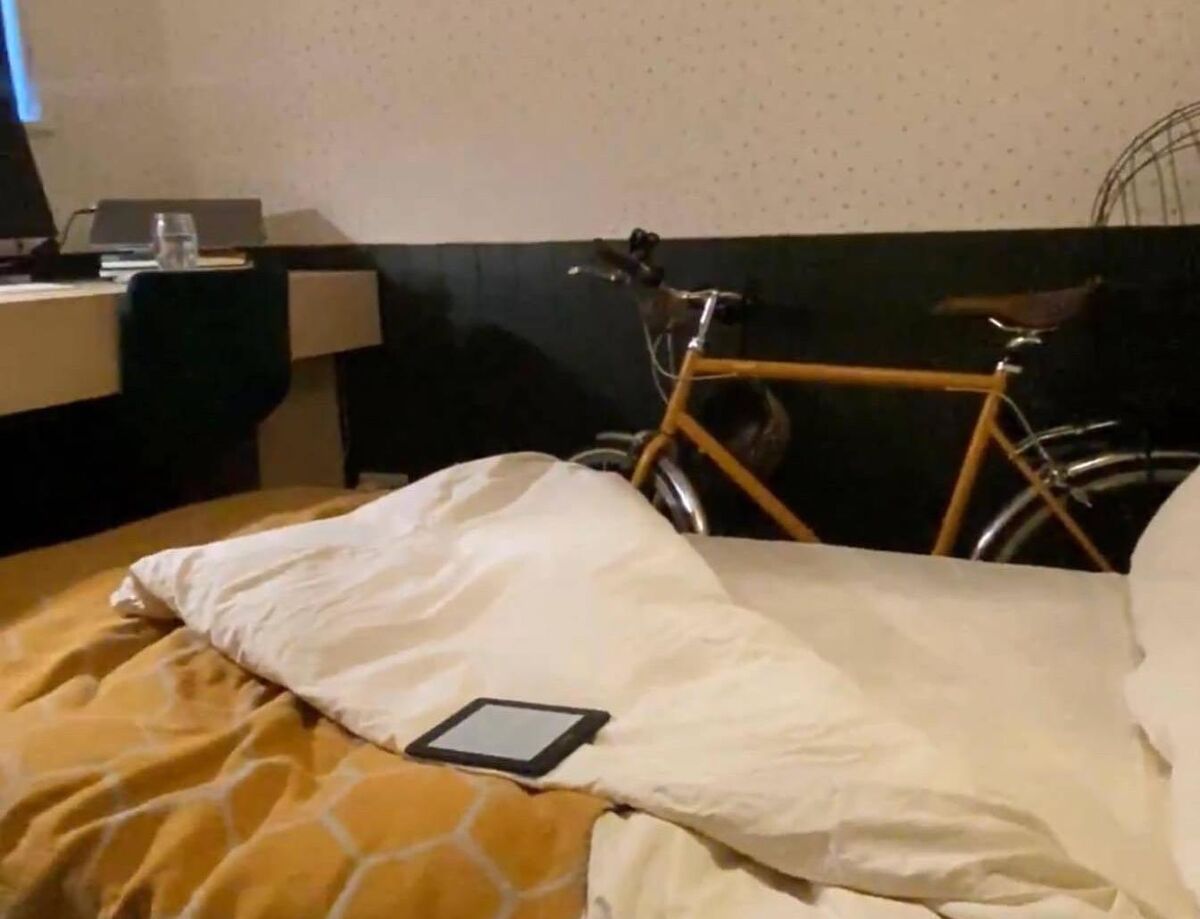
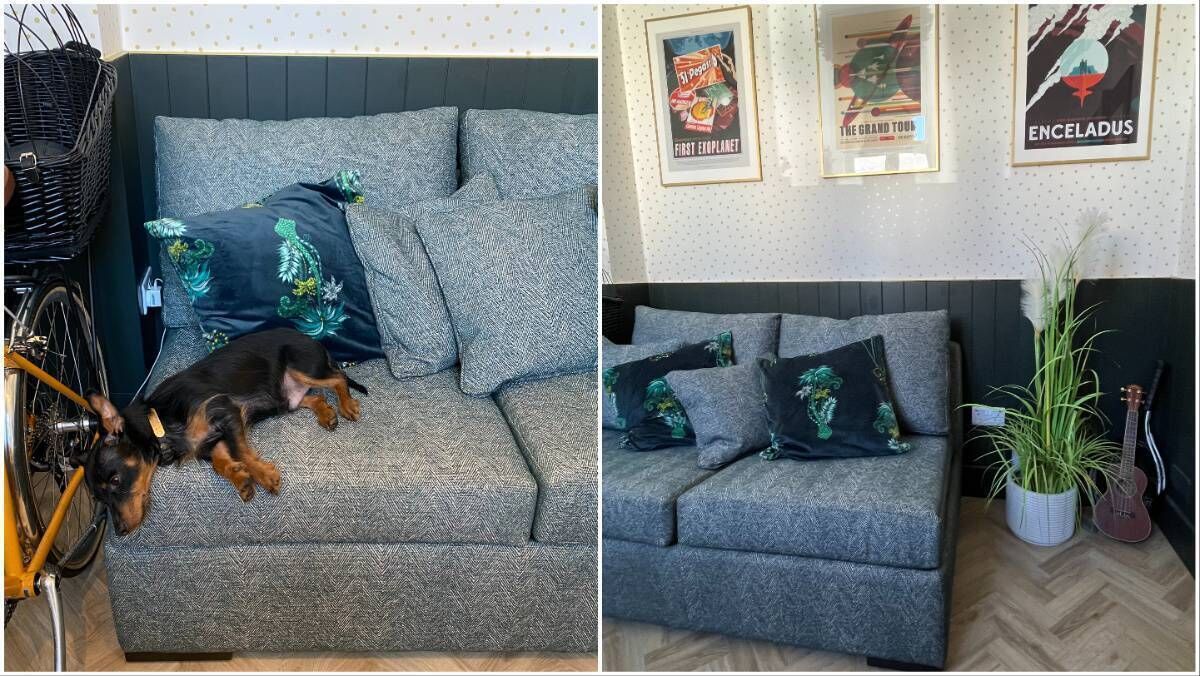
The bed is a pull-out bed that spends most of the year being a couch. That is the correct ratio. A guest bed that dominates a room you use every day is taking up too much space.
The desk is a dream. The sofa-bed is wonderfully comfortable (the Klaus from Finline Furniture). I love the decor. The pain for me was finding a chair.
My desk is a little higher than standard, so finding one that was comfortable, well made and not an eyesore was a project. I got there eventually, but it took months of searching.
Office chairs seem to come in four flavours: cheap and uncomfortable; comfortable and ugly; monstrosities that look like a Formula One seat; or beautiful ergonomic sculptures that cost more than the desk.
Don’t cheap out to the detriment of your health; prepare to search and invest if you’re going to be using it regularly.
Not everyone has a spare room, and you do not necessarily need one. Under the stairs is the classic — deep enough for a proper worktop if you are willing to give up the storage space.
Under the eaves in an attic conversion is dead space in terms of headroom but perfectly good for anything you do sitting down: sewing, painting, model-making, jewellery. Lapidary.
A wardrobe office can be super. You take a wardrobe or an alcove press, fit a worktop across it at desk height, put a socket in, add a shelf or two above, and close the doors at the end of the day.
The office disappears, visually and emotionally. For anyone working from a bedroom, or for a hobby that involves a lot of half-finished things, being able to shut a door on it is valuable. Landings, wide hallways, and the space beneath a window are all great spots too.
Should you have the luxury, plan out the utilities that your hobby actually needs. Sockets are usually necessary, and put in more of them than you think. Water, if you are doing anything wet — pottery, lapidary, printmaking — and a drainage plan, because clay and stone grit will destroy a sink trap.
Ventilation for anything involving solvents, resins, or fumes, with an open window as the absolute minimum. Storage and the ability to hide things away if needed are key. Then layer in decor.
I bang on constantly about warm bulbs and cosy lighting. I stand over that everywhere except here.
Detail work needs different light. If you are matching thread colours, judging a glaze, or trying to tell whether a stone is polished or just wet, warm light can throw you off.
What you want directly over the work surface is a cooler, brighter task light with a high colour rendering index — CRI 90 or above, usually printed on the box — while the rest of the room stays warm and comfortable. A good adjustable lamp is usually the right answer.
Music rooms in terraces and semi-ds are an exercise in diplomacy. It’s hard to fully soundproof a room. What you can do is dampen the noise: a rug with a thick underlay, heavy curtains, a full bookcase against the party wall, upholstered furniture rather than hard surfaces, all do a good job of absorbing sound. You can add acoustic panelling and even sound-absorbing insulation if you’re feeling generous.
Electric instruments with headphones solve the problem entirely, which is a large part of why my piano is electric. Otherwise, be considerate about your timings.

CONNECT WITH US TODAY



Be the first to know the latest news and updates