Parts of Cork City could be submerged by end of the century, experts warn
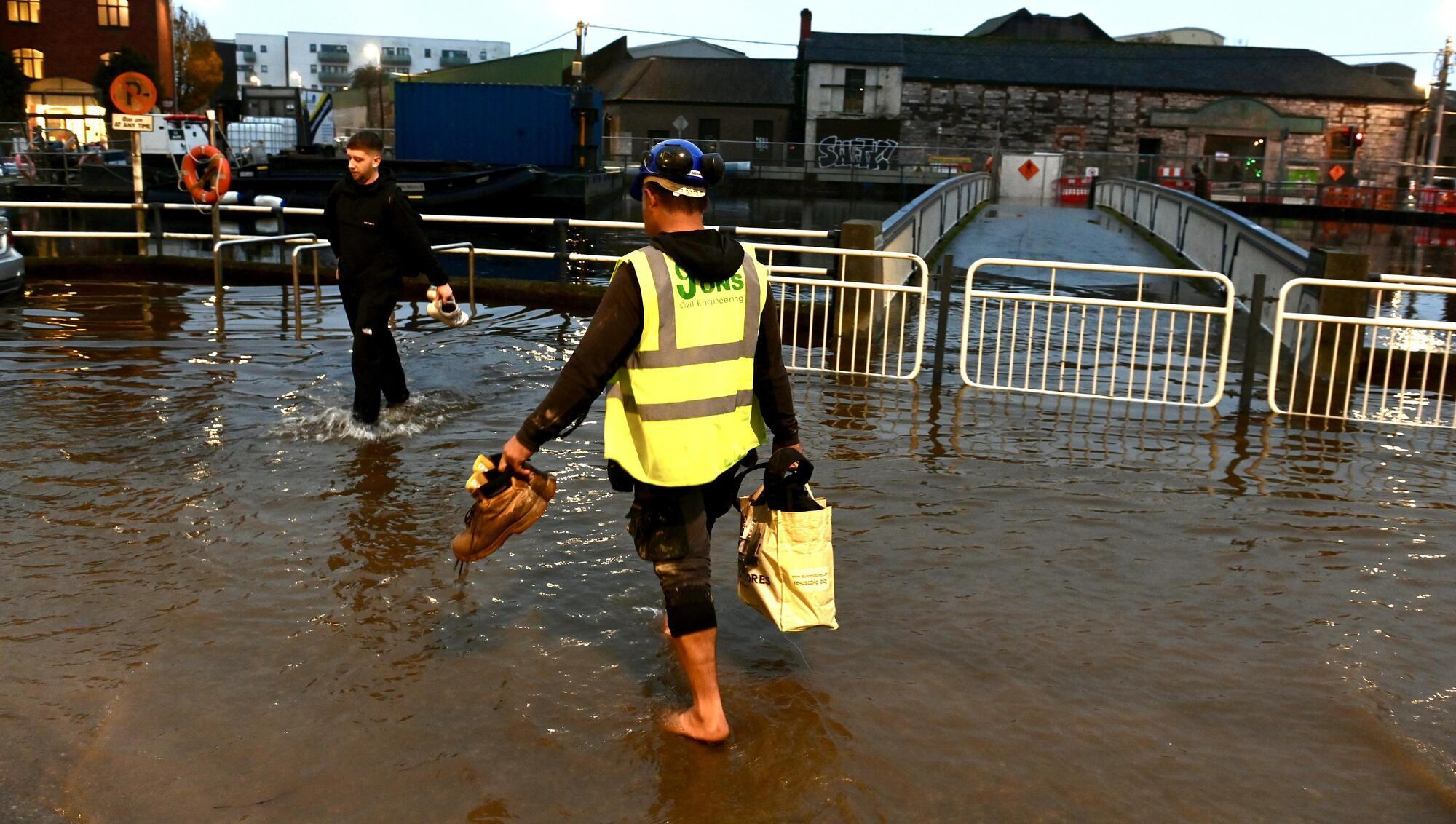
Pedestrians cross Trinity Bridge during tidal flooding at high tide at Morrison’s Island, Cork City. File picture: Larry Cummins
Current rates of sea level rise across the country are the highest in 100 years, as experts warn that parts of Cork City could be submerged by the end of the century.
New research from the University of Maynooth found that Ireland will “not escape” these increases due to “rising globally man-made climate change" that continues at a breakneck pace in historical terms.
The study combined tide-gauge records from six locations, including newly digitised historical records from Cork, Tarbert in Kerry, and Galway.
It used measurements dating back to 1925 to bring a reconstruction of a century of sea-level change across the island.
Lead author of the study, Patrick McLoughlin, said that this reconstruction shows that by the end of the century, in the next 50-100 years, “you could be easily looking at a rate of sea level rise of one metre or more in places like Tarbert, Co Kerry or Cork".
Mr McLoughlin said it was certain that “parts of Cork City would be under water.”
“You see these once-off floods about shops and supermarkets being flooded; that would become very normal practice and even worse than that, most low-lying coastal areas, especially near riverine environments, could actually see a significant submergence of water in city areas,” he told the .
“The idea of the city being completely submerged underwater would be an exaggeration, but you would see serious coastal flooding to businesses, homes, and infrastructure in Cork City and nearby areas in Cork,” Mr McLoughlin said.
The study found that the lowest rate of sea level rise in a century was in Belfast.
However, the highest was recorded in Tarbert, Co Kerry — which is situated at the mouth of the River Shannon — at 1.4mm per year.
Read More
“While this may not seem significant, over time — certainly since the 1970s, when there was an acceleration in global warming — we believed that has ramped up,” Mr McLoughlin said.
He said between the 1920s and 1970s, while it could have been a half millimetre rise per year, now it “is in the order of 1.4mm.”
“It has more than doubled, and in the terms of the next century, towards the end of the century, in the next 50 to 100 years, you could be looking easily at a rate of sea level rise of one metre or more in some of these regions,” Mr McLoughlin added.
The researcher added that it was important to give prominence to villages and towns along the west coast when it comes to protecting communities from coastal erosion.
“Often, we find a lot of literature which talks about putting infrastructure in important locations like Dublin.
“And while that’s important because they are city areas, for places like Kerry, [our research] shows the possibility that flooding may be a greater risk in these areas,” he added.
Mr McLoughlin added that more research needs to be put in place for these areas, as well as “planning implementation for potential future flooding scenarios".
"Farmers who do not want their land flooded should be given importance, but arguably the greater importance should be to the actual coastal settlements, villages and towns, as they could be most at risk there,” Mr McLoughlin said.
CLIMATE & SUSTAINABILITY HUB
CONNECT WITH US TODAY



Be the first to know the latest news and updates