Home Q&A: I hate the radiator in my new house. Should I replace it or disguise it?
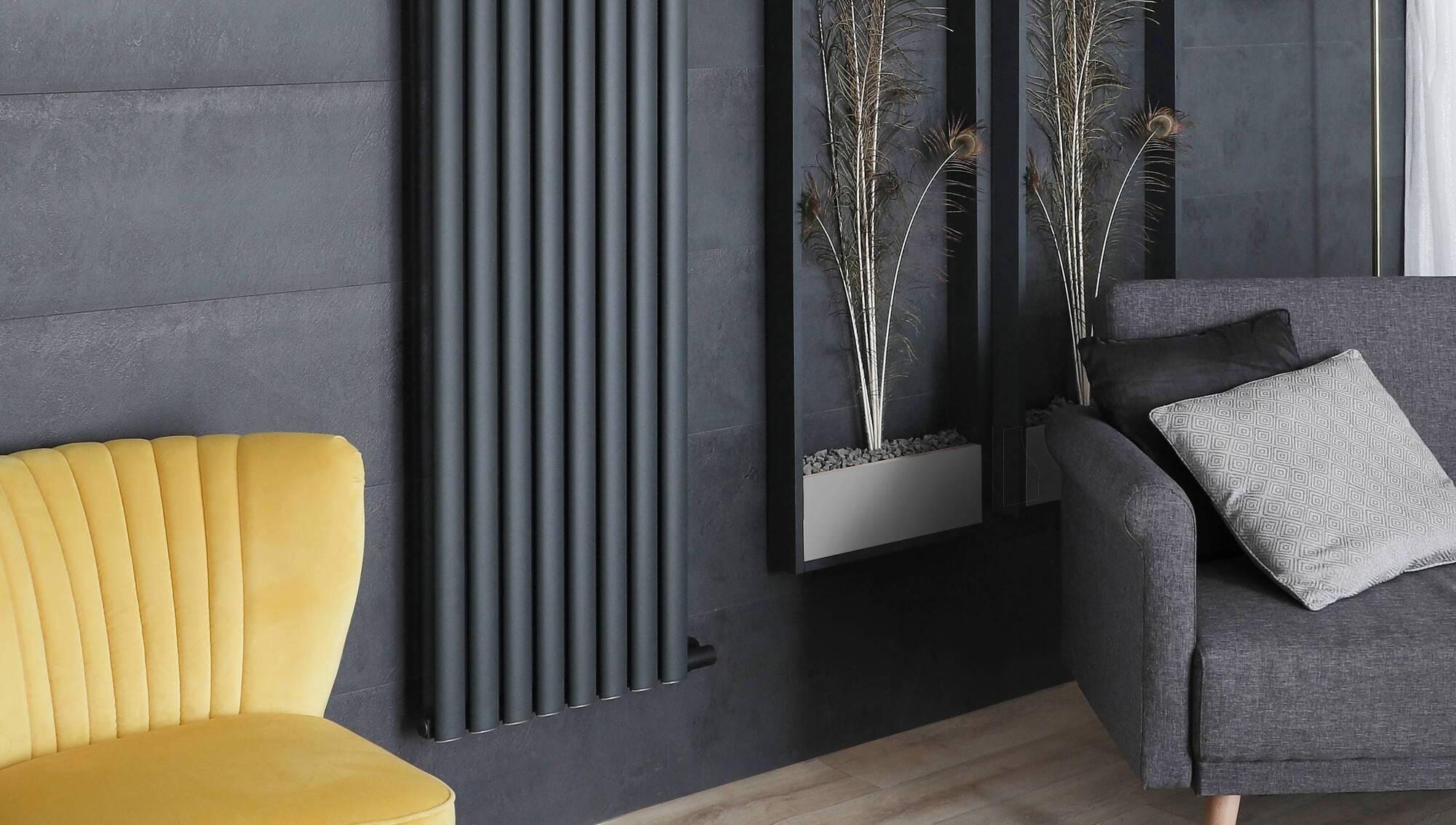
Here a modern radiator is balanced against some artful panelling, visually earning the space. The tonal blue gives it a sense of belonging. Milano Aruba in Graphite from €296, Best Heating.
The radiator is an emitter for a loop of the central heating and is carefully sized to the demands of the space.
Physical sizing (like-for-like) starts at the pipe centres. If the pipe centres and their valves match the new radiator, you or your plumber can isolate just that radiator and easily replace it with a new one.
That said, older valves are best replaced if they are eight years or older, and this is a perfect time to introduce a thermostatic radiator valve if you don’t have one here.
Valves come in a range of finishes and styles, and we can add pipe covers and floor collars for a bit of decorating dash.
If the existing pipe centres coming up from the floor and the position of the valves do not match the dimensions of your new radiator, your plumber can do two things. They can either manipulate the copper in or out to meet the slightly new position, or they can go under the floor to keep the pipe straight and make this change invisible.
The latter solution is invasive and time-consuming, as it involves going into the finished floor of tile/wood flooring/floor-boards under carpet.
Chasing into concrete? Pricey. If you need new valves, the job becomes more complex, with a full system drain and refill. For me, once the valves need a swap-out, it’s a DIY don’t. If the radiator pipes run along the floor, they can be extended to ensure the valves meet a smaller radiator width or can be cut back for a larger one.
If you are unsure, have your plumber check the spec of the radiator to get its heat capacity and size established before you buy. Some oddly sized old rads may not have millimetre equivalents. I have read posters on social media whinging long and loud about a small swan -eck bend to a piece of copper pipe a few centimetres off the floor, huddled by a skirting board. Seriously? I have a couple of these, and they are artful.
Extender tails attached to the valves are interrupting visually, it’s true. Height-wise, the new radiator should be hung at least 100mm off the floor to allow air to sweep under the panel. The correct bracket for that radiator will set it at the right distance from the wall.
I believe in the survival of excellence, and that includes our trades. Unless you’re a warrior of PTFE tape, radiator refills, bleeds, chemical inhibitors, and resetting the boiler pressure — don’t DIY a radiator change that involves pipe manipulations and valve changes. If the match is off by 20mm or more, hire the pro.
When buying radiators, we can use a British Thermal Unit (BTU) calculator to work out what the space requires (many larger radiator suppliers offer one online). You tap in the cubic metres of the room and multiply it by a figure based on the insulation levels of the room. The multiplier for a BER of B2 or better is 130, and 150 would cover a C rating. That’s then balanced against the output of other radiators and/or heat sources.
The BTU figure for the radiator is then sized slightly up. Yep, a callused, experienced plumber is a better calculator than the one on Stelrad.com.
If you’re replacing a single panel radiator, a double-panel could potentially double its output — a real opportunity here, with no disruption changes if the pipe-centre/valve positions are right.
If you live in a timber-frame home, a heavy radiator must be well supported, with fixings to the brackets reaching through the plasterboard to the studs. Not sure what you’re doing? P-l-u-m-b-e-r!
Deep-energy refit with new radiators required? Lean into a heating engineer and/or appropriately experienced, reputable plumber working with your retrofit squad. Any plumber should carry a National Craft Certificate (QQI Level 6), be tax compliant and carry full insurance. Construction Industry Registration (CRI) is not obligatory as yet.
If the radiator is working well and free of rust and corrosion, we could cheer it with paint. Mattress styles are the acknowledged fuglies of the radiator world. I don’t mind them as it’s all BTUs to me once they are painted pure white. Cloaked in one colour (the wall/the radiator/ the skirting) — the radiator’s dodgy design will recede. This can be done in a dead-flat matt, or we can dial the radiator up dimensionally with a gloss finish.
Finned radiators against brick or stone walls are modern classics delivering texture and visual rhythm, and here a contrasting paint will showcase their feted industrial engineering.
We can use any one of a vast range of solvent and water-based products (emulsions, acrylic, gloss and multi-surface products). However, the surface of a radiator becomes extremely hot at regular intervals for months.
Radiator paint is formulated to allow that heat to convect uninterrupted by the new paint surface without any colour change, peeling or flaking. Thick creamy paint in two or three coats will be insulating, and very slightly inhibit the heat emitted from your radiator. It’s generally a negligible difference, but now you know.
Metallic paint, not dedicated to use with radiators, can slash the output by as much as 20%, and this is equally true of chrome, steel or bronzed finishes. With new radiators, compare the output between colours, finishes and designs in the same sizes. The difference between the colour choices and the emissivity of the radiator is down to 1%-3% in most cases. Nothing to sweat about.
If you’re buying new or reconditioned radiators, see what’s on offer from the supplier. Many carry a massive range of RAL colours for an extra spend. The factory finish spray-application may cost more, but it should be flawless.
If you adore that Bundy Loop vintage beauty or vertical dandies, a colour that sits up against another wall colour in a tonal or completely contrasting look will really elevate it.
You can submerge a really fantastic rad in a collection of artwork (nothing too fragile, too close, please). We expect to see radiators in white, slate and bruised black colours, but see what raises the temperature for you.
Radiator covers? Every radiator cover known to mankind reduces the heat output to the room to some extent. The clunky, relatively heavy frame of the cover slows and disrupts the flow of warm air, which would otherwise go up close to the wall, cross the room and ceiling and drop down as it cools.
The cabinet itself also ingests heat in its materials. A useful shelf raised on high legs, set around 150mm over the top edge of the radiator, is a much better choice in a hall.
If you do decide to go with a cover, don’t shroud the thermostatic radiator valve. Let it jut out where it can read the temperature near the radiator.
- Got a question for our Home team? Email home@examiner.ie
CONNECT WITH US TODAY



Be the first to know the latest news and updates