Jennifer Sheahan: How to ensure your renovation goes smoothly
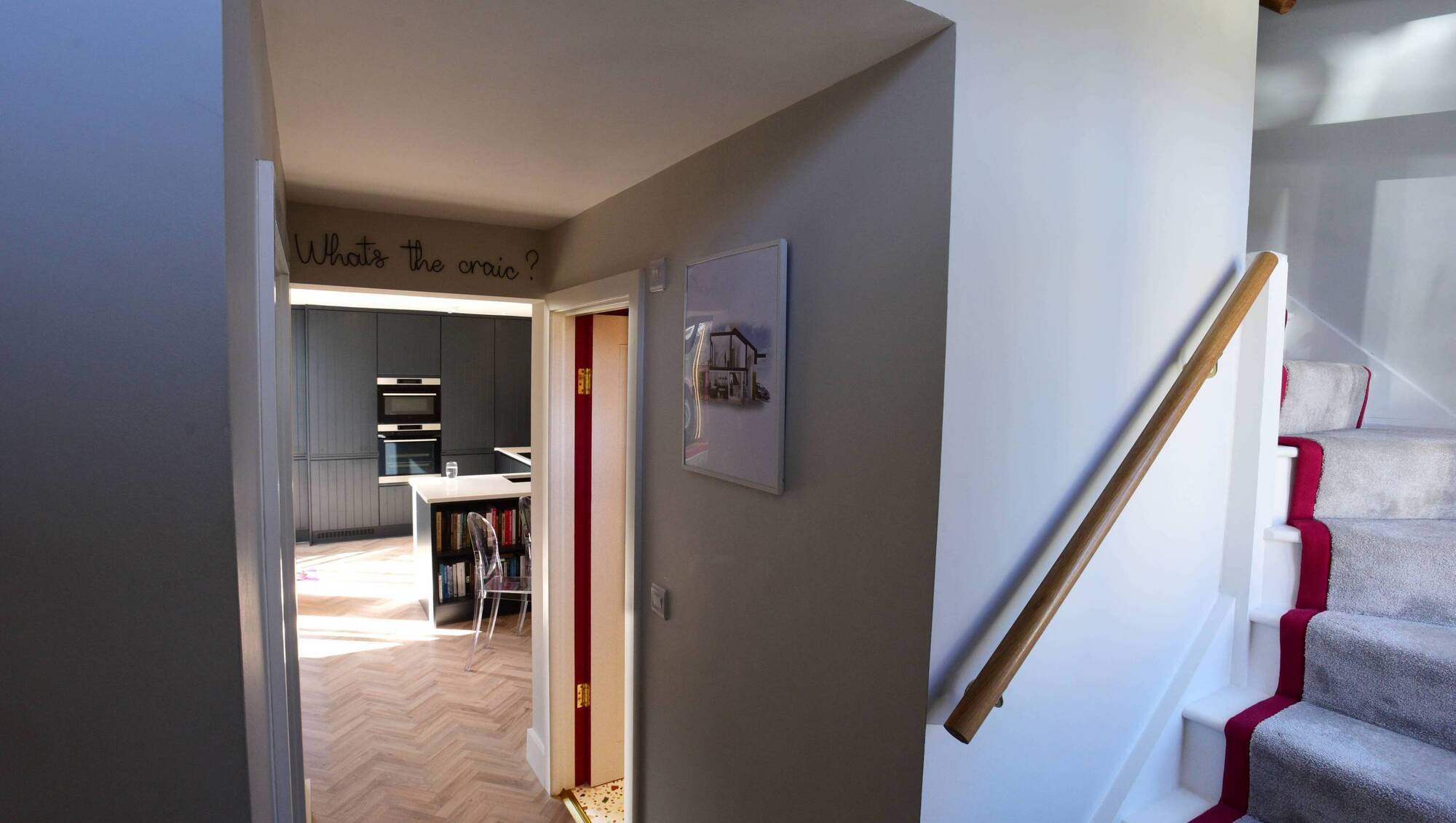
Inside the hall door of Jennifer Sheahan's home in Rathmines: Don't over-purchase paint, warns Jennifer . Picture: Moya Nolan
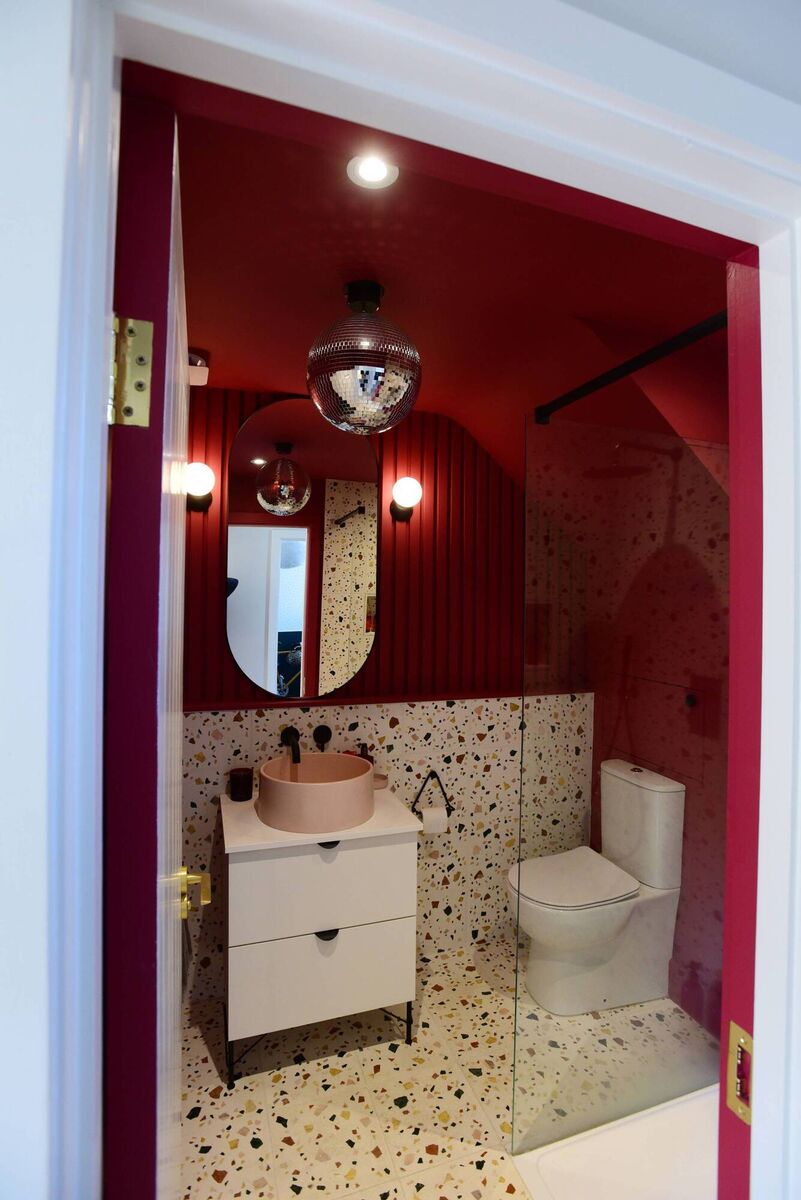
I feel like I did a lot of things right in my home. I put a lot of planning and thought into my renovation, and I love the outcome. Except this one little ramp in my downstairs bathroom. It drives me nuts. It’s because the terrazzo tiles I chose are very thick, much thicker than the LVT in the adjoining hallway.
I chose these tiles late, so my builder did not get a chance to level the floors accordingly. He improvised and installed a sloped transition strip, which works fine. In fact, even my robot vacuum can traverse it with ease, so I shouldn’t really be complaining.
That said, if I were renovating again, I would know this time that flooring thickness should be agreed early to avoid these level differences. Now that I write and talk about such things for a living, I know so much more than I did when I was planning this renovation seven years ago. Some of this is through renovating clients’ homes, and some comes from researching and talking about renovations — including on Rip It Up: The Renovations Podcast, which I co-host with Kate O’Driscoll (@victorianrathmines on Instagram).
We release new episodes weekly, and recently did a series where we interviewed the best tradespeople we knew and asked them what they wish their clients knew to make the whole process run more smoothly. We spoke to a builder, an electrician, a plumber, a kitchen designer, and a paint expert. You can listen back for all the details, wherever you get your podcasts, and read on to discover their top tips.
Renovating is exciting, and our tendency is to jump straight to aesthetics, because there are so many beautiful inspiration images out there. But your tradespeople don’t really care what your home is going to look like. But they do need to know what’s going where.
With my flooring example — your builder doesn’t need to know the final colour or style, but it does help to know what type of flooring you will be getting. Your plumber doesn’t need to know the finish of your taps, but they do need to know whether they will be wall-mounted or sink-mounted.
Your electrician doesn’t care what your bedside lights will look like, but they do need to know whether they will be wall-lights, and how high you want them to be, and where you want the switches to go.
All of your tradespeople want you to be aware of what items have the longest lead times. If you don’t order your kitchen on time, for example, it can hold up the entire project and throw everyone’s schedule off.
Kitchens can average 12 weeks or more, and so you need to have the layout locked down early. You can tweak smaller decisions such as colours and drawer inserts later.
Every tradesperson we interviewed told us to spend money on the skeleton — the things that are hard to change.
Windows, doors, flooring, insulation, layout — invest here, and if budget is tight, save on decorative items such as furniture that you can more easily upgrade later.
Our builder, Jason Doyle, gave an answer that I hadn’t thought of — he said to invest in roof slates, guttering, downpipes, and everything to do with keeping water out of your home, including good skylights
if you’re getting them. Ireland is wet, and thus we need to invest in keeping our homes dry. This goes for plumbing too — do not cheap out on fittings, because leaks are incredibly destructive, and in this country they rarely get a chance to dry out (our most recent weather notwithstanding).
I’m a fan of decorative switch and socket plates, I must say. Design is all in the detail, and this is a great way to lean into that principle. But our electrician, Ronan Byrne of Eleven Electrical, points out that they can quickly add up and that you don’t need them everywhere.
It’s good advice — there’s no point spending loads on something that will be hidden behind your couch or a desk, so plan them carefully. Karena Hyland, research and development manager at Fleetwood, advised us that there’s no point in over-buying paint as it does go off over time (which many people don’t realise!). She says to buy what you need, then be sure to write down the colour, finish, and batch number in case you ever need to buy more for a repair job.
Jason Doyle, our builder, advised us not to blindly follow expensive trends that you have never seen in real life — such as polished concrete. It can be lovely, but it is not without its risks, and given the price tag it’s better to go in with your eyes wide open.
My favourite piece of advice again came from Jason, who said that people should be more annoying. I agree. What he means is that your tradesperson needs to know what is in your head — they are not mind-readers, and being overly polite and not wanting to cause a fuss will just end up with you not getting what you want and your contractor feeling frustrated.
Good communication is the number one thing that all tradespeople said made jobs go most smoothly. To be a good communicator on a building site, you need to be direct and clear. Say something as soon as it comes up — don’t wait until it’s too late to change it.
Remind people if you think they have forgotten — write notes, send emails, and double-check. Your tradesperson is likely working across a few jobs, and they might forget something you said last week, so be annoyingly direct and communicate clearly.
We’re shocking at this in Ireland, land of the “would you mind” and “I don’t mean to trouble you now but” and “sure it’ll be grand”. This advice is harder than it sounds, but stop saying sorry and just ask for what you want.
We’re all guilty of thinking we’ll do things differently in the future. That’s why we join gyms and agree to go to boring events that are months away.
Same goes for our houses — we think we’ll always be tidy and that our future self will be the kind of person who will be happy to scrub grout every weekend, but of course that’s rubbish. We need to design our homes for how we actually live our lives.
As our plumber said, we need to eschew a spa-like bathroom for one that has a place to put shampoo bottles and hang towels.
Our kitchen designer, Dawn Guidera in Savvy Kitchens, did just this with me — I arrived at her showroom full of ideas about how my kitchen would look. She instead handed me a long questionnaire that interrogated how I used my kitchen in my daily life, resulting in one that works perfectly for me (and looks great, if I do say so myself, even if I did give up on the blue Smeg fridge I initially wanted).
Be honest with yourself about how you move around your home and plan accordingly. Then worry about how it will all look later.
CONNECT WITH US TODAY



Be the first to know the latest news and updates