Jennifer Sheahan: Most people would rather repair an item than get rid of it and find a replacement
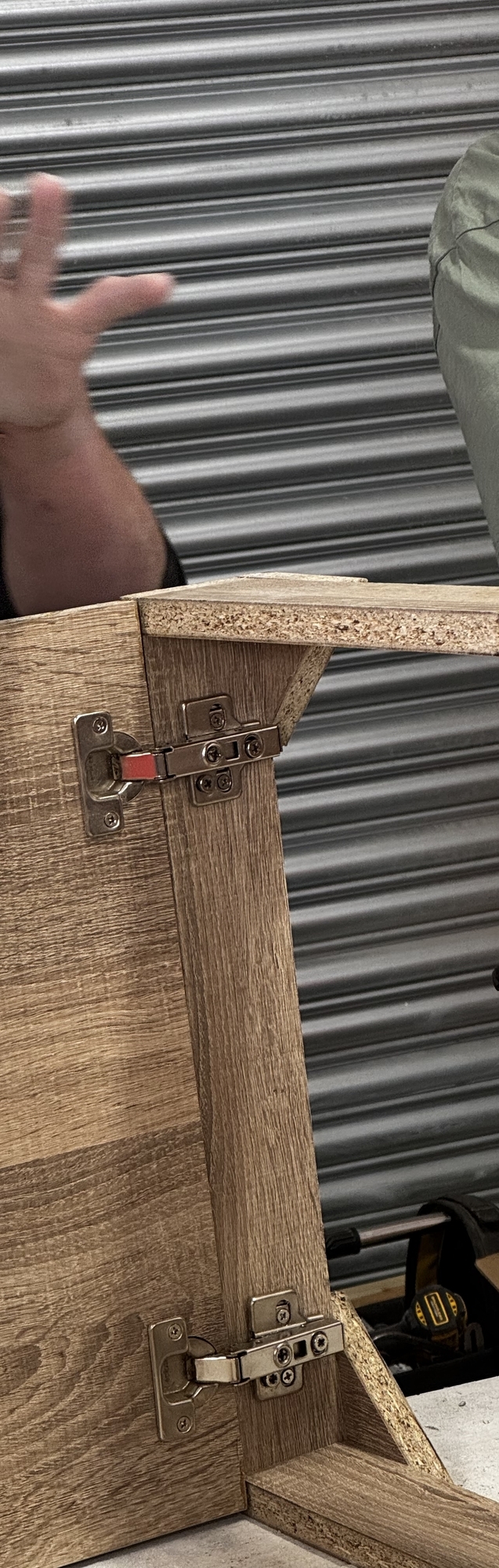
Modern hinges can be adjusted in three directions.
We live in a fast-fashion, high-consumerism, flat-packed, mass-produced society. The mindset nowadays is to think that once something looks tired, it's finished. If kitchen doors are chipped or peeling, it’s time to replace the kitchen. If the dining table is scratched or there are ring stains on the side table, it’s time to get new ones.
I don’t think this is because we’re lazy, or that we don’t care about the environment, or even that we want new things. I think it’s because we’re not taught how to repair these items. I believe that most people would prefer to do a simple repair rather than to go through the hassle of getting rid of the old item and shopping for a new one that fits with their decor.
Repairing wood furniture and joinery is not complicated. Solid timber furniture, in particular, was built to last generations. In fact, in many cases, it is even possible to repair flat-packed materials such as vinyl-wrapped MDF or melamine.
We're far too quick to replace perfectly good furniture and joinery that simply needs a little attention. So before you spend thousands replacing something, it's worth asking yourself if you can restore what you already have. I’ll start with the easy repair tips.
This sounds obvious, but it's remarkable how many "damaged" items are actually just dirty.
Kitchen cabinets build up an invisible layer of cooking grease over the years that dulls the finish and makes paint look tired. Timber furniture collects waxes, polish and grime, and there can often be build-ups in crevices and corners.
Before assuming something needs repainting or refinishing, give it a proper deep clean using an appropriate wood cleaner or sugar soap. I've seen an oak dining table that seemed ready for the skip look almost new after nothing more than some elbow grease and a polish.
If you don’t know this one already, prepare to be bowled over. This remains one of my favourite little repair tricks. Ready?!
Small scratches on timber can often be disguised by rubbing the flesh of a walnut over the damaged area. The natural oils darken the exposed timber and make small scratches practically disappear. It’s magic.
It won't repair deep gouges, and it works better on darker woods. But for everyday scuffs on dining tables, wooden chairs, sideboards, and even floorboards, it's a wonderfully satisfying life hack.
Kitchen cabinets take a huge amount of abuse. There’s frequent wear and tear — banging, steam, and grease. Doors often become chipped around handles, paint chips away, vinyl wrap can peel at the edges, hinges loosen, and drawers start sagging. None of these necessarily means you need a new kitchen.
Most cabinet doors can be repaired, filled and repainted. Even flat-packed ones. MDF is hardier than you might think, and you can use wood filler and even give it a light sanding before repainting to get it smooth and ready for another few years of abuse. Vinyl wrap that’s peeling can be removed with a heat gun, and the doors can be repainted or re-wrapped, good as new.
Hinges can often be adjusted in minutes with a screwdriver. If you have a modern kitchen, you’re likely to have hinges with three adjustment screws that can be moved up, down, back, forth, and side to side as needed. Handles are one of the easiest upgrades you can make, but they have an enormous impact.
If your cabinet carcasses are still in good condition, then a little filler, a new paint job, and some hardware upgrades can get you a brand new kitchen without having to replace it.
One of the reasons people love real timber flooring is that it gets better with age. Scratches, dents and faded finishes are the patina that develops with time and gives the floor its character.
When the scratches and scuffs become too much, you can sand them and re-oil them and they’re practically good as new again. Depending on the thickness of the boards, many solid timber floors can be sanded multiple times during their lifetime before being re-oiled or lacquered.
Even old pine floors — which many people immediately dismiss because of their orange hue — can look spectacular once the varnish has been sanded off and a more contemporary finish is applied.
It's messy work, and you’ll need to hire some equipment to do it properly yourself, but the transformation can be extraordinary.
Most furniture doesn't actually break because the timber fails. It breaks because the joints loosen. I’m talking about wobbly dining chairs, unstable tables, worn drawer runners, and sagging shelves. These are usually repairable.
Loose wooden joints can often simply be reglued by applying quality wood glue and clamping overnight. Screws can be tightened. Worn drawer runners can be easily replaced. Shelf brackets can be tightened or reinforced.
It's always worth spending half an hour with a screwdriver before throwing something in the skip.
If you're painting furniture or joinery, preparation is everything. Fill dents and chips with an appropriate wood filler, allow it to dry completely, then sand it flush before priming. Buy an appropriate primer and paint for the type of wood you’re working with (ask at the paint shop and they’ll get you the right stuff).
It’s easy to skip this preparation stage, but don’t. Painting is 80% preparation, and doing it right will make the finish much smoother and last much longer.
Oiled timber is easier to spot repair because individual sections can usually be refreshed without refinishing the entire surface.
Lacquered or varnished finishes are often tougher day to day but can require more extensive refinishing if they become badly damaged. Neither is better, but it's worth understanding what you want beforehand.
One of the fastest ways to revive furniture is by replacing the parts you touch. Handles, knobs, hinges, drawer pulls, castors, legs — these details make an enormous difference. Consider whether your item could be refreshed by swapping out the hardware rather than throwing it out in its entirety.
Not everything can be saved. Water damage is the main culprit in ruining your furniture for good. In particular, chipboard or MDF that has suffered from water damage is very difficult to restore properly. Extensive woodworm or rot may require professional repair or replacement.
But these cases are far less common than people imagine — solid timber, quality plywood and well-made joinery are remarkably forgiving.


CONNECT WITH US TODAY



Be the first to know the latest news and updates