Jennifer Sheahan: How to grout and regrout your tiles
In any wet area, make sure the grout you choose has mould-resistance built in. File picture
I'm deep down a DIY rabbit hole and thoroughly enjoying it. I’m taking a DIY evening class, which is something I would strongly recommend everyone to do.
It’s confidence-building and satisfying to tackle basic home maintenance and repairs, and you save yourself some cash along with the hassle of trying to get hold of a tradesperson.
Last week I covered how to tile, and this week it’s grouting. Cracks, stains, or missing pieces of grout start to show up over time and make your tiled surface look neglected, and failing grout in a wet area can let water in behind the tiles in a way that causes real damage.
It is one of those jobs that is genuinely not difficult, once you understand what you're doing. Here's what grouting properly actually involves.
Powder mix is better than ready-mixed when it comes to grout. It is stronger, more water-resistant, and better value. The ready-mixed tubs are convenient for tiny repairs but for any real grouting job — a shower, a tiled floor, a splashback — powder mix is superior.
Beyond that, you have the same options you have with tile adhesive: flexible or non-flexible, standard or fast-setting.
Read More
Flexible grout is worth using anywhere there might be slight movement — timber floors, surfaces around a bath, anywhere the substrate can shift a little.
Fast-setting grout cuts your curing time down significantly, which is useful for busy tradespeople, but gives you less time to work, which is pressure you probably don't need if this is your first time.
One thing that is non-negotiable in a shower or any consistently wet area: make sure the grout you choose has mould-resistance built in. It will say so clearly on the packaging.
Standard grout in a shower will start to blacken over time no matter how well you clean it. Mould-resistant grout won't last forever, but it will last considerably longer and stay looking cleaner for far more of that time.
The best thing you can do is go to a good hardware shop and talk through your needs with the staff there, who can advise what type of grout will work best with your tiles and the area they’re in.
Grout colour is a hugely important decision that is often overlooked.
Many people default to white or pale grey and are then surprised when it looks grubby within a year.
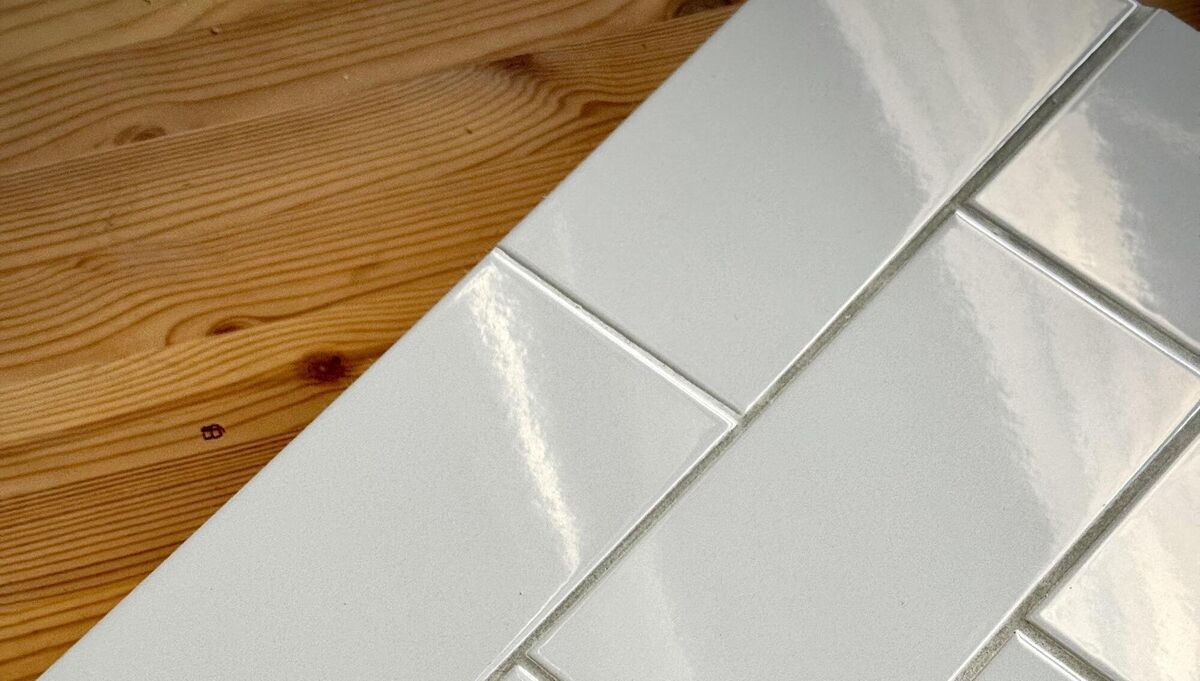
White grout in a shower or behind a kitchen hob is high-maintenance — it stains, it discolours from shampoos and steam, and it requires regular cleaning and sealing to look its best.
Unless you are prepared to keep on top of it, a grout in a slightly darker tone is a far more practical choice.
Contrasting grout is very much having a moment — dark grout with light tiles is a strong look that ages well.
If you are going for this, be extra careful in your application. Any inconsistency in the grout lines becomes very obvious against a strong contrast, so your application needs to be neat.
Know too that a huge range of bold and unusual colours are available, from blues and yellows to metallic hues, which is a fun and affordable way to jazz up plain tiles.
You don’t need much to grout — a bucket, a mixer, a grout float, a sponge, and a cloth is all it takes. If you’re re-grouting, you’ll need a grout removal blade too. Grout can be mixed by hand, but using a paddle mixer will make your life a lot easier — it’s an attachment that fits into your drill.
Using a paddle mixer gives you a smooth, consistent mix without the lumps that cause problems when you're trying to push grout into narrow joints.
If you are mixing by hand, add small amounts of water and be sure to mix thoroughly using a trowel. Your grout will have directions for how much water to add in — usually a ratio of around one parts water to five or six parts powder.
Mix to a smooth peanut-butter consistency — runny enough to spread, thick enough to hold its shape in the joint. If the mix is too stiff, add a small amount of water. If it's too loose, add more powder. Adjust gradually.
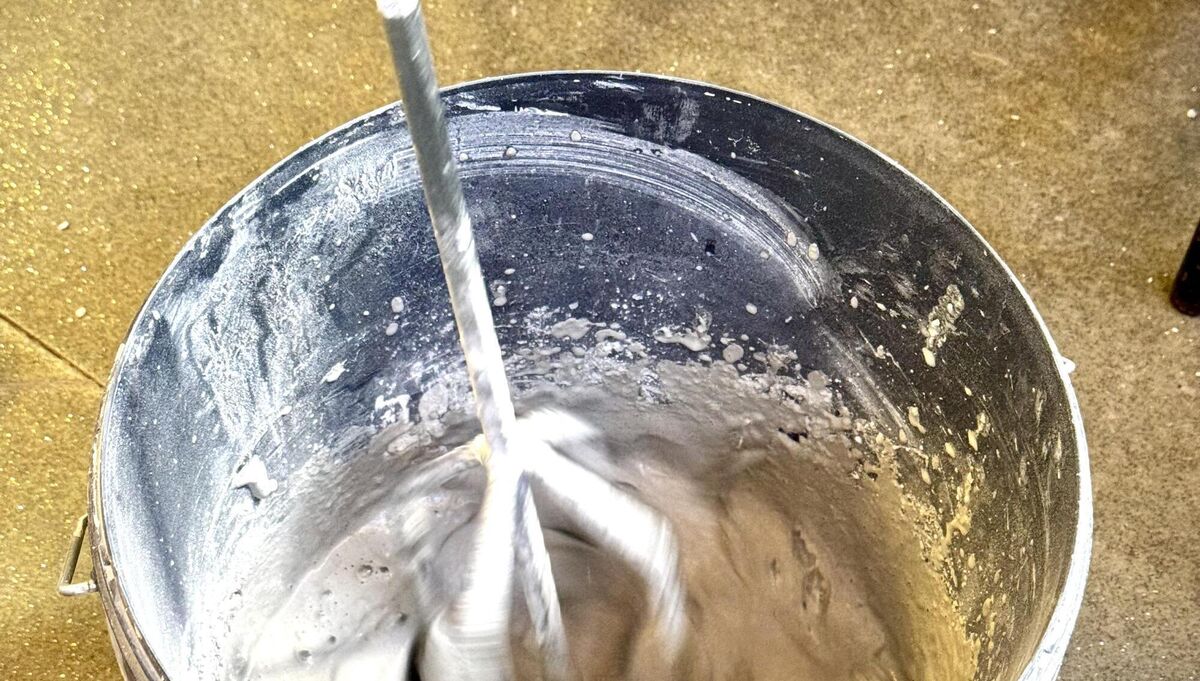
Once mixed, you have around 20 to 30 minutes before it starts to set.
Do not mix more than you can use in that time.
Unlike adhesive, you cannot loosen setting grout with more water — the chemical process has started and adding water just weakens it. Mix in batches and keep track of your time.
Use a rubber grout float or a grout trowel. Hold it at roughly a 45-degree angle to the tiles and work the grout diagonally across the surface, pushing it firmly into the joints.
Working diagonally — rather than parallel to the joints — prevents the edge of the float from dragging grout back out of the gaps as you move along.
Press firmly. The grout needs to fill the joint completely, with no voids or air pockets.
Voids mean the grout will crack or crumble out earlier than it should. Take your time over this — a well-packed joint is the whole point of the exercise.
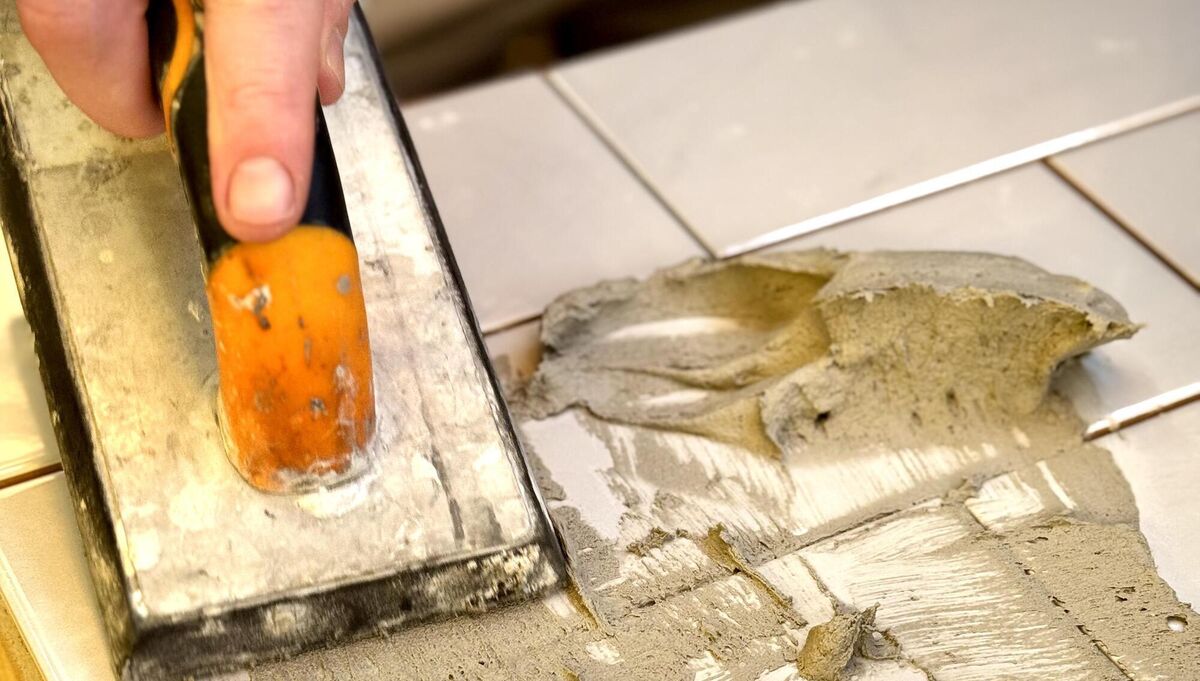
Work in manageable sections of around half a square metre at a time rather than spreading grout across the entire surface at once. This gives you control over timing and allows you to apply the grout properly before it starts setting.
Leave the grout to firm up for around 15 minutes after application — it should be starting to set in the joints but still be slightly soft on the tile surface. Then wipe it down with a clean, damp sponge.
This does two things at once: it removes the excess grout from the face of the tiles, and it gives you an opportunity to smooth and finish the joints.
Run the sponge lightly along each joint to give a clean, slightly recessed finish.
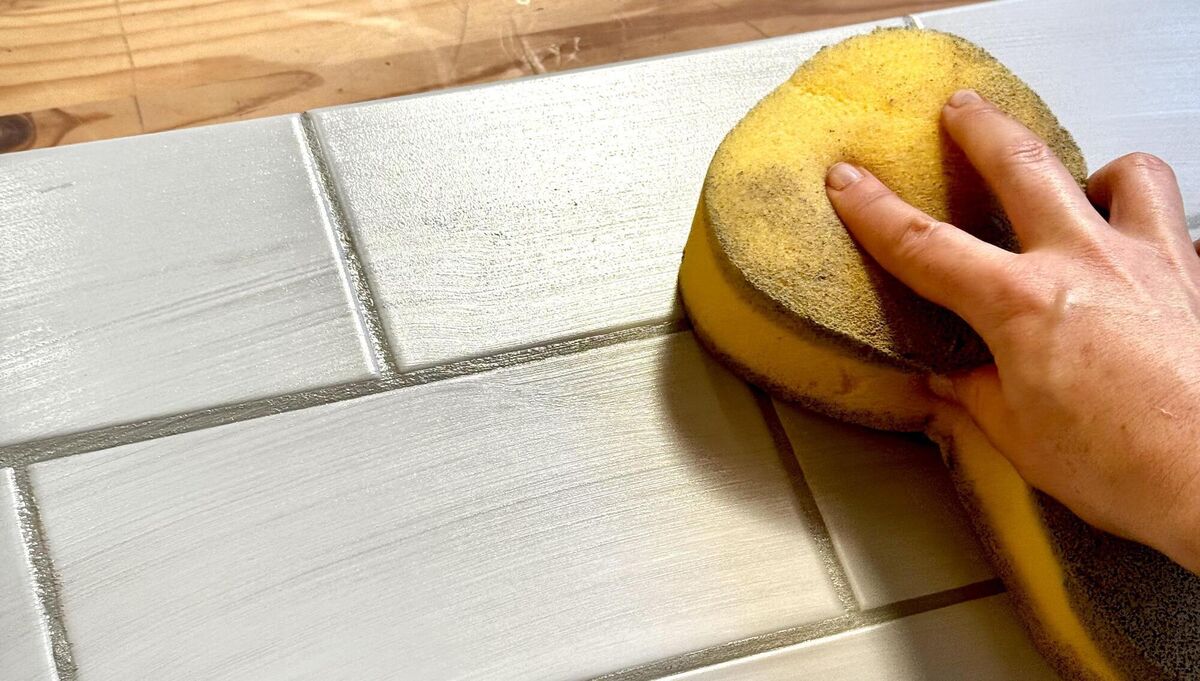
Wring the sponge out well before each pass — too much water on the surface can weaken the grout as it cures.
Rinse it frequently. Work in long, steady strokes rather than scrubbing back and forth, which can pull grout out of the joints.
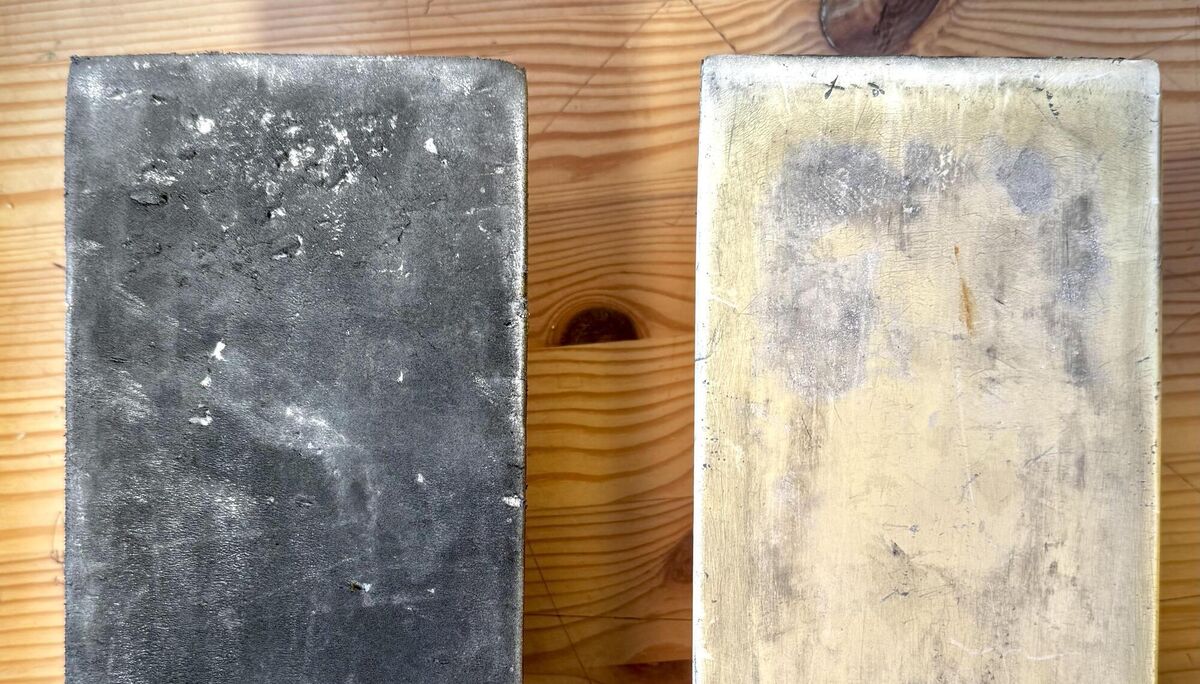
Your grout is going to look really dark at this stage, but don’t panic, it will lighten as it dries.
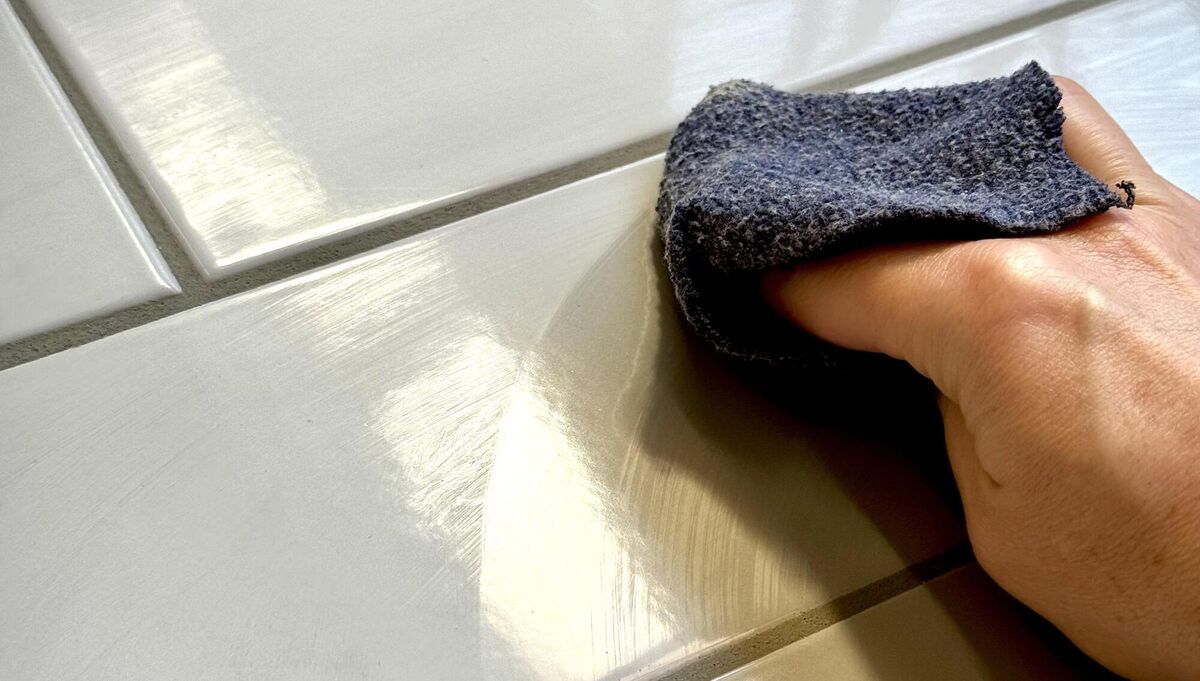
Once the grout has dried fully, go over the tiles with a clean dry cloth to remove the hazy residue that's almost always left behind. On smooth, glossy tiles this takes very little effort.
On matte, textured, or grooved tiles it takes considerably more — the grout residue gets into the surface texture and needs a bit of work to lift. A stiff brush can help on particularly textured tiles, but be careful not to disturb the joints.
Leave the grout to cure for the time specified on the packaging — usually 24 hours minimum before getting it wet.
Once fully cured, a grout sealant is worthwhile in wet areas. It takes minutes to apply and adds years to how well the grout holds up.
If you're re-grouting rather than grouting fresh tiles, the first step is removing as much of the old grout as possible.
Use a grout-removal blade — a small, hardened tool designed specifically for removing grout — and work carefully along each joint.
It’s easy to damage tiles here, by pressing too hard or slipping and catching the tile edge. Take your time, use light pressure, and work at a consistent angle.
Once the old grout is out, clean the joints thoroughly and let everything dry completely before applying the new grout.
Any moisture or residue left in the joint will compromise the bond of the new grout, and you'll only end up doing it all again soon enough.
CONNECT WITH US TODAY



Be the first to know the latest news and updates