Damien Enright: Islands add romantic wonder to seascapes
As Yeats confirms nature can deliver a daily dose of magic 
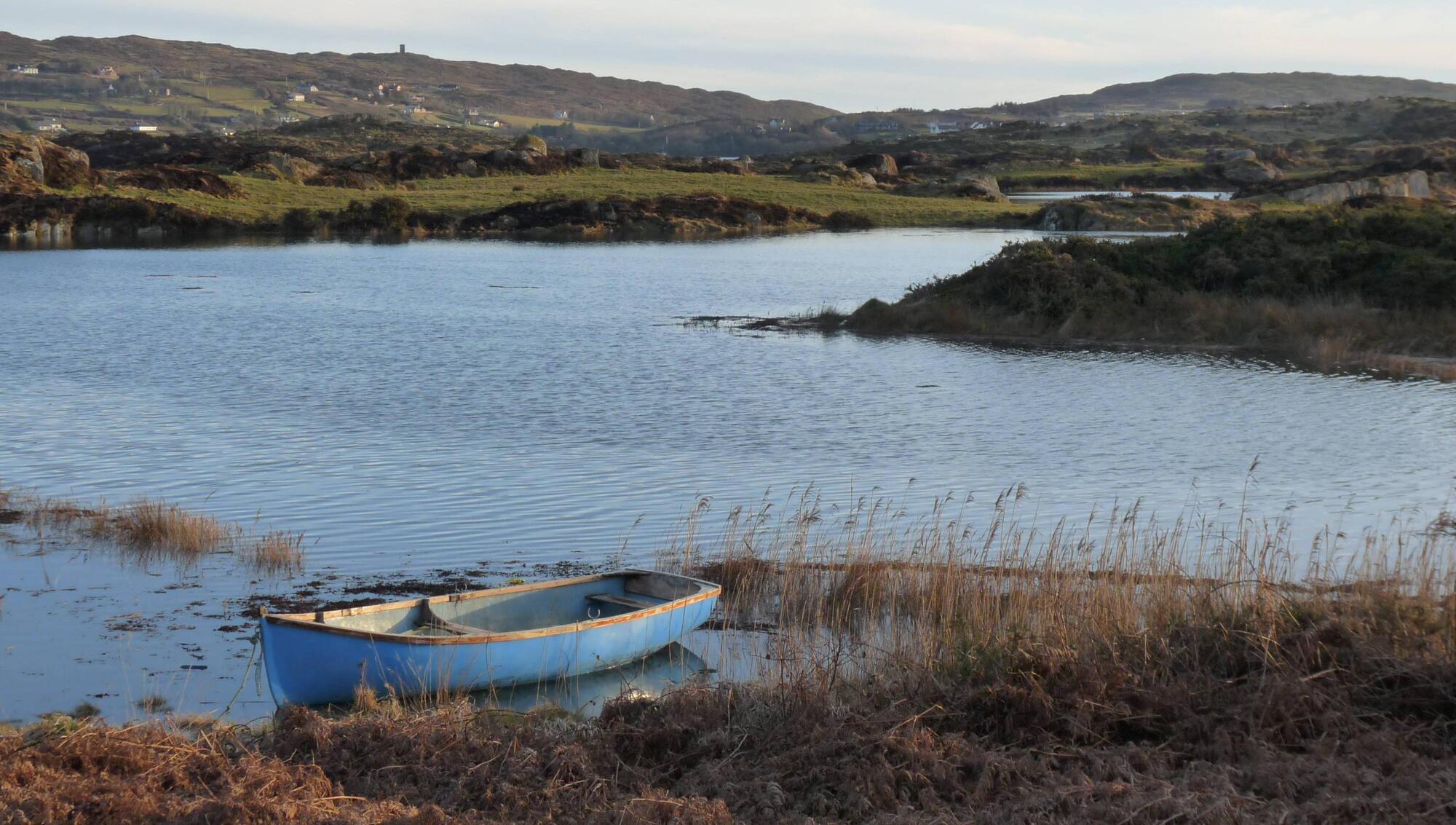
Ringarogy Island, near Baltimore, west Cork. A sheltered cove, one of many passed on an easy walk around the island shores.

Ringarogy Island, near Baltimore, west Cork. A sheltered cove, one of many passed on an easy walk around the island shores.

And I shall have some peace there 

For peace comes dropping slow...

The lines of the Yeats poem 'The Lake Isle of Innisfree' are simple and perfect. They get stuck in the mind and, by some sort of magic, become 'poetry'. They're not language anymore, or even simply music. To my mind, what they become is 'magical'.

Magic has been shown the door in this 20th-century world but it survives in poetry, in music, and in song. In graphic and three-dimensional art, too, one is 'transported' elsewhere when one sees it and is captured by it. But transported to where? That's the magic. It has no postal code or GPS. Nature can do it too, as Yeats confirms.

Last week I took a walk on Ringarogy Island — near Baltimore in west Cork — and Yeats came into my head when, suddenly, the evening was full of linnets' wings, a small flock, actually, but a nice surprise. However, it would seem from the punctuation that Yeats was referring to one bird. Was it a specific bird that frequented his cabin "of clay and wattles made"?) The line is everywhere punctuated " ... evening full of the linnet’s wings.

I've consulted four printed texts of the poem in books lying around the house, school poetry books, and a hardback collection of Yeats's Collected Works, and it is always thus. So, it must remain a mystery. Like how the spell of those 121 words of the poem have worked so powerfully as to be memorable to me and, no doubt, to many readers of this column for decades.

No doubt there's a dissertation on the subject of the definite article and the consequent apostrophe before the 's' – but I set out to write about Ringarogy Island, not Yeats.

Shelduck, near the Lag Bridge on Ringarogy Island, near Baltimore, west Cork.

As we walked, my wife and I were guided (or misguided, for one stretch) by a book I wrote 20 years ago called Walks of Skibbereen, Baltimore and Roaring Water Bay (still available from Maps n Charts, Schull.) Not much had changed. "There are few human artefacts to distract us from nature..." is correct but some ruins have been converted into beautiful homes in unique locations, million euro houses, I think.

"One rarely sees a car..." remains true; we saw perhaps eight in the two-hour, 4-miles circuit, double the number recorded in the year 2,000.

"Gorse and heather skirts the lane..." – indeed, it does, as it did then. "Gorse seeds from Ireland were taken to Scotland and Wales to grow fodder for cattle. The islets and islands of the Lag and the bay are dressed twice a year in mantles of yellow, or yellow and purple....."

"The shore-line rocks are splattered with white and orange lichens...The rocks are black, the sheltered waters dark, reflecting all these colours. Any wonder West Cork is one of the loveliest places on earth."

But the lichens and the seaweeds are the eternals — as are "Spanish Island and the mouth of the Ilen to the right, Turk Head and, far off, Mount Gabriel, behind Schull." and " The vicious, black rocks below the Sherkin lighthouse, the white beacon on the Baltimore side and, then, the coloured houses of Baltimore come into view."

At low tide, out on the slob, redshank, greenshank, curlew and oystercatchers stalk insects and worms. The most striking birds are the shelduck, big as small geese, with black-green heads, chestnut collars, pure white breasts and red legs and beaks. 

From Ringarogy Island, near Baltimore, views of islands in Roaring Water Bay

Present all year, they are fewer in July and August when most adults fly to Heligoland, in the Baltic, or to the Bristol Channel, to moult, leaving their offspring in the care of a few crèche minders. When they return, parents and offspring recognise one another immediately and reunite.

Shelduck nest in rabbit burrows, sometimes miles from the sea whither the ducklings have to walk only days after hatching. A nine-mile walk is on record. If we are flagging, we may be inspired by the thought of waddling more than twice the distance on duckling legs.

Ducks that do not find a nest may become 'cuckoo females', surreptitiously laying in other's nests. Shelducks lay an average of 11 eggs and one surrogate mother was recorded as incubating 33 hatchlings, and all survived. I'd be fascinated to meet such a brood on its way to the water.

Shelduck do, in fact, eat shells — the tiny hydrobia snails which they hoover by the thousand off the mudflats — but they are not called for that, rather for the old word 'sheld' meaning variegated and referring to their colour.

As we arrived at the Causeway, our starting point, late sunlight broke through the clouds. Islands add romantic wonder to seascapes, and Roaring Water Bay has islands galore.

x

More in this section

Revoiced

Newsletter

Had a busy week? Sign up for some of the best reads from the week gone by. Selected just for you.

Cookie Policy Privacy Policy Brand Safety FAQ Help Contact Us Terms and Conditions

© Examiner Echo Group Limited