All you need to know about aluclad windows and how to fund them
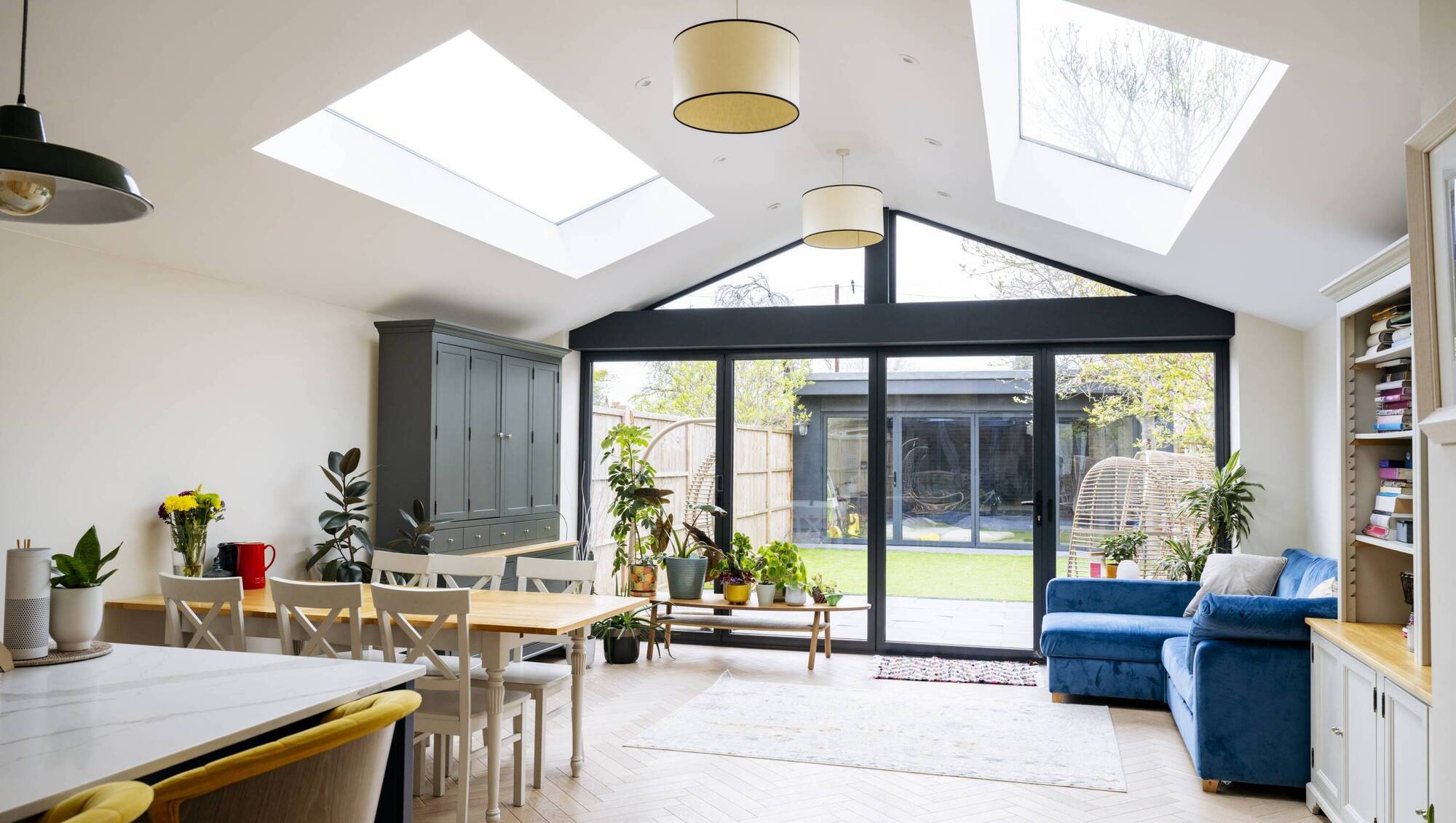
Aluclad is a valid choice for an extension on any era of building. Talk to a design professional before using them in place of more appropriate frames for a period façade (even without RPS/ACA protection). File picture
There is a very generous window replacement grant on offer from the Sustainable Energy Authority of Ireland (SEAI). Formerly ring-fenced to the One-Stop-Shop tranche of energy improvement grants, SEAI-managed funding of up to €4000 is now available as an Independent Window Grant for a detached home. There are some reasonable conditions around insulation standards (so check out those vital T&Cs). It’s clear from the emails receives and from wandering on social media building groups that many Irish householders are actively considering an upgrade to new windows with double or triple-glazed units. The SEAI also offers a grant of up to €1600 for two exterior doors — great if you want the home’s collar and cuffs to match closely. Aluclad windows are an aspirational choice for many of us, and with good reason. I replaced my clumsily designed 22-year-old windows with Danish aluclad units, and they proved to be perfect for my c.2000 build. However, before we get any further into the principal features of aluclad as an excellent hybrid frame, I have to make a heartfelt appeal.
When I see a gentle old period house on a town street in Ireland, like many of you, the windows are often the first thing my eye settles on. Recently there’s been a march of aluclad windows in one volume replacing sash windows or older PVC units in attempted character profiles. I’m not entirely sure how I feel about this. On one hand, the windows are simple, uncomplicated, and they have certainly been improved in terms of weathertightness and the U-value. On the other hand, has the removal of the sashes or simple casements with their rails and glazing bars degraded the building’s original charm? When it comes to contemporary buildings, and the renovation of late 20th-century builds, I am all for simplicity and uninterrupted metres of glass, and aluclad is a market favourite. The reduction in framing is less preachy, unpretentious, fresh and often quite lovely if it makes a match with the architecture in its aspect, rhythm and proportion.
Would I have used aluclad in an Edwardian or Victorian home not protected by the Minister’s List? I hope not. Just because a building is not on the Record of Protected Structures (RPS) or in an Architectural Conservation Area (ACA), take advice from an architect or the conservation office of the local authority on respecting its façade before you call a window supplier. Timber sashes and casements have lasted for over a century (or more) in older buildings. They can carry energy-efficient slim-profile glass and firm closing mechanisms to keep your home safe and secure. It is possible to restore the windows to be close to how they looked when the building went up. Seize that opportunity rather than scanning the street to see what your neighbours have done. PVCu sash windows? That’s a whole other argument, but honestly, I would personally prefer to see a properly profiled sash window in PVCu with horns and a mechanical mechanism, rather than the staring eyes of a misplaced modern aluclad window on a hundred-year-old terrace or cottage.
Aluclad windows combine the robust qualities of aluminium on the outside face of the window and the comfortable, warm vernacular of timber on the inside of the building in one high-efficiency unit. A polyamide strip ensures no thermal bridging between the aluminium cladding and the wood. Aluclad reads as high-end, and it has proven to be supremely long-lasting in a new build or renovation. They can carry either double-glazed or triple-glazed units and, pulled into the frame on closing, offer exceptionally low U-values in a quality window. By installing good aluclad windows, you have windows that are not only high performance but perceived as excellent window choices by potential purchasers if and when you come to sell.
This variety of windows comes in standard or a very sleek, slim profile. These slimmer frames produce what architects term slender sight-lines (just less frame on show from inside to out). You can have your windows as side-hung casements, top-hung, and tilt-and-turn. Each of these look slightly different when open, but largely identical when closed; it just depends on what action works best for your project and space. They will look uniform when shut, even if you have a variety of actions room to room.
The finish to the outside of an aluclad window is a powder-coated, factory-applied paint with a very long lifespan. Inside, you can have raw timber, oiled timber or painted timber. You will be offered a range of RAL colours to choose from for outside and interior finishes. The windows can usually be expected to last 40 years with proper maintenance (they will not be warranted for that long by anyone), but the powder coating can reasonably be expected to survive 25 years in excellent condition.
If you live by the sea, inform your supplier, who may have a marine-grade coating for that situation. Like all windows, the opening mechanisms and compression seals may need occasional replacement, and this brings me neatly to the subject of weight. A window combining insulated aluminium and solid wood, together with the handles and security elements, can be a heavy window in a larger size. Top-hung — this is particularly obvious when operating a triple-glazed aluclad window with standard profile frames (40kg per square metre). It’s important that the surrounding structure and lintel support in a timber-frame or block home carry the window well.
Aluclad has the reputation of being the most expensive windows in standard (non-bespoke) choices. My experience was that they were very closely comparable with the top timber and PVCu windows, with a 10% loading for aluclad when I came to buy. The price point is PVCu, timber and then aluclad. Large or elaborate windows or premium branding can bump this to as much as 30%, so shop around. Triple glazing will certainly elevate the price, so go over the U-value difference for a double- or triple-glazed aluclad window with your supplier and architect or engineer if you’re using one. The difference in thermal and acoustic insulation values may be negligible for the project as a whole. Keep in mind that the overall U-value of the window and the U-value of the glazing are two different figures. Compare like-with-like when researching windows.
Some householders mix up double and triple-glazed units according to their aspect, reserving triple-glazed units for the North and windward side of the home. If you are expecting to use SEAI grant aid, every inefficient window must be replaced to bring the house to a Heat Loss Indicator (HLI) figure of 2.3W/sq m/K along with other insulation improvements. If you mix double and triple glazing, the SEAI may request triple-glazed units on the north side of the building.
There’s a BER following works to establish that the HLI has been achieved for the property before your grant aid is released to your bank account by the SEAI. For every window, whatever its framing material, the baseline U-value must be 1.4W/m2K or lower (that’s the whole window including the frame). Happily, the window replacements do not usually include conservatory or sunroom glazing if there is a reasonable, exterior-grade door separating that structure from the rest of the house.
- For further details on the SEAI window grants, see Seai.ie.

CONNECT WITH US TODAY



Be the first to know the latest news and updates