Taste the difference with edible plants
Many plants we only consider for their aesthetic qualities can be eaten as well, writes Peter Dowdall.

Taste the difference with edible plants

Many plants we only consider for their aesthetic qualities can be eaten as well, writes Peter Dowdall.

Life is all about perception isn’t it?

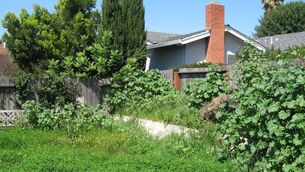
It’s one of the most difficult weeds to eradicate in the garden and one that I am asked most often about how to control. Aegopodium podagraria or more commonly known to you and I, Ground Elder, Bishops Weed or Gout Weed is an invasive ground-covering perennial which spreads rapidly by underground rhizome.

Try removing it by hand and it will only laugh at you as if you leave even the trace of a root it will re-emerge almost before you have put the garden tools away. Add its ability to spread from seed and you have a serious problem when ground elder gets a foothold in the garden, particularly, if, like me, you would rather not use chemical weedkillers in the garden.

I would go further to say that even if you are happy using chemicals, you will still have a problem.

What if I told you that help was at hand, and at the same time I told you you could have a bountiful supply of fresh herb/vegetable leaves that could be regularly harvested as a ‘cut and come again’ plant?

A plant that needs no special treatment in terms of soil type or feeding and isn’t prone to any pest or disease damage and that is packed full of vitamin C, iron, calcium and magnesium?

The clue is in the botany, Aegopodium is of the family Apiaceae, other members of which include, chervil, anise, angelica and carrots.

This wandering garden thug can be harvested from as early as when you see the first leaves in February or early March.

These new leaves can be eaten raw, mixed in a salad or boiled in the same way as we treat spinach.

As the leaves mature they become more bitter to the taste but are still fine to eat and palatable when cooked but once the flowers emerge, the leaves become too strong and pungent to eat. Who would have thought of eating what we always think of as no more than a garden pest?

It was introduced to Britain by the Romans who used it as a food crop to feed its travelling army and it’s often found in monastic gardens as monks used it to treat a variety of ailments including as a poultice for gout and arthritis, hence one of its common names, goutweed. As I say, it’s all about perception isn’t it?

As we have progressed and become more intelligent as a race, we have lost so much in terms of what plants were previously used for food and for medicine.

We now get most of our food and medical remedies from manufacturing plants which arrive wrapped in plastic packaging.

There are many plants which we regard as only of aesthetic value but will also bring flavour and goodness to our dinner plates, our lunch boxes and even our mineral and cocktail glasses.

We’re all familiar with viola blooms on salad plates and while, in my opinion, these look nicer than they taste they are quite edible, as are the blooms and the younger leaves of Nastursium with their strong, peppery taste.

The bedding Begonia, B. semperflorens offers a tart and bitter, acid flavour to a soup or salad. The cucumber-like Borage flower makes a beautiful addition to any salad or frozen in an ice cube gives that extra,refreshing sparkle to a drink.

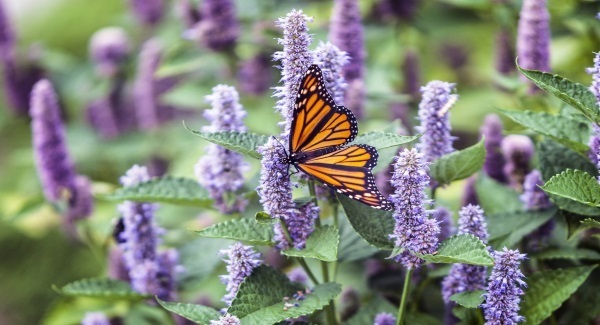
Agastache ‘Blue Fortune’ referred to as Anise Hyssop is one that I love in the garden as it attracts the world of butterflies and bees. Its leaves and flowers can both be eaten and will give an aniseed flavour as well as a shot of colour to any dish to which you add them.

Japanese honeysuckle, Lonicera japonica produces masses of flowers, rich in sweet nectar and they make a beautiful sweet syrup.

A note of caution, however, is that the berries of this and most Loniceras are poisonous. Extracts of the bark and leaves can be used medically in a decoction, but this should only be attempted by trained medical herbalists.

The flowers of lavender too, are used regularly in desserts and cooking in general with its calming essential oil being extremely aromatic but there are many more edible flowers which you may not be aware of.

Wisteria and magnolia petals can be eaten along with the petals of yucca which taste exactly like crisp iceberg lettuce and should be used in the same way. Once more, it’s all about perception.

More in this section

Revoiced

Newsletter

Sign up to the best reads of the week from irishexaminer.com selected just for you.

Cookie Policy Privacy Policy Brand Safety FAQ Help Contact Us Terms and Conditions

© Examiner Echo Group Limited