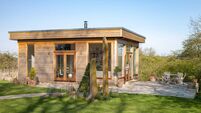
Home Q&A: How to paint, stain and maintain a modular wood building
Every three to five years, backyard wood buildings (residential or otherwise) will require light repair, sanding, and painting or staining
Home Q&A: How to paint, stain and maintain a modular wood building

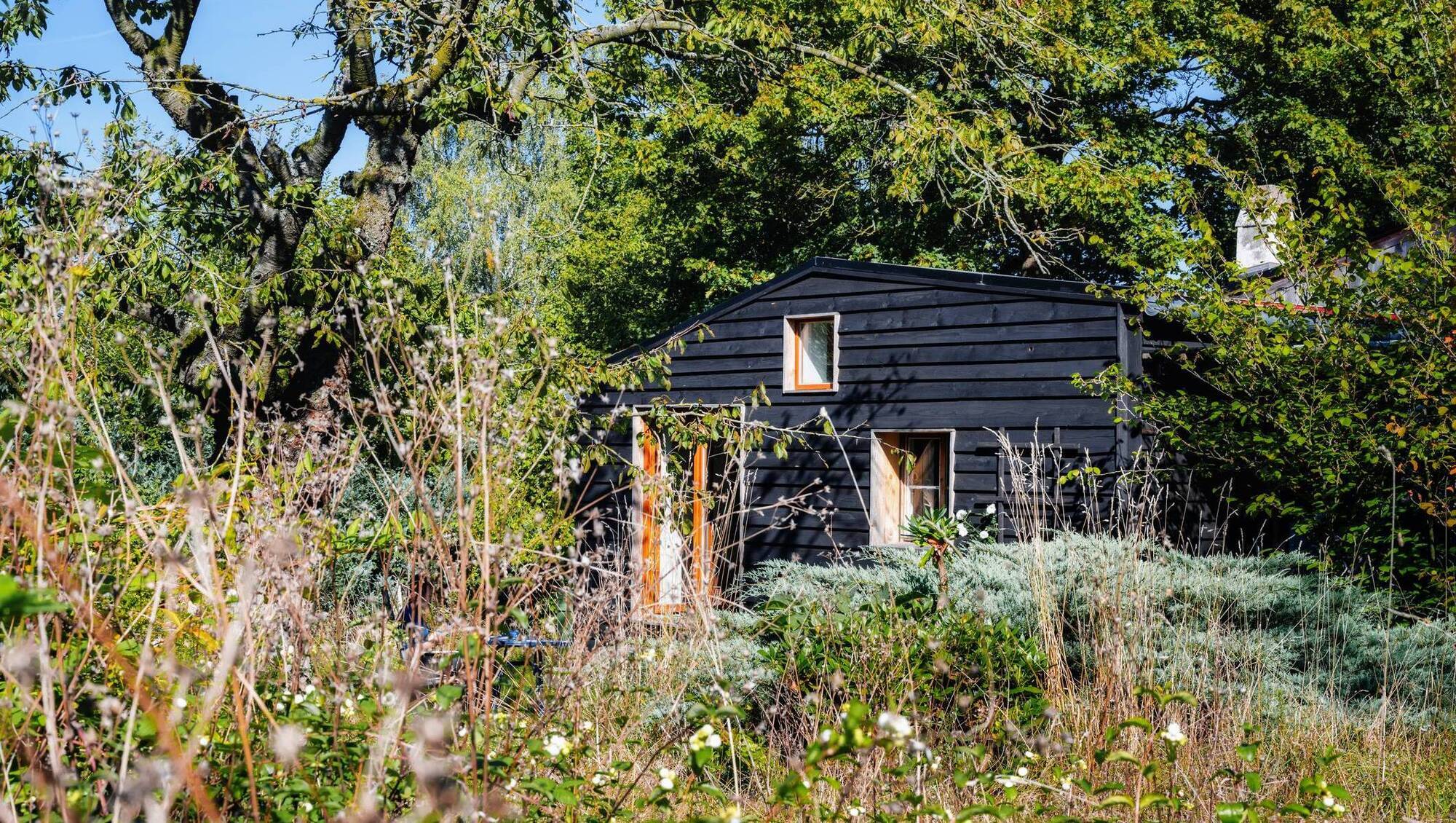
Clear back overhanging planting from your wood building. The dropping leaves and shading can promote green growth on the cladding. File picture

With a dramatic exemption to planning permission working its way through the bureaucratic machine, modular timber buildings are getting a lot of play. When I wrestled my way through a direct build of this American-style timber-frame, timber-clad home in 2000 (Cygnum in Lissarda provided the frame), I was an outlier with a hippy-crib. It wasn’t the trending hefty “log house” I set out to build. Authentic log houses with the same trunk of a tree forming the interior and exterior walls are rare in Ireland. The cabins and modular solutions being pushed all over social media are almost exclusively timber or steel-framed buildings clad in wood, steel or PVC with enhanced insulation measures, proper electrical outlets, and first-fix water and wastewater facilities.

Most modulars under and over that golden 45sq m limit are warm, aesthetically inviting, and highly livable, and large enough to embrace an open-plan kitchen-diner, a family bathroom, a short hall, a reasonable master and a small second bedroom. They are not our standard, easily insured vernacular, and not all will match current Irish building regulations.

In some instances, the frames might be finished in cement boards and rendered to be in keeping with the main house, but overall, we can expect to see the proliferation of affordable softwood cabins over steel or render siding.

Authentic log houses with the same trunk of a tree forming the interior and exterior walls are rare in Ireland, writes Kya deLongchamps. File picture

Let’s take a closer look at the job of finishing and maintaining exterior wood walls to a residential quality. This is something that the property owner/landlord would usually be responsible for.

We are super-confident perking up the exterior render. However — wood? Smiles fade and paint brushes droop at the prospect of wiping off a flaking, bubbling finish — never mind slapping on new, enlivening protection.

Just to clarify — in wood, we’re dealing with planks (rough and smooth) rather than fine joinery (like a sleek wood window or door). When you have just had that wooden palace erected on site, chances are it will look fantastic. Spoiler alert: That faultless, factory-applied finish won’t look the same after five years without some DIY or professional caresses. It’s time to make friends with the prep and application of a translucent preservative, solid stain, or opaque timber paint.

Wood, as a natural material, moves with heat, cold and the moisture in the air. It swells, shrinks, develops cracks and can (safely) absorb and release water. This is natural reactivity, but you have to let the wood dry back to help moisture migrate, heading off potential decay.

Vigilance is key

Always have an eye out for rot, spongy planks, structural movement, odd stains (indoors or out), and any kind of ingress by water or vermin. Mice and rats can take on failing double-skinned spruce walls or a gappy suspended floor. Some resinous timber, like cedar, requires no protection or additional finish, weathering to an honest silver; however, most backyard cabins will be finished in a lighter, drier, softwood or treated timber.

The longer you ignore issues, the more miserable and expensive they will become. Softwood timber boards without pressure treatment and surface protection will degrade fast. Neglected wood siding clouded in green growth looks dire and signals cumulative damage.

The pros

On the bright side, as a carpenter recently reassured me — “Kya, it’s just wood”. Medieval timber-framed homes are standing all over Europe, and here in Ireland, softwood Georgian windows and exterior doors dating from the late 1700s are still in service. Wood can be repaired, replaced, and maintained.

A gelatinous reviver will moisturise and clean, delivering a brighter colour in just 15 minutes. Outside of British-style barn-dwelling, care of wood cladding might be little understood here, but it’s a standard perennial chore across the UK and Europe, with brilliant products on the shelves and to order. Sadolin Classic stains (solvents) start at just €17 per litre, comparable to any good exterior grade emulsion.

Every three to five years, backyard wood buildings (residential or otherwise) will require light repair, sanding, and painting/staining. Their aspect will have some bearing, and even waxy water-based products will finally fade or shed from cladding with the attrition of rain and the beating of the sun.

With stain/paint survival, clip around two years from any paint maker’s promises. Clear back over-hanging planting from your wood building.

The dropping leaves and shading can promote green growth on the cladding. My house is clad in thick, mature Nordic spruce. It’s treated to a light machine standing and complete repainting every eight years.

Top tip

If I had one tip to impart at the design stage of your building, it’s deep roof overhangs teamed with perfect gutter maintenance. My house has dramatic overhangs that not only keep rain off 30% of the wall’s surface but also shade the boards from UV damage. It was one of the best things I was talked into by my frame designer.

Prep

Preparation is the hardest bit of refreshing a wooden building. The actual paint or stain job is ASMR satisfying. Most timber buildings require sanding from the fascias and soffits to the base boards to remove imperfections (give it a hose and soft brush down if it’s truly filthy, sanding and staining the next day).

Rough boards may have pulled most of any water-based product into the fibres. For a consistent, even finish (and colour), sanding back by hand or using a power sander is worth the work.

Cover windows

Cover the windows and be wary of hitting glazing or vulnerable details with even a mouse-sander. Look for open knots, splinters and cracks that can be filled at this point with a good, flexible, exterior-grade product.

Stain and paint choice

Five-year water-based wood stains are perfect for spraying or sloshing cheerfully over rough fencing panels, boards, and posts, but not intended for smooth timber siding. They also won’t give rough-sawn siding the colour-fast longevity and exquisite biocide protection of a better buy. That doesn’t mean you must reach straight for a solvent-based stain or paint. Water-based wood products are safer and easier to work with. Great for smooth wood, touch-dry in a couple of hours — with low VOCs — they are more environmentally friendly, too. A good water-based stain or paint will be rich in waxy resinous ingredients to protect and nourish the wood on application. Stains flex with the timber, the weather and humidity, allowing rain and moisture to evaporate. For a time, this will prevent damage to the pigmented topcoat.

Algaecides included in your paint or stain will slow the growth of green algae and mould. Otherwise, drifting spores will settle in and have their way. Water-based finishes do not last as long as solvent-based stains, and top Scandinavian brands are expensive.

For colour, Sadolin Superdec is a multi-surface, self-priming and self-undercoating in hundreds of colours (from €37 per litre). Suppliers include crowndecoratingcentres.ie.

Sadolin Superdec in Gull Grey, from €37 per litre. The low-VOC water-based exterior paint is easy to work with. Suppliers include Crown Decorating Centres.

Solvents are smelly, sticky, and highly unforgiving when working on smooth wood, but with an opaque topcoat, they tend to have better lasting power, moisture, and humidity resistance, and carry highly protective UV qualities. V33 Extreme Protection Wood Stain offers 12 years at €24 a litre (B&Q). Explore alternative microporous oils, too.

Primers and finishes

There are also a number of wood preservatives/conditioners that act as primers/finishes for (non-joinery) cladding and outbuildings, covering five square metres per litre with a couple of coats. I favour Owatrol Seasonite (€30 per litre). There are self-priming products, and other systems that will recommend a priming product or protocol. It’s all there on the tin, including the number of coats to expect.

Explore alternative microporous oils, like OSMO. Easy to apply for a translucent finish, oils don’t last as long but really celebrate the grain and figuring of the wood (from €47 per litre, multiple suppliers). This year, I’m moving to water-based paint — a pigment-rich, matt Teknos Nordica or Tikkurila Valtti, both from Finland, in RAL colours (from €21 per litre from Paintlab.ie).

Teknos Nordica, from Finland, pictured in T7034, offers a protective, flexible, water-based painted finish from Finland; from €21 per litre from Paint Lab.

Most paints and stains can be sprayed, speeding the job with two or three coats, but it’s vital to ensure that if you cut them with anything else, it won’t make the coverage so thin you’ll be out there for weeks recoating. With dimensional boards, expect some additional brushwork to drive it all home.

x

More in this section

Revoiced

Newsletter

Had a busy week? Sign up for some of the best reads from the week gone by. Selected just for you.

Cookie Policy Privacy Policy Brand Safety FAQ Help Contact Us Terms and Conditions

© Examiner Echo Group Limited