Wouldn't be without a Magnolia
Every plant should offer more than just a fleeting moment of beauty — it should bring more than one period of interest each year but in the case of magnolias, By Peter Dowdall advises making an exception.

Wouldn't be without a Magnolia

Every plant should offer more than just a fleeting moment of beauty — it should bring more than one period of interest each year but in the case of magnolias, By Peter Dowdall advises making an exception.

As the price of land increases and new gardens become smaller and at the same time, more established gardens become overstocked — it’s shows why considerable thought should go into which plants go where, in your garden. I’m a firm believer that every plant needs to work hard to warrant its place. Ideally, it should offer more than a fleeting moment of interest or beauty during the year.


Don’t just look at flowering time or length of flowering period, nor flower colour. No, a plant can offer much more than just that. Each plant has a texture all of its own and to me, it seems like such a waste not to even consider this when designing or planting a garden.

If the texture is dense and shrubby then add some contrast by planting something open, airy and light nearby. These little tweaks add that extra level to a garden plan, they help to make the garden ‘work’ and make it more interesting.

However, colour cannot be overlooked or understated — so look beyond flower tone alone — any plant is more than just a flower. Look at what the foliage is like, perhaps you would like something with light gold or variegated foliage to brighten an area or maybe something with purple or red leaves to create some drama and to offer a foil or accompaniment to the more brightly- coloured plant in front.

Perhaps it isn’t brightly garbed for most of the year, but a mere modest green until autumn arrives and the plant seems to let out all the sunlight it absorbed during the summer through its leaves, turning them to every bright colour imaginable.

Others, such as Crabapple, Pyracantha, Viburnum and Skimmia to name but a few, will make the spring more beautiful in the garden with their blossoms and then, later in the year, they scream for attention once more with their brightly-coloured winter fruits and berries.

In short, what I am trying to say is that a plant should bring more than one period of interest each year, or else it cannot be allowed to take up valuable space in your garden. Of course, there are the exceptions and everyone will have plants that they simply could not be without and there are a few that I think no self-respecting garden should fail to have on show. In particular, I’m thinking of magnolias.

Yes, the flowers are only on the plant for s a short period before the frost turns them brown, or the wind simply strips the petals from the plant, but that time, that annual spring display — no matter how fleeting — is essential for me in the garden, it is part of the seasonal clock.

I need to see the magnolias opening as they are, in front of my eyes, to know that we are well into spring and heading towards summer. They don’t bring much more, in truth, they have no autumn colour worth talking about and barring some species such as M.wilsonii, very few of them have anything interesting to offer in terms of fruit or seed pods.

Magnolias are ericaceous, meaning that they like to grow in an acid soil, that is a sol with a pH of 7 or slightly below and like many other ericaceous plants, they hold their flower buds throughout the winter having formed them the previous summer/autumn.

They are at risk of being burned by the frosts and cold temperatures of the winter. Avoid planting a magnolia facing due south or east as the bright sun will burn the flower buds during the winter and they will then open up with much brown discolouration.

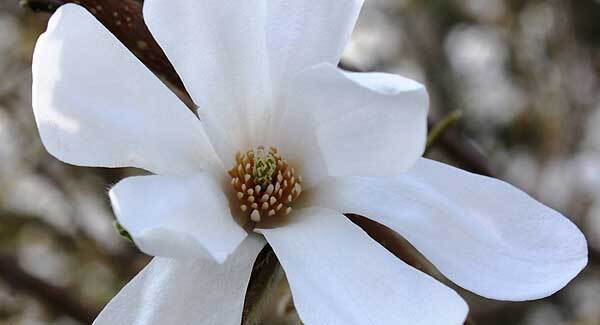
The Star Magnolia, M.stellata is one suited to even the smallest of gardens as its ultimate height is between 1-2m and its spread is about 1.5m, and if even that is too big, it can, like all magnolias be cut back straight after flowering.

This species is not just one of the smaller and more widespread varieties, it is also one of the only species which will thrive in an alkaline as well as an acid soil making it truly, universally suitable.

If you have space for a larger specimen then opt for M.soulangeana, the classic magnolia which produces tulip shaped white flowers tinged pink or if you fancy something a bit different, then magnolia wilsonii mentioned above for its bright seed pods, is one to think about. It will grow quite tall, often reaching 4m and similarly in width, so it’s not for a small garden.

For M. wilsonii check out www.futureforests.ie/products/magnolia-wilsonii

x

More in this section

Revoiced

Newsletter

Had a busy week? Sign up for some of the best reads from the week gone by. Selected just for you.

Cookie Policy Privacy Policy Brand Safety FAQ Help Contact Us Terms and Conditions

© Examiner Echo Group Limited