Whales: Babies whisper to mums
A third category, speech, is peculiar to humans; no other creature has developed language. But, it seems, thereâs a fourth category, whispers. We know that bullfinches donât sing as other songbirds do, but a paired male and female will talk quietly to each other.
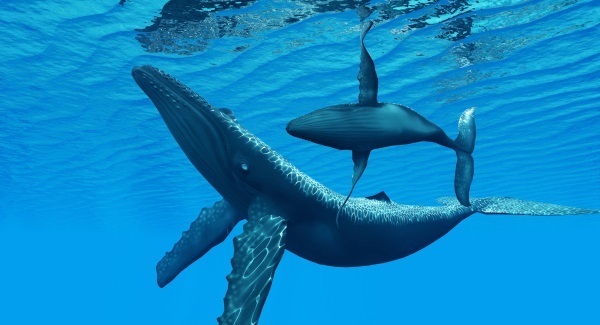
Now, Danish and Australian scientists have shown that whales and their calves do likewise. Are other creatures using this unobtrusive form of communication? Is there a whispering club?
Using inflatable boats, scientists approached humpbacks in Exmouth Gulf, Western Australia. With long poles, they placed tags on the backs of two mother whales and eight babies. The tags, held in place by suction cups, caused no discomfort to the animals.
Each device had a video camera to monitor and record the animalâs behaviour and movements over time. Within a day or two, the tags detached from their hosts and floated to the surface. Retrieved, they provided a wealth of information on the hidden lives of the whales.
Whale mother and baby relationships are especially interesting. Infants are 5m long at birth and stay with their mothers for about a year.
âWe know next to nothing about the early stages of whales in the wild,â Simone Videsen of Aarhus University told Science News, âbut they are crucial for the calvesâ survival during the long migration to their feeding groundsâ off Antarctica.
Humpbacks spend the summer in cool, oxygen-rich waters where there is abundant food. These seas, however, are too cold for newborn calves to survive, so the whales travel 8,000km to tropical seas before giving birth.
Just now, humpbacks are passing along our west coast on their way from Arctic waters to warm locations around Madeira. According to the Irish Whale and Dolphin Group, the first humpback of 2017 was seen about 5km off Crow Head, Beara Peninsula, on April 5.
The scientists obtained 69 hours of acoustic information from the tags. They found that mothers, fasting since they left polar waters, spend time resting as well as suckling their infants.
Playing back the recorded sounds, the researchers heard grunts and squeaks which seem to be intimate communications between mothers and calves. âSounds, like two balloons being rubbed togetherâ, were probably produced by calves nudging their mothers for milk.
Humpback whales produce very loud songs which can be heard over vast areas of ocean. That they also whisper to each other is surprising. But why would whales choose this form of communication?
The seas through which whales pass on migration are often murky; mothers must stay in touch with their calves to ensure that they donât become separated. Baby whales are particularly vulnerable to orcas.
By communicating quietly, the scientists suggest, the risks of alerting killer whales to their presence is reduced. Mothers may also want to avoid the attentions of humpback males seeking females with which to mate.
âMale humpback whale escorts,â the researchers say, âmay disrupt the high proportion of time spent nursing and resting, and hence ultimately compromise calf fitness.â
Man-made noise, mostly from ships, may be drowning out whale sounds. Are our activities âincreasing the risk of mother-calf separationâ, the scientists ask? Do the humpback mothers and babies visiting Irish waters communicate in this way?
We canât be sure, because our ones belong to a different population to those off Australia. Indeed, some biologists argue that the whales of the North Atlantic, those of the North Pacific and the ones in the southern oceans belong to separate sub-species, each with its own distinct characteristics.