Set-up at honey-house something no Irish beekeeper could aspire to
On the first Sunday in September a group of Irish beekeepers visited the Celle Institute of Apiculture, in lower Saxony in north west Germany, for its open day, which is held every year.
The County Cork Association has had Dr Otto Boecking from this Institute visiting here twice to give talks, in 2008, and again in 2015.
The Institute produces approximately 17,000 kg of honey and 700 Queens annually and runs a school for Apiarists; advanced training for beekeepers; disease diagnostics; testing of honey, as well as testing of pesticides and research and development.
It may be of interest to Irish beekeepers that the tratment there for the Varroa mite is, Formic acid— it’s used once after the honey crop is removed, and again when feeding is complete.
The Celle Institute uses the Liebig Dispenser, which dispenses the acid over a period of time. This method has been used all over Europe for years. The winter treatment is oxalic acid.
The group arrived in Celle on Thursday evening.
Otto had organised a visit to a bee farm, so Friday afternoon he drove us to Fredrick and Michael Voigt’s bee farm and candle-making business.
Michael, the father, does the candle making, he has these super zinc molds that are 33-years-old which he had originally bought from someone who had given up candle-making.
A huge insulated vat of hot beeswax stands in the centre of the room, and from this he fills the moulds, a smaller container sits beside the bigger one for topping up.
In another room, boxes of candle’s of different shapes and sizes are wrapped and packaged, ready for market and Christmas.
The aroma naturally, was lovely. The Voigt’s have a stall in Celle on Saturdays where they sell honey and candles and they also attend other markets.
Customers in Germany know the high standard of the beekeeper by the special jar and label.
Fredrick the son, and his wife run the honey business, he says he has 300 hives, but Otto thinks he has more, he’s probably like the Irish beekeepers — hiding some of them.
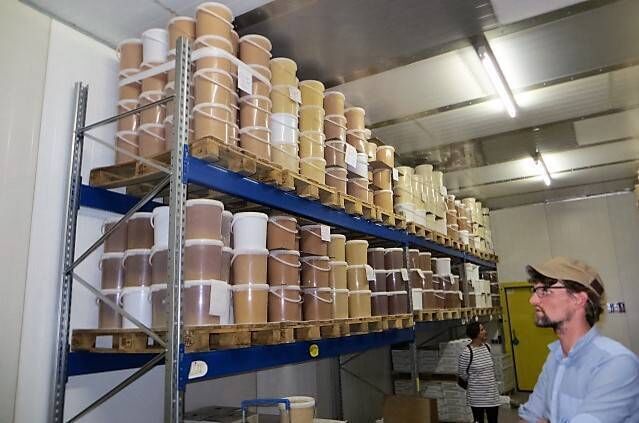
His setup and honey-house (such quality in the stainless steel I have not seen before, same in the honey house at the Institute), is something no Irish beekeeper could aspire to, their season is so much longer than ours, they have so much more forage, so many different types of honey — chestnut, linden, oilseed rape, acacia, Spanish chestnut, cherry blossom, walnut, and heather honey is very popular there.
The Voigt’s always keep a reserve of thirty to forty tonnes of honey, this room would make any beekeeper envious, 50 kg containers of all the different honeys is shelved to the roof.
Their honey is priced between €5.20, the cheapest which is oil seed rape, and €9.80 for heather, per 500 gram jar.
To avoid the wax moth they have a cold storage shed for boxes that have been extracted.
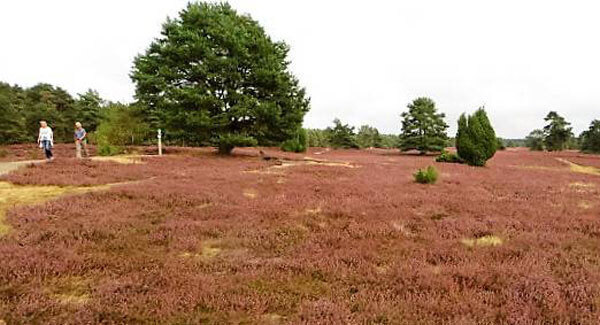
On the Sunday afternoon, we visited the Luneburg Heath, which is a unique natural environment, acres and acres of heather, a beekeeper’s dream.
Visitors can cycle, walk, or go in a horse-drawn carriage, naturally German beekeepers bring their bees there and get this wonderful crop of heather honey.
On Monday morning, some of the group set off by train to spend a few days in Berlin.
Lifting main crop potatoes and harvesting cabbages continues.
The last of the peas and beans should be picked.
Lots of gardeners lift carrots and other roots now to store in peat or sand over wintertime, I always leave some in as I find they are sweeter after a touch of frost, especially the parsnips.
The harvest is ongoing but so is thinking of more crops for later seasons. Garlic sets, plugs of winter edibles and bare-rooted fruit bushes are available in local garden centres.
Now is good time to plant new rhubarb plants or divide and re-plant old crowns.

CONNECT WITH US TODAY



Be the first to know the latest news and updates