Nature table: What do you know about mistletoe?
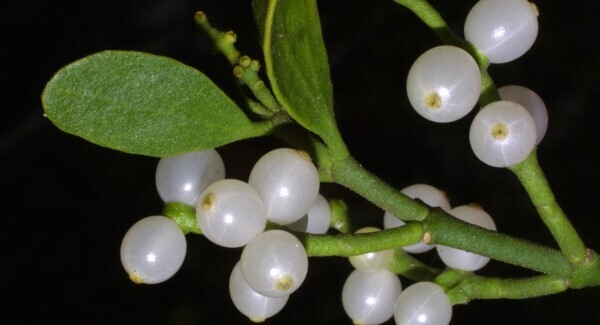
It’s a parasite growing on deciduous trees such as apple, birch, lime and oak. It sucks sap from the host tree, often damaging it but seldom killing it.
But mistletoe has evergreen leaves that can photosynthesise so it can produce nutrients of its own, particularly during winter when its host tree is dormant.
This means technically it’s a hemi-parasite rather than a full parasite — an even more unusual botanical phenomenon. It’s almost certainly not native.
It has been recorded growing wild in a few locations in this country but this is probably as a result of fairly recent introductions.
Our pagan ancestors were fascinated by a plant alive when its host tree lost it leaves in winter.
The association of mistletoe with the winter solstice and with kissing is a relic of this ancient fascination — the plant was revered in both Old Norse religion and mythology and by the Celtic Druids.