Work hard at getting the home office right
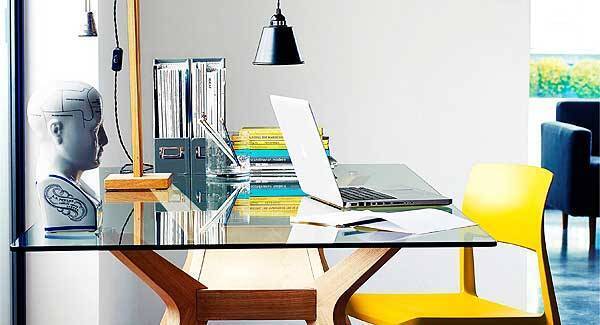
Without the physical change of going out one door from your home life and in another to employment or study, you must develop some sense of psychological remove. That’s the real battleground — setting out the interior of your head for working at home. Distraction is everywhere pulling you up and out of the chair, and when off-duty, a misplaced work area can haunt you back to repetitive fidgets at the books, spoiling relaxation time. Neighbours and friends see you as being available for calls and stolen cups of tea, and your remotely employed spouse will resent cooking on their return for someone who has been home all day.
I write from my house in an open-plan room stalked by a variety of demented animals. At 3.15pm their infant leader returns with an explosive bang, bouncing the €2,000 front door off the €1,000 American fridge/freezer. Thuggish livestock cavort outside the window, knocking injurious things down and kicking each other up and down the fields- it’s a sort of rural Westside Story. When I’m working, if they were reasonably quiet about it, the beasties could eat the child and I wouldn’t notice. My chair fits my frame, the screen is perfectly balanced against the ambient light in the room, and I have a carefully honed technique to filter out every scream, bleat and bang that doesn’t require the calling of the emergency services. That’s focus, and it’s taken time and the right physical support to reach that quiet land.
Some of us with rugged attention skills and can execute work from a laptop balanced on the cliff edge of the couch. Generally, however, calm, conducive surroundings pointed into a screen by comfortable seating, storage easily to hand and as high a degree of personal organisation as possible is crucial for that essential ‘head space’ Whether it’s a separate office or a nook under the stairs, choose a place that’s out of the way and likely to remain unmolested by the rest of the family. Setting up every time you sit down is a painful delay. A spare room can be split into two areas retaining a bed or sofa-bed for guest while screening off your own spot for real world of work the other 351 days of the year. Pointing a desk out a window is a seductive idea (five silver birches rather than next door’s trampoline please) but more wall gifts more hanging storage. I’m a fan of blind corners flanked by windows for that sense of enclosure, an embrace within a room with plenty of natural light spilling in from both sides. It’s vital to impress on others that no matter what its composition or location, this is your dedicated area — you may have to raise hell to do this. Never, ever, set up a working spot in your own bedroom. It’s malignant to the soul. The bedroom is for two things— sleeping is one of them, and typing is most assuredly not the other.
If you use your laptop as your main computer, have a wireless network, and operate with largely paperless files, then a perch with storage potential can perform way beyond its square centimetres. Wall hung or with gazelle long legs, the work station centred on a console table is an increasingly popular option. Keep in mind that no matter how slender the desk, folding up the framing of a good chair can be far more problematic. Calligaris have just released their own workstation answer with the Space Box, a wall mounted writing table inspired by the 18th century writing slide. If you can operate around its five, 10cm deep compartments it would detail the under stair’s area or slip into one side of a generous hall, where a chair could do double duty as a smart occasional. €346. www.unomodernliving.com.
Don’t be afraid to throw in some artwork to form a relationship with the table below and personalise your cubby. Where your hunched industry won’t obliterate all your working light, a short length of counter can deliver an office from any corner or nook married to overhead shelving and a box or two beneath the writing surface. Drill out the rear of the desk for any conduit to keep the area crisp and clean. In a true alcove or roomy corner, a curtain can completely disguise what you’re up to after hours. Just flip your working chair around to the wall as a side-chair to buy its silence. Casters allow you an inch or two of wiggle room if you want to move your desk back when not in use.
Only you know your workload. If you’re straining to make a smaller table work, decanting a travelling office to a series of crates and spreading it over a dining table for tightly managed periods of the day may be the only sane option. If the work-station is going to be plunked rudely in your living space look for non-office quiet styling but perfect dimensions in terms of the table and chair’s comfort and height. The return to 50s outlines has delivered some light footed desks but they do tend to offer little if any blind storage compared to the clumpy outline of say a small Victorian style pedestal desk with vast knickerbockers of drawers and cabinets. The Conran Hornby from M&S has a huge following for its practical elegance, unobtrusive in even a formal livingroom. Fonteyn by Made.com replicates the splay of a dancer in another iconic desk that again requires some OCD storage habits. €421. Once it’s all about the table-top, it’s vital to pare your working materials back to the bone, stacking neatly what’s left. It makes sense to fly shelving around you, but use appropriate boxes and trays set on shelving to put manners on inevitable tat.
All the styling in the world cannot make up for one moment’s back, shoulder, head or neck strain. Once you wander away from working office furniture there’s a danger of buying for looks alone — be wary. Set up in the wrong position and mesmerised by screen work, it’s easy to set yourself up for a daily round of aching misery and some long term physical problems. A fabulous little tool to tailor your office to your height, Ergatron’s workspace planer will set your ideal screen, seat and keyboard height with a few clicks. www.ergatron.com. With regular posture changes, this should reduce your chance of serious muscle fatigue. If you wear bifocals the top of the screen should be just below eye level and tilted slightly backward and a little closer to your eyes than for regular glasses (40cm). Your hips should be at 90-120 degrees with your feet flat on the floor, something you can remedy with a footrest if necessary. Sit in the chair you’re considering as your working chair, and buy something rated for regular not just occasional use. As computer screens all feature integral lighting it’s easy to forget what your eyes need, and that’s a dedicated lamp for function areas and a general wash to level out any chance of eye strain. A layer of lighting additions and overhead light works well. Window light can vary from glare to glow. Consider a venetian blind for versatility.
CONNECT WITH US TODAY



Be the first to know the latest news and updates