House of the week
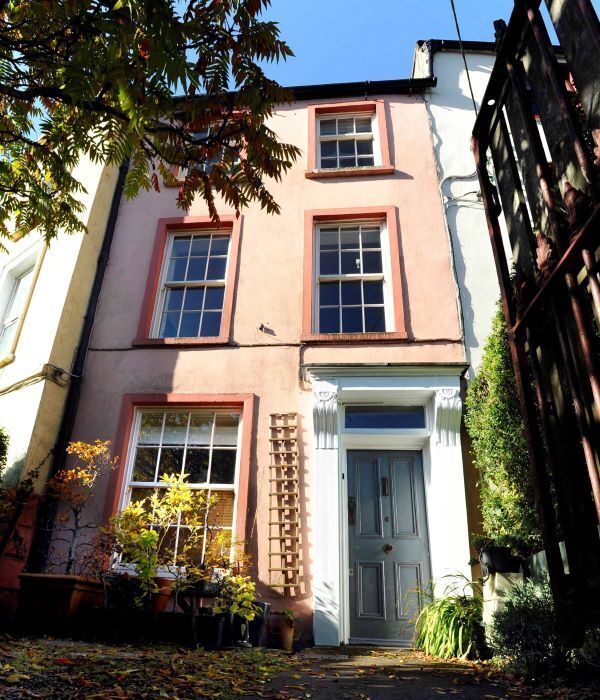
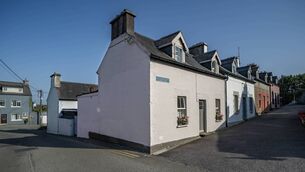
Dating to the 1830s, the Georgian townhouse has undergone a rigorous, but discrete, renewal over the past decade, guided by a conservation architect.
As the three/four-storey Cork city home comes up for sale, it acknowledges its venerable age — but with 21st century mod cons. It’s a characterful cracker, just in need of a fresh lick of paint for new occupation.
Seeking offers around €185,000, auctioneer and local resident, Andrew Moore, describes No 6 as “a classically restored period townhouse,” and he praises its painstaking renovations, extension and practical elegance.
Now, that elegance isn’t expressed in grand, large rooms, or ornate plasterwork, or marble fireplaces, it’s more in its integrity and honesty, bravely done.
Brave? How? Well, it’s one of only a handful of homes where the owners took out the pvc windows in the front facade, to replace them with new, hardwood sash windows with rope cords, very much as they would have been in centuries past.
Made by Glanmire’s Jim Kelleher, of Keltcraft Joiner, the windows’ small Georgian panes make perfect frames for views to the sandstone St Luke’s church across the road, which was used for concerts on culture night (Cork Chamber Choir, and Douglas Comhaltas) and is soon to be home of writers’s group, Tig Filí.
Mid-terraced, No 6 is on the sweeping bend coming up Summerhill, just before St Luke’s Cross, near a host of amenities, shops, services and the legendary Henchys bar. St Patrick’s Street is a 10-minute walk. It’s an easy urban lifestyle, with screened front and back yards for greenery.
Part of a trio of houses slightly smaller than their neighbours, No 6 faces east, with a tiny west-facing back yard, oddly accessed from a new ground-floor bathroom extension, and overlooked by the first-floor kitchen/dining room sit-out balcony.
‘Best’ room is a first-floor sitting room, with two sash windows, working shutters and solid-fuel stove inset into a slender fire surround, and this room — like several others — has a sturdy red-oak floor. That floor is repeated in the 20’ by 10’ kitchen/dining room, with bespoke kitchen, which has painted units (higher than the standard height) topped by serious-heft oak, with the slightest of curves around the hob. As in much of the rest of the house, it’s the exact opposite of bling, the work of serious craft done by joiner John Clarke.
The stairs, now in the house’s centre core thanks to the deep, rear extension, runs fully to the attic/fourth level, where’s there’s a slope-ceilinged 16’ by 14’ garret room, full of character, with original panelling and floorboards salvaged form lower levels, and Velux windows east and west. The roof was done by conservation experts Cornerstone, while Alan Moroney did much of the other building work.
The floor below, the second floor, is home to two decent-sized bedrooms, one with an old cast-iron fireplace, and there’s a shower room, an en-suite with the back bedroom and a vestibule entrance. Views behind are a beguiling jumble of yards, extensions and chimney pots — city life.
Back at ground level, there’s a compact front reception room/home office, with small, solid-fuel stove and chimneys that have been relined, with plumbing and electrics also redone.
The entry hall has original, buff tiles on the floor, and an internal arch leading to a useful (but windowless) utility room/bike store, and beyond is a surprise, a 12’ by 9’ bathroom with raised double-ended bath, screened by a wall of glass blocks, and with French doors to the enclosed, old stone-walled yard, with concealed gas boiler for the central heating.
VERDICT: Calling all urbanites: bigger than you’d expect, expertly redone, and refreshingly different.
CONNECT WITH US TODAY



Be the first to know the latest news and updates