Letters to the Editor: Mark Kilmichael ambush with reflection
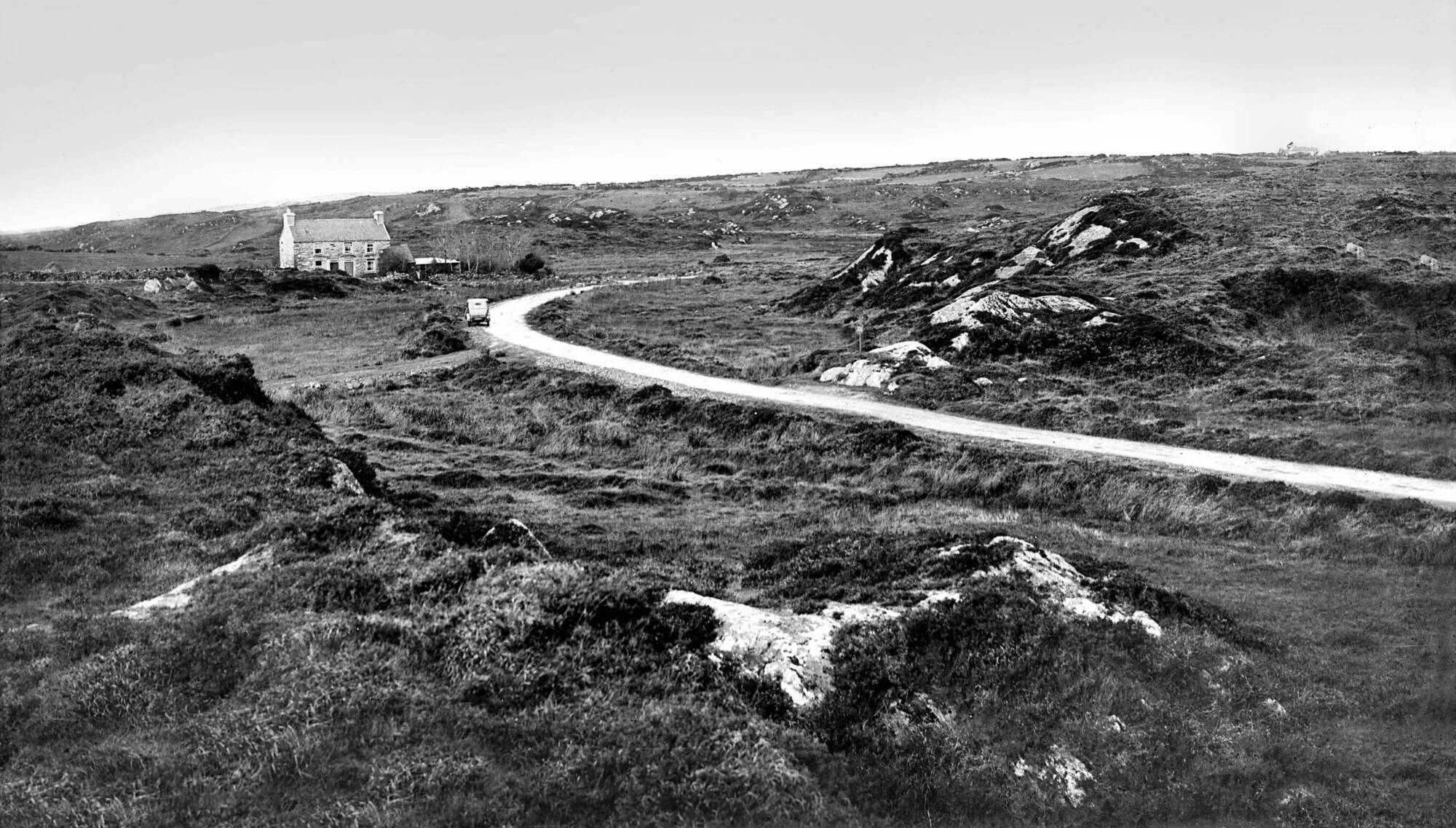
The Kilmichael ambush site pictured in 1931.
The commemoration of the Kilmichael ambush offers an occasion to reflect on its place in the Irish War of Independence and on the evidence through which we understand it.
On November 28, 1920, a West Cork IRA flying column led by Tom Barry engaged members of the RIC’s auxiliary division. The ambush demonstrated the capacity of a locally organised column to challenge the forces of the British administration. Seventeen auxiliaries and three Irish Volunteers lost their lives.
In my judgement, a false surrender took place at Kilmichael. I find the argument that Barry invented the episode for his 1949 memoir unpersuasive, particularly in light of the chronology of the surviving sources.
The historian Barry Keane drew attention to a letter sent by the Irish army’s southern command to headquarters in June 1924. Written in support of a pension application by the father of Michael McCarthy, one of the volunteers killed at Kilmichael, it records that McCarthy was shot after rising to accept what appeared to be a surrender. That account was in circulation 25 years before Barry published .
Historian Meda Ryan also documented accounts from Kilmichael veterans who recalled a false surrender. Witnesses differ on the sequence of events, including when McCarthy was shot, and those differences matter when reconstructing individual deaths. On the central question, the early documentary record and the testimony of participants together persuade me that a false surrender occurred.
At the commemoration, I hope we will also take time to remember Michael McCarthy, James O’Sullivan, and Patrick Deasy by name. Pat Deasy was only 16. For three West Cork families, an event that would enter national history was first a death in the family. That fact deserves its place in how we remember Kilmichael.
There is work that can still be done close to home. Families who remember hearing about Kilmichael from an older generation can record who told the story, when it was told, and what they remember of it. Those details allow future readers to distinguish firsthand recollection from what was passed down. They also preserve something the official record rarely captures, which is how an event of national consequence was remembered in the homes of the people who lived with its aftermath.
Few words in Ireland are more likely to unleash the dogs of political warfare than neutrality. It has now been joined by the infamous " triple lock".
The standard of debate ranges from the misinformed to the downright emotional, with nationalism inevitably rearing its head. It has become one of the most overinflated political footballs in the Houses of the Oireachtas.
Let us start from first principles. Ireland may claim military neutrality, but how credible is that neutrality without a reasonable capacity to defend ourselves?
Through decades of neglect by successive governments of all political hues, Ireland has become something of a soft underbelly of European defence. This is particularly ironic given the current Taoiseach’s championing of security as a central plank of Ireland’s EU presidency.
Nato was never the silver bullet it was portrayed as. Established as a defensive military alliance during the Cold War, it also served as an instrument of American foreign policy and military influence in Europe.
With the dissolution of the Warsaw Pact, one might reasonably have expected a fundamental reassessment of Nato’s purpose. Instead, the old behemoth was kept on expensive life support in Brussels while a new role was sought. Its prolonged intervention in Afghanistan hardly provided a convincing justification for its continued relevance.
Russia’s invasion of Ukraine gave Nato a renewed sense of purpose, while the European Union — increasingly influenced by the security concerns of its eastern members — sought a greater military role.
The EU possessed considerable economic resources, but limited independent military capacity. Nato possessed the military infrastructure but depended heavily on American commitment.
An arranged marriage saw the old bachelor Nato courted by a wealthy European bride. The honeymoon is being spent in Ukraine. Yet amid the military posturing, the endless crisis meetings, and the appalling human cost of the war, remarkably little attention has been given to an existing mechanism established precisely to prevent such conflicts.
The Organisation for Security and Co-operation in Europe (OSCE) emerged from the Helsinki Final Act of 1975. It represented a remarkable attempt to encourage dialogue between the two Cold War blocs.
Based around its three dimensions — politico-military, economic and environmental, and human — it offered a holistic approach to European security.
Its principal weakness, however, lies in its reliance on consensus and the politically rather than legally binding nature of its commitments. Its potential has also been overshadowed by the competing priorities of Nato, the EU, and the major powers.
For Ireland, the OSCE offers considerable opportunities. We were a founding participant and have been a strong supporter of its principles, successfully holding its chairmanship in 2012.
Ireland has a voice at the table rather than being on the menu.
Its inclusive membership brings together Russia, Ukraine, the US, Canada, and every EU member. Despite its limitations, it remains an established forum in which competing security concerns can be addressed.
Rather than allowing the debate on the triple lock to become a proxy battle over Nato membership, Ireland should concentrate on developing credible military neutrality, strengthening its own defence capabilities and reinvigorating the institutions of international dialogue.
Significantly, the proposed Defence (Amendment) Bill 2026 recognises the OSCE as one of the international organisations capable of providing endorsement for overseas military deployments. This aspect of the legislation deserves far greater attention in the public debate. It presents Ireland with an opportunity not merely to recognise the OSCE in legislation, but to champion its revitalisation as an instrument of European security, diplomacy, and conflict prevention.
There is a legitimate case for removing the power of an individual permanent member of the UN Security Council to obstruct Irish participation in peacekeeping operations. But reform of the triple lock should be accompanied by robust parliamentary safeguards and a clearly articulated commitment to military neutrality.
Ireland’s contribution to European security need not be measured solely in military expenditure or membership of alliances. It can also be measured by its willingness to champion diplomacy.
Perhaps the key to the triple lock lies, not in abandoning neutrality, but in giving it substance, credibility, and purpose.
Considering myself as part of the political left, I am bewildered as to why the collective left in Ireland want to maintain the triple lock and are presenting the issue as being a simple for or against Irish neutrality, without much evidence presented to prove how our neutrality would realistically be impacted by its abolition.
Presenting it disingenuously like this in a requested referendum would be a winner for maintaining the triple lock, no doubt. Keeping the triple lock is the opposite of sovereign neutrality, in giving the power of how we deploy our peacekeeping troops to a currently dysfunctional UN Security Council.
The outdated council is badly in need of reform, having been established as a peace coalition of the Second World War victors ... the US, the UK, France, Russia, and China.
Reform is unlikely in the near future. Using the Uniting for Peace mechanism of the UN General Assembly is cumbersome and also unlikely to be used.
It is worth remembering how the council has functioned since October 7.
The US vetoed six Gazan ceasefire resolutions during this period (potentially lifesaving on a massive scale), four under Biden and two under Trump. Biden also blocked a Palestinian statehood resolution in 2024.
The council, under heavy pressure from the US and Israel, is now withdrawing the Unifil troops from south Lebanon, leaving the civilian population exposed to who knows what. Israel has already proven form in this regard. Israel is pleased... there will be no witnessing international eyes on the ground in south Lebanon.
The council has not deployed a peace-keeping mission since 2014 in spite of many deadly global conflicts, mostly due to political gridlock and rivalry between the permanent council members.
Is this a mechanism we want to keep to grant permission to deploy our peacekeeping troops?
Removing it means that, like all other countries, we can still engage with UN peacekeeping forces but are not constrained in other decisions we might make as a sovereign nation.
Uphold the integrity and reform of the UN by all means possible, but maintain wise and objective judgement that these systems are not always as well functioning as they should be.
I note there is a petition before the Oireachtas calling for Shakespeare to be made optional, rather than mandatory, for Higher Level Leaving Certificate English. It’s my contention that this should be resisted.
Shakespeare is not just another writer on a long list. He created or codified nearly 2,000 words, and is the most translated secular author in history.
His plots and themes run through modern drama, film, television, and fiction. The argument that we should not elevate one man above everybody else misses the point. This is not about hierarchy, it is about roots.
I believe that one is incapable of fully comprehending modern English without understanding where it came from. One cannot recognise a reworking of or if you have never studied the originals.
Yes, Shakespeare borrowed from Sophocles and Chaucer, as all great writers borrow, but he still remains the genesis for English as we speak it today.
Making him optional is a slippery slope that should be avoided. If one author should be compulsory, it is Shakespeare.