Letters to the Editor: ‘Fairytale of New York’ raises good questions
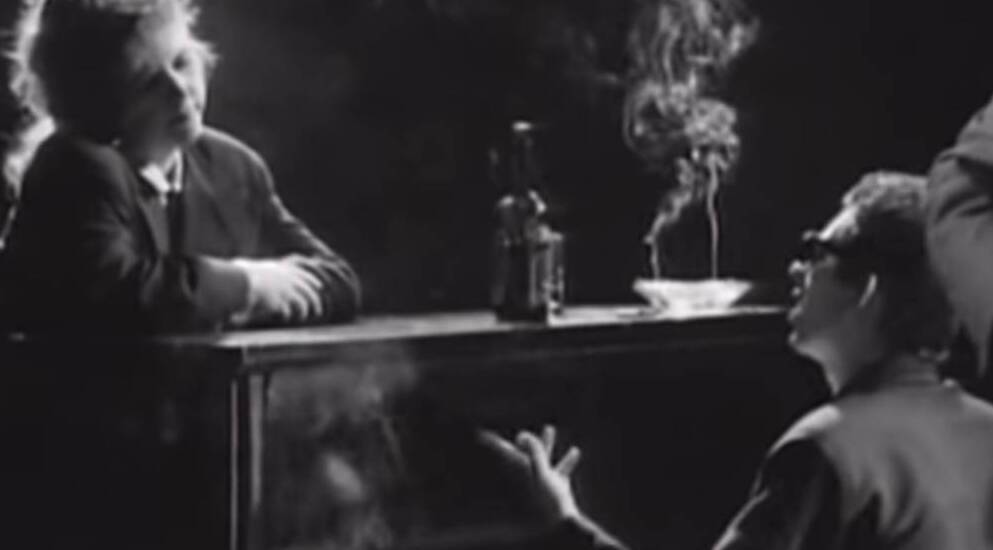
Shane MacGowan and Kirsty MacColl in the video for their chart-topping Christmas song, 'Fairytale of New York', which was first released on this day in 1987. File picture
This is the time of year when, as we walk through shopping malls, we cannot help but hear the now classic Pogues Christmas song Fairytale of New York. There is a line in it which reveals one of the major dilemmas of our time: “I could have been someone / well, so could anyone”. The truth is that every living person is already “someone”. It’s the dilemma of our time of our multimedia-saturated 21st century, we are immersed in a counter-culture built on a quagmire of illusions.
Women who have spent a good part of their lives looking after their homes and taking care of their children feel they have lost the sense of themselves in the process. It is said that rearing children is a thankless job and that is true in many cases when children grow up and move off to another country to follow their pursuit of a career or becoming famous, forgetting the sacrifices their parents made for them.
One has to ask the question “Why are we here on this planet?” Is it really to be “someone” in a popularity parade of business, sport, or politics or just to rear a family? In the past we were told that God has a plan for us all, and that we all have a calling in life.
But in a post-Christian or post-faith era, where do we get a meaning — an in-depth meaning for our lives when failure, sickness, or death approach?
Read More
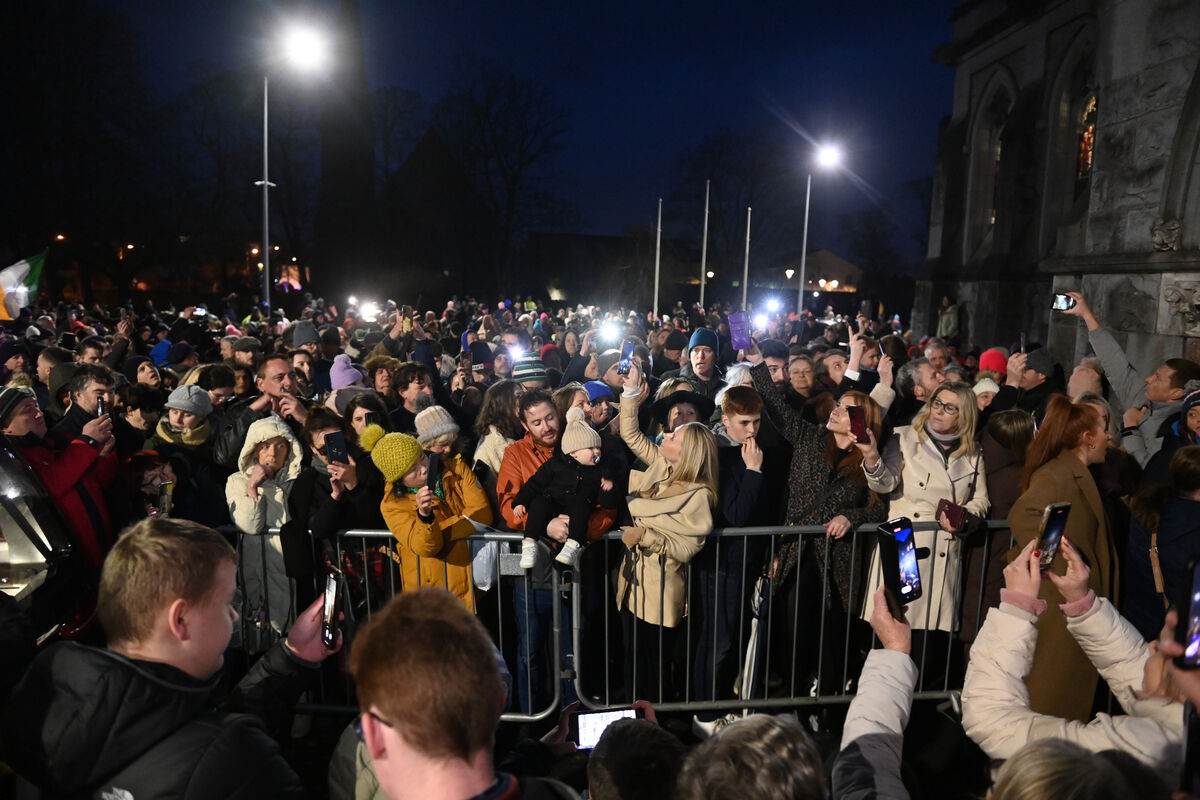
Is this an era when being a ‘community person’ is looked on as a waste of a life? We all know people who have been a great asset to society, community people have giving up their free time to help out with sports, residents’ associations, and amateur musical societies without any remuneration.
They may not get accolades, recognition, or fame but society is much poorer for their passing. Surely that is the “someone” we should be trying to be.
Recently the topic of married priests was discussed twice on RTÉ Radio One during two of its programmes. Some time a bit earlier, the closely-linked topic of the declining number of priests in the Catholic Church was also discussed on one of these same programmes.
However, these topics concern the internal regulations of the Catholic Church and often repeat the same details over many years.
Back in the 20th century, the discussion of these topics didn’t do much to solve the long-running troubles in Northern Ireland. Neither are they likely to solve the troubles of the world in the 21st century.
But if priests came on the radio to talk earnestly about how the family of mankind should care for all its members everywhere, they might then begin the process of doing real and practical good in our troubled world. By doing this, they should be able to encourage more men of conviction to join the priesthood.
I want to share a concern about Gareth O’Callaghan’s column, “Are we as intelligent as we think? I know what Barney the parrot would say,” (Irish Examiner, October 24). I enjoyed the article’s broader discussion of intelligence and will continue reading your column, but I felt disappointed by the comparison suggesting that someone who services a car engine might be viewed as less intelligent than someone who solves complex mathematical problems.
My concern is with the comparison rather than the quality or purpose of the article, and I hope you will consider how practical, technical, emotional, and professional skills can all demonstrate intelligence.
Intelligence is not limited to academic achievement; it can also be expressed through technical knowledge, sound judgment, problem-solving, communication, empathy, and the ability to support others.
I will continue to read and recommend your articles because I enjoy your work and feel that we share a similar generation and outlook. I hope you will keep exploring these subjects and bear in mind the many intelligent and compassionate mechanics who serve their communities every day.
Richard Hogan is right that stronger standards for community mental-health services represent an important step forward (‘This is a landmark moment for our nation’s mental health’, Irish Examiner, November 11).
His central point is simple but vital: People seeking help, often at the most vulnerable moments in their lives, should be able to trust the quality of the care they receive.
That principle should also guide how Ireland regulates counsellors and psychotherapists.
The Irish Association for Counselling and Psychotherapy strongly supports statutory regulation. But regulation must be about more than protecting a professional title. It must give the public confidence that the person behind that title has been properly prepared for the responsibility involved.
Counselling and psychotherapy are deeply relational professions. Practitioners routinely work with people experiencing trauma, grief, relationship breakdown, anxiety, depression, and significant emotional distress.
That is why supervised clinical practice, ongoing professional supervision, personal development, and rigorous ethical standards have long been central to professional training.
As Ireland strengthens oversight across our mental-health services, we have an opportunity to ensure regulation of counselling and psychotherapy is equally ambitious.
This is not an argument against regulation. Quite the opposite. It is an argument for regulation that is credible, proportionate, and strong enough to command the confidence of both the public and the profession.
In the words of mental health minister Mary Butler: “Good mental health services should move people towards the life they want to live”.
That should be the measure against which we judge the choices we make now.
Mick Clifford highlights the state of our Government’s housing policy (‘Ireland’s housing crisis is breaking the social contract between generations’, Irish Examiner, November 14).
The statistics are dismal and an entire generation faces into the tender embrace of the private rental market.
Cognitive dissonance is the order of the day: Everyone agrees that there is a housing affordability crisis. Yet no mainstream political party can explicitly advocate lower house prices without being decimated at the polls.
The silent but widespread belief that high house prices are “good for me personally” is deeply embedded in Irish society.
It exerts a powerful influence over government policy.
Housing is the only human necessity where people are encouraged by high prices and strive to maintain them. In tandem with this, the Dáil has a disproportionate number of landlords who have a vested interest in the maintenance of the status quo which is bound to affect their appetite for the political risks required to change it. No other developed Western country in economic history has had such a dysfunctional housing market for so long. Many of the causes and obstacles are outside government control. But some of the projections and assurances provided by government have transcended inaccuracy and are neighbours to falsity.I voted for this Government and would do so again. But lassitude, windy spasms of make-believe, and a resigned attitude are quietly generating a vast disaffected constituency of young educated adults. This will have vast political consequences on top of the socioeconomic ones.
The process is well underway and it will soon reach a tipping point if it is not addressed.
I find the complacency of Government parties at present to be utterly baffling. We have some excellent courageous and reforming ministers on the bridge of the ship of state. But the cold waters of homelessness and unaffordable rents are sloshing against the portholes on the lower decks.
If the officers of our political class do not find fresh impetus and the urgency due to this moment the political fragmentation we have witnessed over the past seven or eight years will seem orderly and quaint in the years to come.
The future does not begin tomorrow. It begins today.
Fianna Fáil and Fine Gael were both young and radical once. When the stakes are this high, the forgetting of that is a crime. An increasingly stratified and Americanised Ireland comprised of bilious shouting winners and silent demoralised losers would be the sow that eats her farrow.

BLACK FRIDAY
Already a subscriber? Sign in