Glass so much more than half-full for Ireland at half-empty Twickenham
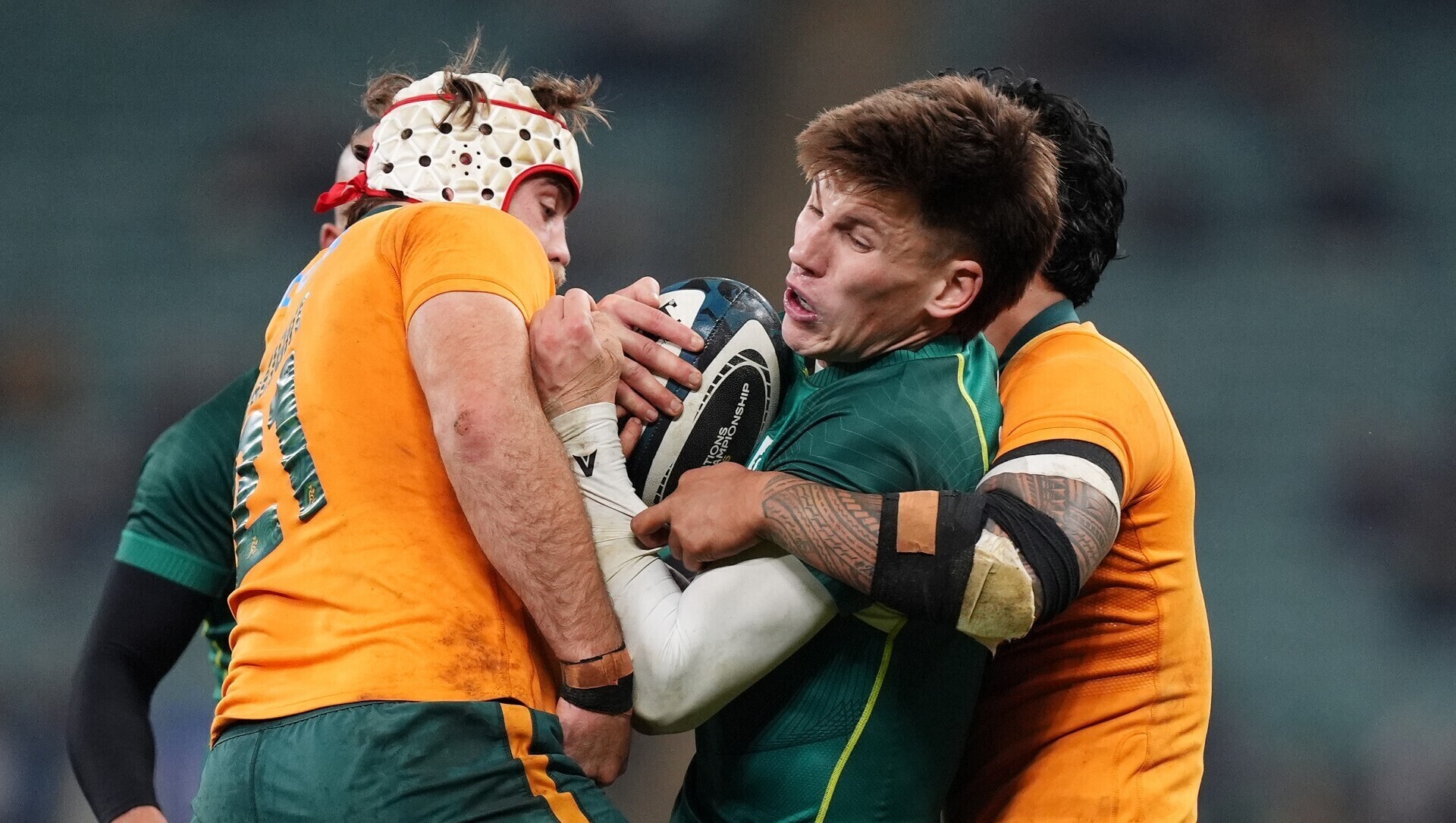
HOLDING FIRM: Ireland’s Sam Prendergast is tackled by Australia’s Fraser McReight and Len Ikitau at Twickenham. Pic: Mike Egerton/PA
Twickenham half-empty, Ireland at half-tilt for close to the first half-hour but, by the end of this oddity of a fifth-place playoff against the Wallabies, a Nations Championship glass that stands a long way north of just half-full.
This wasn’t the wrinkle-free performance that Andy Farrell had in mind after last week’s rousing result against South Africa. For a time here it looked like Ireland’s world might actually be turned upside down just six days after undoing the world champions.
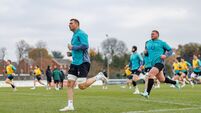
The Ireland head coach went with his strongest possible selection for this last game at the end of a month where the biggest of Test animals available to him had already done the majority of the dogwork against Argentina, Fiji and the Springboks.
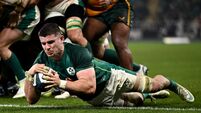
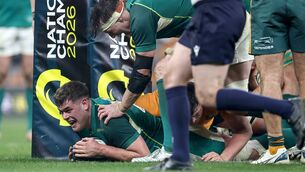
His reasoning was simple: momentum. Hit 2027, and the build-up to the World Cup, in full stride. They didn’t quite manage that in London, even if a five-try, 38-14 win should brook few strong arguments in the cold light of day.
They started on snooze.
Rob Valetini stiff-armed Ryan Baird on the kickoff, Joseph-Aujuso Sua’ali’I barrelled into Hugo Keenan in the air, and then the Wallabies won a pair of penalties off the game’s first two penalties. Oh dear.
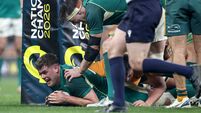
The Aussies had 87% territory and 79% possession by the time Jeremy Williams claimed an overdue opening try 23 minutes in. This month’s schedule is one Ireland used to mimic a World Cup. It had, at that point, all the signs of another quarter-final exit.
They responded. They had to.
Muscle memory, and maybe a bit of fear, kicked in. Seventeen points in the space of 17 minutes allowed them close out the half with a ten-point advantage and keep most of the rest of the contest under their thumb.
But that false start… Go back just over three years and it was a soporific opening against the All Blacks in Paris that ultimately cost the team its shot at an historic semi-final, and maybe more again. A repeat of that, or this, and they can kiss the last four goodbye in Oz next year.
There were other warning signs besides. Jamison Gibson-Park looked in trouble after shipping a knee to the ribs after 23 minutes with the scores level. He played on but imagine the fretting if he was forced off so early in a World Cup knockout game next year.
A penny as well for Ciaran Frawley’s thoughts.
The Skerries out-half took the plunge by moving from Leinster to Connacht last summer so that he could get a No.10 jersey on his back and make himself a more attractive proposition for similar honours at Test level.
He managed three appearances for Ireland over that same summer, one of them still his only start to date in the playmaker’s position, against Japan. His club form coming in to November was promising and yet he hasn’t been allowed kick on.
The regeneration of Sam Prendergast, who made just his 22nd cap against the Wallabies, has been first, second and third priority. Frawley sat on the bench for the duration against South Africa last week and needs-must had him slotting in at 15 last night.
Jack Crowley’s recovery from a complicated vascular problem continues. The hope is that he will be back on the roster in 2027. If not then Ireland are going to a World Cup with a reserve ten that has precious few minutes in the role.
Again. If once was unlucky, and twice careless, then whither four in a row?
That scrum-half situation raises similar worries but Farrell has nailed his colours to the mast long before the voyage Down Under.
Next spring’s Six Nations will be not be a stage set for auditions. Ireland are already at a point where they have opted to stick rather than twist.
So, up-and-down as this effort was, it was easy to see the thought processes behind the decision to target momentum over the prospect of greater game time for fringe players, especially with the team’s uncertain form line coming in to it.
Farrell will also, rightly, point to the reintegration of key men like Andrew Porter, Mack Hansen and Hugo Keenan after long layoffs this month, and to the re-education of Prendergast in green after his loss of form at the end of last season.
Ryan Baird has emerged as a tour de force, Dan Sheehan can now moonlight at No.8 while Sean Jansen, Nick Timoney and James McNabney have put up their hands higher than they could have managed prior to these four games.
The squad has not been in stasis this month.
The scrum has shown (some) signs of improvement, the defensive lineout has real promise, the attack game looks slick at times with Robert Baloucoune now an undisputed try machine, and they have, lets not forget, won all four of their recent games to boot.
In all, Ireland used only 31 of their 35 squad players this month and the likes of Caelan Doris, Jack Conan, Crowley and Ringrose have all to return from injury. If the door hasn’t yet fully closed to any latecomers then it is no more than barely ajar.
Next up, England in Dublin in the Six Nations.

BLACK FRIDAY
Already a subscriber? Sign in

CONNECT WITH US TODAY



Be the first to know the latest news and updates