Letters to the Editor: We must learn from the past on defence spending
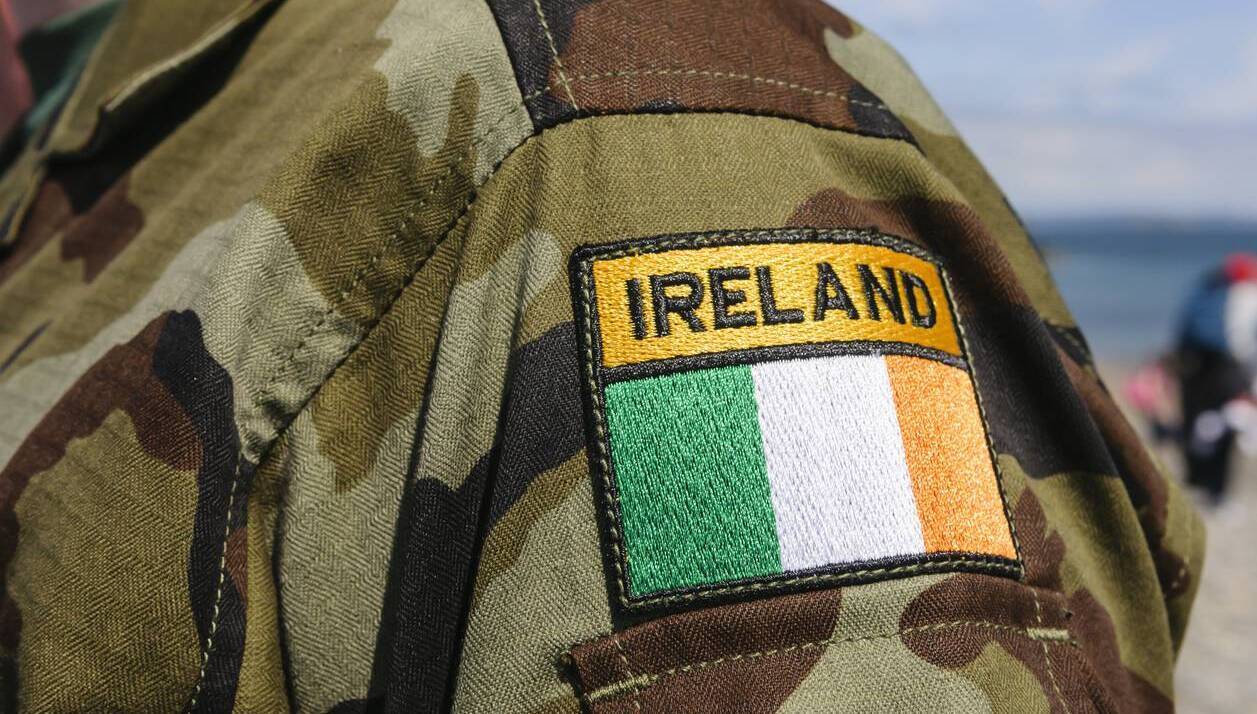
'As Ireland enters serious defence procurement, oversight should be external'
'As Ireland prepares for the largest defence spending in its history, it is worth recalling a forgotten episode from the past.' File picture

'As Ireland prepares for the largest defence spending in its history, it is worth recalling a forgotten episode from the past.' File picture

As Ireland prepares for the largest defence spending in its history, it is worth recalling a forgotten episode from the past.

During the Emergency, the Defence Forces expanded rapidly but never had enough small arms to equip the force or its reserve.

A business case was made after the war ended and finally acted on in 1954, when the State purchased some 50,000 Lee-Enfield No 4 rifles and more than 2,500 Bren light machine guns, enough to arm the force and hold a strategic reserve.

Six years later, Irish troops went to the Congo in bull-wool uniforms, carrying those rifles.

There they faced Katangese gendarmes and mercenaries armed with modern self-loading rifles, among them the Belgian-made FN FAL.

An emergency purchase of the same rifles followed, and it was the late 1960s before the whole force had them.

By 1957, Britain itself had adopted a self-loading rifle. Ireland had committed in bulk at the end of a generation, and nobody reviewed the decision as the world was moving on.

Institutional groupthink is a recognised risk in any large decision, and defence procurement is currently reviewed only internally. Defence is evolving and purchases need independent review, before and after.

As Ireland enters serious defence procurement, oversight should be external, through the Oireachtas Committee on Defence and National Security, which currently lacks the powers and expertise to provide it.

Alan Kearney Comdt (retd), Cessange, Luxembourg

Triple lock debate

Your contributor Dorcha Lee and others have offered excellent analyses of the triple lock’s diminishment of our national sovereignty. There is also a more quotidian objection. We appear to the world as a coy and dependent money-changing freeloader reading peacenik fairytales to itself and pocketing the peace dividend that the citizens of other countries pay for.

“Everyone loves us” — I wouldn’t bet the house on that and national defence is always a significant part of the mortgage. 

The signals we send in the policies we adopt and the debates that we conduct are very important. Countries that are seen to be willing and able to defend themselves are far less likely to be called upon to do so. They also command more respect in all other negotiations among their international peers.

Michael Deasy, Bandon, Co Cork

Cost of being charitable

Our charity shops have been in the news recently regarding the volume and quality of donations coming through their doors. As well as quality goods well up for reuse, these charity shops are also being taken advantage of for what amounts to free waste disposal.

In other words, items of clothing and other objects that are beyond resale or clothing of such poor quality in the first place to have little to no commercial value.

Our textile waste appears to be out of control, so the question is how to fix it and who will do it? Maybe we could begin with education and awareness-raising among ourselves about the volume of shopping each of us does and the lifespan we expect from what we buy.

Up until recently, there was money to be made by charities for the sale of textiles for recycling but that market seems to have closed off or reduced now. So where do used textiles go when charities can’t sell them and landfill isn’t a responsible way to dispose of them? Is it time for local authorities or private waste operators to step up with a collection system similar to the return scheme?

In a commerce driven society this waste has the potential to be repurposed for good and that must not mean wrapping it into bales and shipping it overseas from one of the richest countries of the world.

Mary Shanahan, Tralee, Co Kerry

Call to act on ‘coercive abortion’

Ann Murphy’s report leads by reporting calls from Sweden and other countries for Ireland to remove the life-saving three-day waiting period and to expand the availability of abortion services.

I was in Geneva for Ireland’s Universal Periodic Review. Your readers should note Ms Murphy’s failure to report recommendations from Romania and South Africa which urge Ireland to crack down on coercive abortion.

Romania recommended that Ireland take steps to investigate and prosecute “harmful practices such as forced sterilisation and coercive abortion” and South Africa also called for a proactive effort to tackle coercive abortion.

Cases of coercive abortion have been reported in Ireland. In Letterkenny in February 2026, a man was sentenced to nine years for forcing his ex-partner to take abortion pills, resulting in the death of her baby. In January 2026, a man received eight years in Mullingar after forcing his former partner to abort under threat of violence. It is likely that many of such cases are not reported.

Victims of trafficking or domestic abuse are especially vulnerable to coercive abortion. It is a fact that the continued provision of telemedical abortion, introduced to reduce in-person medical consultations during the covid period, risks facilitating coercion.

The HSE and Women’s Aid have noted the value of in-person consultations in detecting such abuse. Whatever one’s personal views on abortion, I expect that reasonable people will agree that coercive abortion is not something we should facilitate or support.

Caroline Simons, Pro Life Campaign, Mount St Upper, Dublin 2

Learn from history?

While history may not repeat itself, the failure to learn the lessons of history has resulted in millions of avoidable deaths and environmental and infrastructural destruction.

Over the past three centuries, humanity’s leaders have tried to create peace after catastrophic wars. It would have been wiser to create peace before the wars. The 30 years’ war led to the Treaty of Westphalia 1648 and the questionable birth of nation states.

The Napoleonic wars ushered in the 1815 Congress of Vienna. The First World War gave us the flawed 1919 Treaty of Versailles and the League of Nations, which led to the Second World War.

The UN Charter 1945 should have been the principal pillar of global jurisprudence. Abuses of the power of veto led to proxy wars by the two superpowers.

The end of the Cold War should have brought global peace and justice. Instead, humanity suffered US-led wars of aggression leading to the destruction of the rule of international laws.

The appalling Palestinian genocide perpetrated by Israel with the active assistance of far too many other countries shows little signs of being stopped.

Instead of preventing the genocide the UN Security Council resolution 2803 has approved the Trump- dictated Gaza peace plan, which is facilitating the genocide.

The Irish Government is doing far too little to assist the people of Gaza and instead of promoting international peace, our government is in the process of abandoning Irish neutrality and providing military and financial assistance to one side in the conflict in Ukraine.

A study of history shows that we learn very little, or learn all the wrong things, from our historical mistakes.

With the proliferation of nuclear weapons, the next catastrophe could cause the end of human history.

Meanwhile, cost-of-living protests are dominating discussion in our privileged Western world while the costs of existential wars are largely ignored.

Edward Horgan, Castletroy, Limerick

More in this section

Revoiced

Newsletter

Had a busy week? Sign up for some of the best reads from the week gone by. Selected just for you.

Cookie Policy Privacy Policy Brand Safety FAQ Help Contact Us Terms and Conditions

© Examiner Echo Group Limited