Letters to the Editor: Demolish the old Cork prison
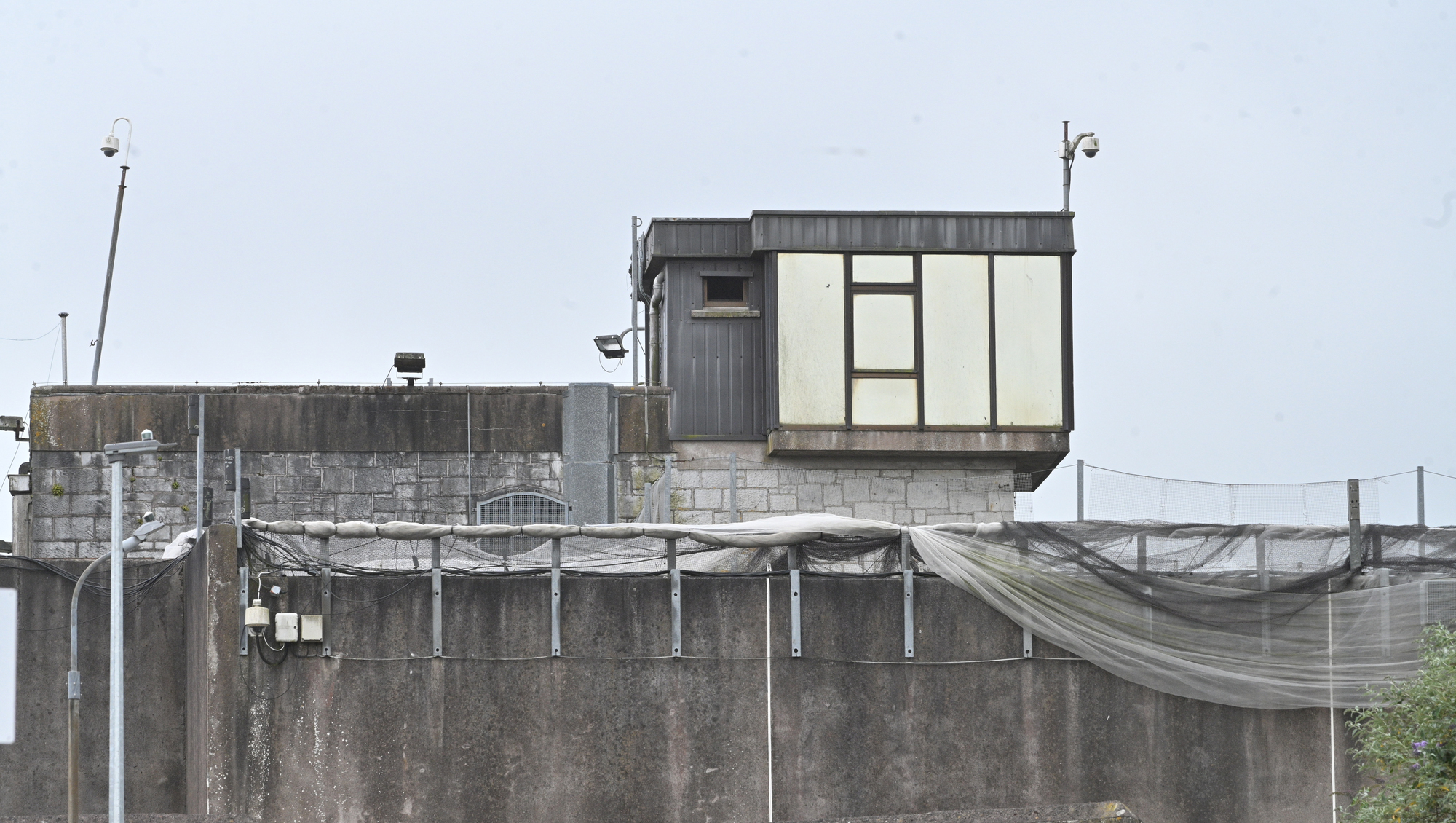
The watchtower at the old Cork Prison. 'Cork badly needs a new, well-planned second prison to help deal with overcrowding in our current prison, which is too small for our growing population.' File picture: Larry Cummins
As someone who grew up not far from the old Cork Prison, I would like to voice my support for its demolition. Removal of this old vacant and derelict eyesore is long overdue. I hope the old prison is demolished in its entirety.
Many people in Cork would welcome this outcome.
Cork badly needs a new, well-planned second prison to help deal with overcrowding in our current prison, which is too small for our growing population. If we are to successfully tackle crime in Cork, reform and rehabilitate prison inmates, address addiction issues among the current prison population, and improve the mental health of prisoners, then we need a new, purpose-built facility on the site of the derelict old Cork Prison.
I am writing in response to opinion piece in your paper by Rory O’Carroll, in which he advances case for legalising all drugs in order to curb drug-related violence and weaken criminal markets.
Mr Carroll draws comparison to Switzerland, where heroin has been available on prescription since 1994. However, he does not seem to take into account that opioid-related harm has become a significant health issue in Switzerland, mainly caused by high availability of prescription opioids, leading to a 177% increase in total opioid calls to the National Poison Centre between 2000 and 2019, as
reported in Science Direct in 2022.
It is disappointing that Mr O’Carroll, a celebrated All Ireland medal winner and social worker, does not advocate for primary prevention and social interventionist responses, given his experience and achievement as an athlete. Indeed, Mr O’Carroll does not address issues of mental health, social-deprivation, poverty, or homelessness in his article. Additionally, he does not address how mapping risk and protection factors in local communities can reduce people’s risk and vulnerability to substance misuse as evidenced by the Icelandic prevention model, which is a community-based public health framework developed in the 1990s.
The rise in violence against women in Ireland and globally should concern us all, and not enough is being done to reduce this epidemic. Femicides are up 57%, from seven in 2025 to 11 so far this year, domestic abuse call-out numbers are up, and a new report from the National Women’s Council states that there is a severe lack of refuge and emergency accommodation for survivors of domestic violence. Women’s Aid has reported a 33% rise in domestic abuse disclosures in its latest annual impact report.
We need action to stop this worrying rise in violence against the women of Ireland.
A nation taking a stance on military neutrality is a serious affair, and one to be respected, especially if that nation is seen to back up its position with strength. Military neutrality requires military strength to defend and project determination.
Ireland, though, can’t defend its neutrality, unlike Switzerland, for example. Its national defence forces, modern and professional as they are, are small and lack any real defensive capabilities. This is why it is reliant on Nato neighbours, particularly the UK, to protect sovereignty. Airspace, for example, is protected by the Royal Air Force, and the naval service cannot truly protect its waters. Switzerland, though its forces are in need of investment and modernisation, can put up a fight to defend its neutrality, and it is half the size of Ireland with a lower GDP per capita than Ireland. Yet Switzerland invests in its neutrality. Ireland does not.
Historic arguments for a united Ireland seem to be the mainstay of republican thinking on this island, while ignoring the risks of pushing for a united Ireland.
These could include a loyalist terrorist backlash, administrative chaos, and possibly civil war. But there are those pushing and pushing and seemingly forgetting the fragile peace.
To attempt a united Ireland when things are so bad and Stormont hanging on by a thread, one should not proceed. The argument is also brought forward that because Sinn Féin has a majority that now is the time,but many argue a majority is not nearly enough in a deeply divided society to bring about the concept of a united Ireland.

BLACK FRIDAY
Already a subscriber? Sign in