Letters to the Editor: A word of praise for CUH
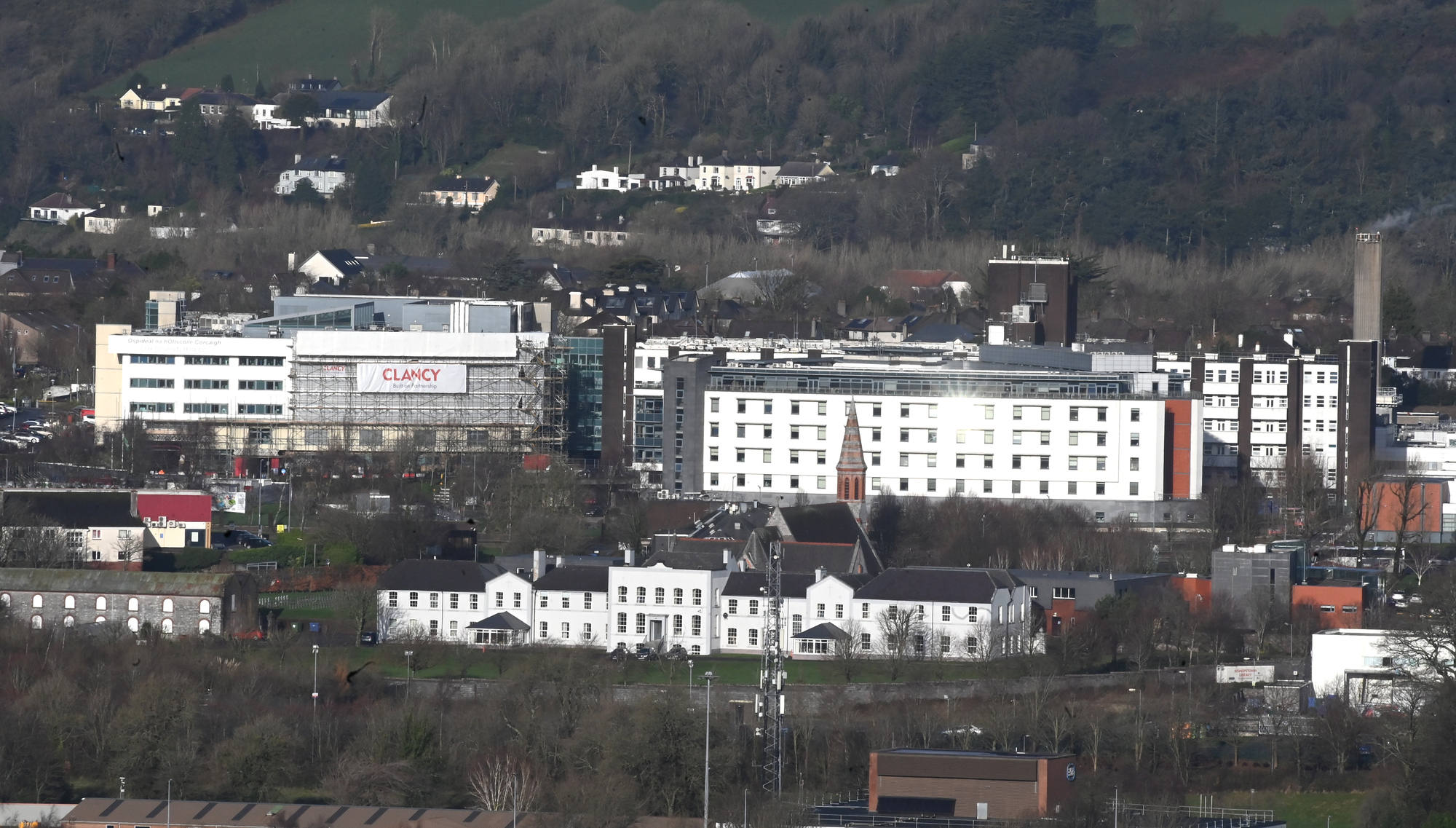
Cork University Hospital. Ken O'Riordan writes: 'I was full of admiration for the respiratory consultant and young respiratory doctors and nurses.' File picture: Larry Cummins
Recently my wife called me at 5am — she was in a panic being unable to breathe.
I called the ambulance and they gave her immediate treatment and called the emergency department of Cork University Hospital to alert them that they had a very ill person that they would bring in shortly.
Her right lung had collapsed and the doctors and nurses immediately worked on her and rectified her collapsed lung.
She was brought to a ward and they subsequently brought her to the theatre where surgeons performed a treatment to her lungs under anaesthetic.
The treatment meant there is only a very slight chance of the lung collapse reoccurring.
I was full of admiration for the respiratory consultant and young respiratory doctors and nurses.
I also felt a sense of pride that this country and this city has this wonderful staff and facility to treat its citizens when ill. I am aware that the facility is overstretched and another such hospital is required.
As November approaches, it’s once again time to, focus on the souls in purgatory. This is the month set aside by the Church to assist in a special way those who have gone before us, those whose souls may not yet have reached heaven.
The most efficacious way to help these souls is to have Mass offered on their behalf which of course can be done anytime throughout the year.
A plenary indulgence which is the release of a soul from purgatory into heaven can be gained for the first eight days of November — that is one per day — by visiting a graveyard on each of the above mentioned days and reciting the Our Father, the Creed and a prayer for the Pope’s intentions and any other prayer of one’s choice for the deceased. One must also go to confession and receive holy communion during this time.
The following is a prayer which St Gertrude stated relieves souls from purgatory each time it is recited:
“Eternal Father, I offer Thee the most Precious Blood of Thy Divine Son Jesus, in union with the Holy Masses said throughout the world today, for all the Holy Souls in Purgatory, for sinners everywhere, for sinners in the Universal Church, those in my own home and within my family Amen.”
It is also worth noting that a plenary indulgence can be gained every single day during the year by praying the rosary in a church or by spending 30 minutes before the blessed sacrament and by praying for the Pope’s intentions in either case. One also needs to go to confession to achieve this and to be as free from sin as possible.
The holy souls which includes many of those whom we have known and loved in life, plead now for our prayers and sacrifices to hasten their entry into heaven — let’s not keep them waiting!
Columnist Mick Clifford highlights how the housing crisis is increasingly impacting older people, a group often overlooked in debates dominated by the struggles of the young — ‘Warning sign on the road ahead’ as older renters face homelessness (Irish Examiner, October 24).
According to Social Justice Ireland’s 2026 poverty focus report, a steadily increasing number of older people are now reliant on the private rental sector.
Mr Clifford writes that a spike has occurred in the number of retirees who have never owned, and will never own, a home of their own.
I fully concur with Mr Clifford’s criticism of the Government for failing to plan for a growing cohort entering retirement under deeply insecure conditions and where he notes that without affordable and secure housing, older renters face severe poverty, and while our young people face punitive rents and unreachable purchase prices, time is at least on their side; but sadly for older people, the light is very much fading.
Many older adults rely entirely
on pensions or modest savings, which do not adjust dynamically to double-digit rent hikes.
Housing is central to one’s dignity, independence, and wellbeing in later life.
The Government must explicitly address the housing needs of older people.
There is a rapidly growing number of seniors in Ireland who could be referred to as “severely cost-burdened”, which means that this demographic, spends over 50% of their total income on housing alone, leaving little for food, healthcare, or heating.
One must remember that loosing one’s home — or living under the constant threat of eviction — has unique compounding impacts on older populations.
It’s absolutely shocking to think that when rent consumes the bulk of a pensioner’s budget, it leaves them frequently having to cut back on essential medications, or find themselves skipping doctors visits, or rationing their food.
This is a glaring failure of the policies of government.
When older people have to move away from a familiar neighbourhood, their vital local support networks are destroyed, which in turn accelerates depression, loneliness, and cognitive decline.
Social Justice Ireland recently reported that “without great access to affordable and secure housing, increasing numbers of older renters may face poverty and financial hardship in later life”.
The Government can offer us all this demagogic rhetoric regarding how they are going to resolve this situation.
However I would like to remind this government, that actions will always speak louder than words.
The next time the Government tries to convince us that they care, I would suggest that we look at what they do, and not what they say.
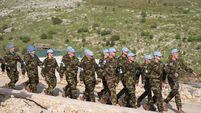
Whether you support the triple lock or oppose it, whether you favour Irish neutrality or want Ireland to take a different path, you have a right to decide. These are fundamental questions of national sovereignty.
Taoiseach Micheál Martin and Tánaiste Simon Harris are taking that choice away from the Irish people.
Some believe European Union membership brings an obligation to defend the union militarily. Others believe the EU was meant to be an economic union, not a military alliance. Whatever your view, the Irish people deserve a say.
The triple lock was central to securing public acceptance of the Treaty of Nice after the first referendum was rejected. It safeguards the deployment of more than 12 Irish troops overseas by requiring UN authorisation, government approval and Dáil approval.
Changing that safeguard without asking the people is no minor policy adjustment — it is a fundamental change to Ireland’s commitments. It demands democratic consent, not a decision imposed from above.
And what of our neutrality? Micheál Martin has sought to distinguish military neutrality from neutrality in other respects. But neutrality means more than staying out of the firing line. It should mean using Ireland’s independent voice to promote dialogue, diplomacy, and peace.
Instead, critics accuse this Government of standing by as Palestinians endure devastation in Gaza, while aligning Ireland with Western policy on Ukraine rather than using our neutral status to pursue meaningful dialogue with Russia. Why abandon the opportunity to help build a just and lasting peace for Ukraine, Russia, and Europe?
And now comes the ultimate betrayal: billions potentially committed to conflict while people at home struggle with the cost of living and essential public services remain under pressure. Those funds could help build homes, strengthen healthcare, improve public services and ease the burden on ordinary families. Neutrality is not weakness. Democracy is not optional. And Ireland’s future is not the personal property of its taoiseach.
On the triple lock, on neutrality and on the prospect of deeper military commitments, the Irish people must have their say. Our sovereignty. Our money. Our future. Our decision.
On April 17 each year, World Public Transport Day (WPTD) is held to honour the essential role that buses, trains, metros, and trams play in local economies. It also recognises that they provide invaluable social connection and environmental stability.
Luxembourg already provides year-round free public transport for all its inhabitants and visitors, but I do not expect Ireland to be as progressive, it might be a step too far for our politicians to take.
However, they might consider having public transport free for WPTD. It could encourage many more to use the service on the day, if only to take a bus into town or wherever for a cup of coffee and a sandwich. Some might even make a day trip out of it and take the train to a city on the far side of the country.
Going one step further, some organisation such as Fáilte Ireland, TFI, Irish Rail, OPW, or similar, could sponsor a collection of images and written stories from the travellers on the day, with a view to publishing a selection of the best in a book. If it works for the first year it could be repeated annually to help boost public transport.