The French right to strike enjoys constitutional protection. In Ireland, no equivalent right exists. Perhaps our vastly different protest cultures are no coincidence.
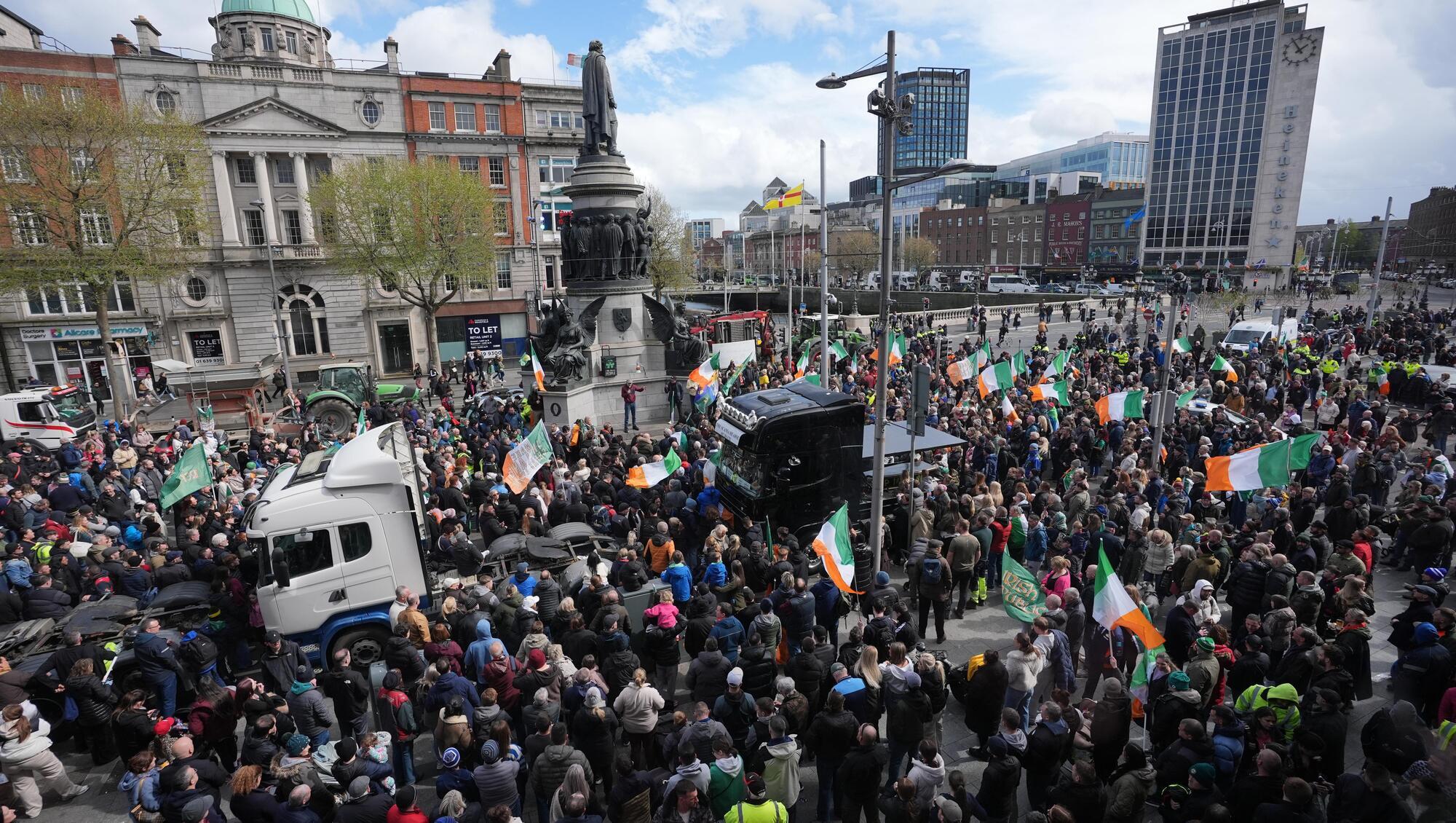
There is no doubt that this has been a seminal year for strikes and protests in Ireland. Between the fuel protests in April, which ground the country to a halt for several days, and the ongoing largest public sector strike in recent Irish history, a lot has happened in the Irish political sphere.
Our European neighbour, France, is also having an explosive year of strikes. In the last two months, France has been rocked by days of strikes, hundreds of arrests, and extensive property damage. These protests stemmed from discontent with their government and educational system.
But for two European countries experiencing some of the most intense and disruptive protests in their recent histories, why is the extent of that action so different?
In short, why is Irish protesting so tame in comparison to the French?
According to the European Trade Union Institute and the International Labour Organisation, the French strike eight times more often than the Irish. There have been several sociological and psychological analyses of the Irish people and culture in an attempt to explain our generally low strike rates compared to some European countries.
Such reasoning has ranged from remnants of Catholicism to faith in the power of austerity. Another theory is the lack of a constitutional right to strike.
The current protests were caused as French unions went on strike over the government’s budget plans, which include €54m in public spending cuts. Similar concerns have also helped drive industrial action in Ireland.
But why have we in Ireland not escalated in the same way as the French have?
The violence seen in parts of France should not be confused with the right to strike. But the broader willingness to engage in disruptive collective action raises a more interesting question: Why do the French generally view such action as a legitimate political tool, while the Irish tend not to?
The EU protects the right to strike, but each country can govern the details differently. The law relating to strikes in France is the most restrictive in the public sector.
Despite this, most working days lost to strike action in France are because of public companies, eg, the SNCF, La Poste, and Air France. Seemingly, the love the French possess for a strike must come from elsewhere.
Could the French constitution, which provides for the right to strike, be the root of this? The absence of an equivalent right in the Irish constitution may be the cause of our somewhat restrained strikes in comparison to our French counterparts.
Both France and Ireland’s constitutions are meant to reflect their society. The French constitution’s explicit right to strike is indicative of the value placed on this right in French society, while the Irish Constitution’s silence on the matter reflects a more restrained tradition.
In Ireland, there is no constitutional provision that provides for a right to strike, though the right to associate and unionise, and the right to freedom of expression are all provided for.
Labour law in Ireland has long followed the principle of ‘voluntarism’, which holds that there should be an absence of legal intervention in the industrial relations arena.
The result is a notable divergence in culture: in France, striking is widely recognised as a legitimate democratic tool, whereas in Ireland it has never enjoyed the same constitutional status or social prominence.
In their book, How Constitutional Rights Matter, Adam Chilton and Mila Versteeg attempt to answer the question: do constitutional rights matter or are they merely “parchment barriers”? They conducted a statistical study using data of the constitutional rights of 186 countries.
Forty-six per cent of constitutions include the right to unionise and virtually all of these include the right to strike, except Ireland.
When a constitution includes the right to strike, it is automatic that the unions have this right. A constitutional right to unionise is no substitute for a constitutional right to strike.
Although the impact of each right is difficult to measure in isolation, the evidence points in one direction: workers are better protected where both rights are guaranteed.
France provides both. Ireland does not.
If constitutional rights matter, Tunisia proves it. Since enshrining the rights to unionise and strike in its 2014 constitution, workers have been able to invoke the right in court when defending themselves against legal challenges arising from strike action.
Following this, the country has seen workers make greater use of industrial action, with 150 strikes authorised in 2015 by one union alone.
France’s strike culture reflects the same principle. Constitutional protections do not simply recognise existing rights; they help embed them in a country’s political and social culture.
As Chilton and Versteeg argue, rights written into a constitution are more likely to be respected in practice, leading to stronger protections for workers overall.
Of course, there is no guarantee that Ireland would replicate the experiences of Tunisia or France. Constitutional change alone cannot create a strike culture overnight.
Yet the Tunisian experience is consistent with the wider research: When the rights to unionise and strike are given constitutional protection, workers are more likely to exercise them.
If Ireland were to enshrine a right to strike in its Constitution, it is difficult to imagine that the industrial relations landscape would remain unchanged.
Perhaps this then answers the question. If constitutional protections help shape attitudes towards collective action, could the absence of a constitutional right to strike be one reason why industrial action in Ireland remains comparatively rare and restrained?
While many factors undoubtedly contribute to Ireland’s relatively low strike rates, the constitutional silence on the issue may itself be part of the explanation. Rights that are constitutionally protected are more visible, more legitimate, and ultimately more likely to be exercised.
Madilynne Hayes, New York (formerly Kinsale, Co Cork)
Breast cancer funds
Micheál Martin has taken to Instagram in a pink tie to encourage schools and workplaces, to get involved in breast cancer support.
People can show solidarity with cancer patients, but they should not have to compensate for a State that fails to deliver the services it promised.
The Government published a National Cancer Strategy, then failed to pay what it pledged. The Irish Cancer Society estimates it was underfunded by almost €180m between 2017 and 2024.
BreastCheck fell nearly 60,000 women short of its own screening target last year, missing it for the second year running.
One in four women referred by their GP with possible breast cancer symptoms were not seen on time. The cancer strategy promised to double clinical trial access to 6% by 2020. Six years later, the State is delivering half of what it promised its own patients.
People are already struggling with everyday costs. Yet the State expects them to fundraise for services it is supposed to provide.
Fund the screening. Staff the clinics. Hit your own targets. Every missed appointment is a woman whose cancer is found later, and later is when people die.
The Taoiseach promised these services to the people. Now the State should pay for what he promised. People’s lives depend on it.
Alan T Kelly, Straffan, Co Kildare
Triple lock removal
Fianna Fáil is planning to remove the triple lock, and by doing so, is undermining the United Nations, the only global agency with a remit for world peace.
The Security Council of the UN may need reform, but we also have the General Assembly, which represents 99% of countries; it has no veto and can approve peace and security resolutions.
Fianna Fáil must listen to the people of Ireland who have consistently, in over 20 years of opinion polls, shown desire for Ireland to be neutral and to be a peacemaker.
Elizabeth Cullen, on behalf of Lex Innocentium, 21st Century, Kilcullen, Co Kildare