Letters to the Editor: Waging war is a very expensive business
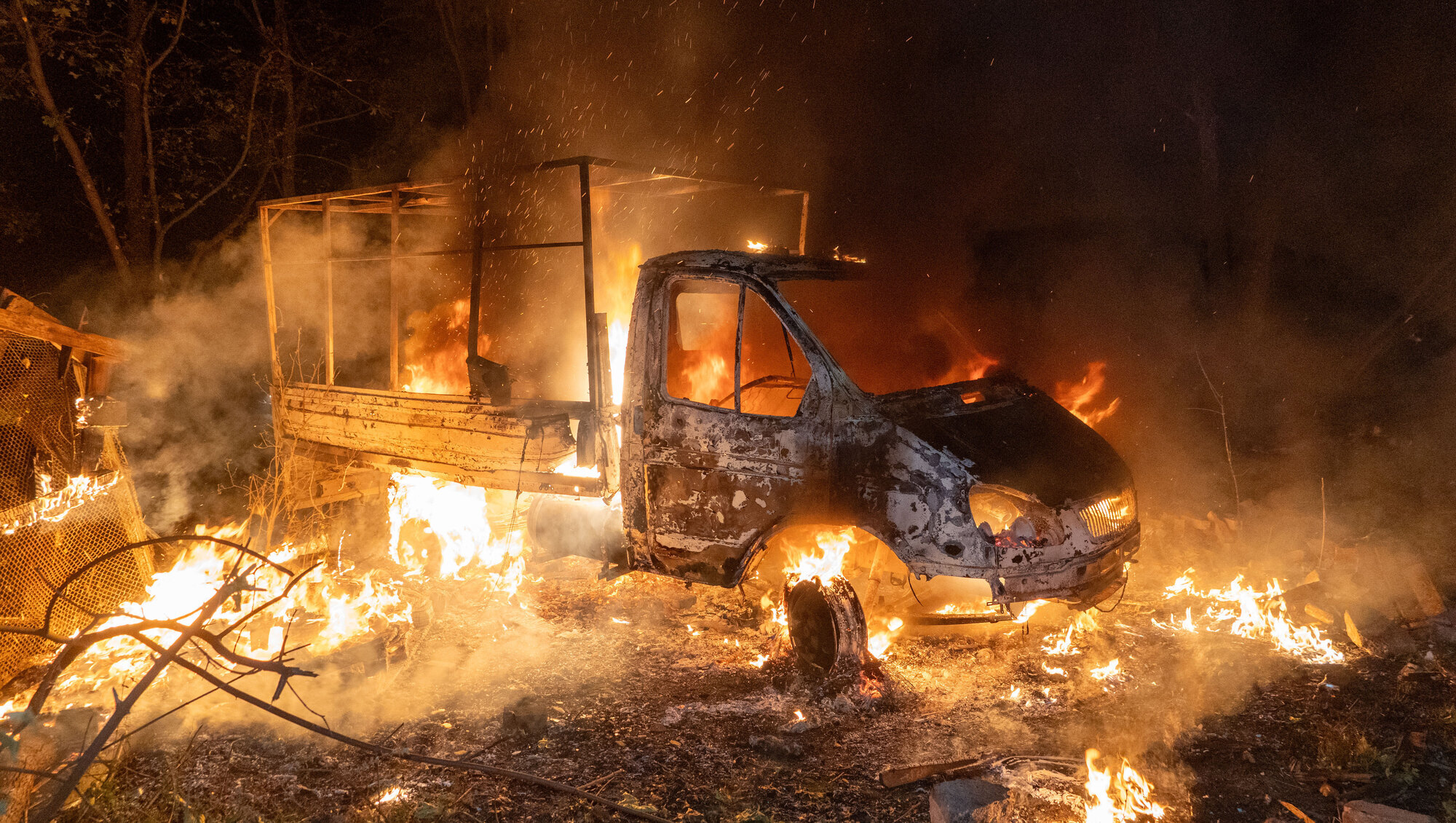
A car burns after a Russian drone strike on a residential neighborhood in Kharkiv, Ukraine. Picture: Andrii Marienko/AP
Waging war is a very expensive business, both in terms of the cost to the exchequer and in the number of human lives lost, not to mention the resulting reputational damage, especially to the aggressor’s country.
In February 2014, Russia seized and annexed the Crimean Peninsula before launching a full-scale invasion of Ukraine on February 24, 2022.
If the war goes on much longer, it will most probably bankrupt Russia and severely damage Europe and the world’s economies.
Perhaps the time has come for someone to try to convince Russia’s president Vladimir Putin that the longer it goes on, the worse it will become for his regime, perhaps resulting in an uprising to overthrow his government, like the November 1917 Bolshevik revolution.
This could lead to great loss of life in Russia, his included.
The question is, who is best placed to try to persuade him of that?
If he opts for peace with the world it leads to a much better and more prosperous outcome for him and for his country, especially if it can lead to trade deals to be agreed with the EU.
We in Ireland don’t have an army to threaten anyone, but we do have a stellar reputation of assisting crisis resolution with our international peacekeepers.
We also have diplomats of the highest calibre, who could possibly, with cogent debate and reasoned argument, open his eyes and persuade him to seek a future for his country that is infinitely better than the existing situation.
One thing I fear is, that if someone doesn’t try to stop the war soon, it could soon lead to the Third World War. Time is not on our side.
I am 55 years old and have been a taxi driver in Dublin for the past 15 years.
This job is my livelihood and how I provide for my family. I want to highlight the serious crisis facing our industry.
We see workers across every sector — civil servants, teachers, and healthcare staff — seeking fair pay increases to keep up with the rising cost of living.
Yet taxi drivers have been left behind. Our income has been drastically eroded, and we are struggling to survive.
The key issues we face:
- Platforms like Uber take up to 45% commission from drivers, yet pass on only around 10% to passengers. Free Now charges 25% commission, often adding just €1–2 to the fare. This is eating directly into drivers’ earnings;
- Costs have risen sharply: Fuel is over €2 per litre, insurance costs are up, roof sign rental is more expensive, and the cost of replacing vehicles has soared. But fares have not kept pace;
- Fare-setting should be the responsibility of the National Transport Authority (NTA), not private companies. It is the NTA’s job to calculate fares fairly — taking into account the real cost of living, running costs, and a decent wage for drivers — not to let platforms decide what passengers are charged.
There are 27,000 taxi driver families in Ireland depending on this work.
Many are considering leaving the industry because it is no longer possible to earn a living.
We protested peacefully outside the NTA on October 13, but have received no meaningful response.
If drivers leave in large numbers, there will be a serious shortage of transport — especially as we approach the busy festive season — affecting communities, tourism, and our economy.
We are not asking for special treatment — simply fairness. At the very least:
Keep fares at a level that reflects real costs;
Give the NTA full control over fare-setting — not private platforms;
Ensure commission charges are fair and transparent.
We need a sustainable taxi service in Ireland — but that is only possible if drivers can earn a decent living.
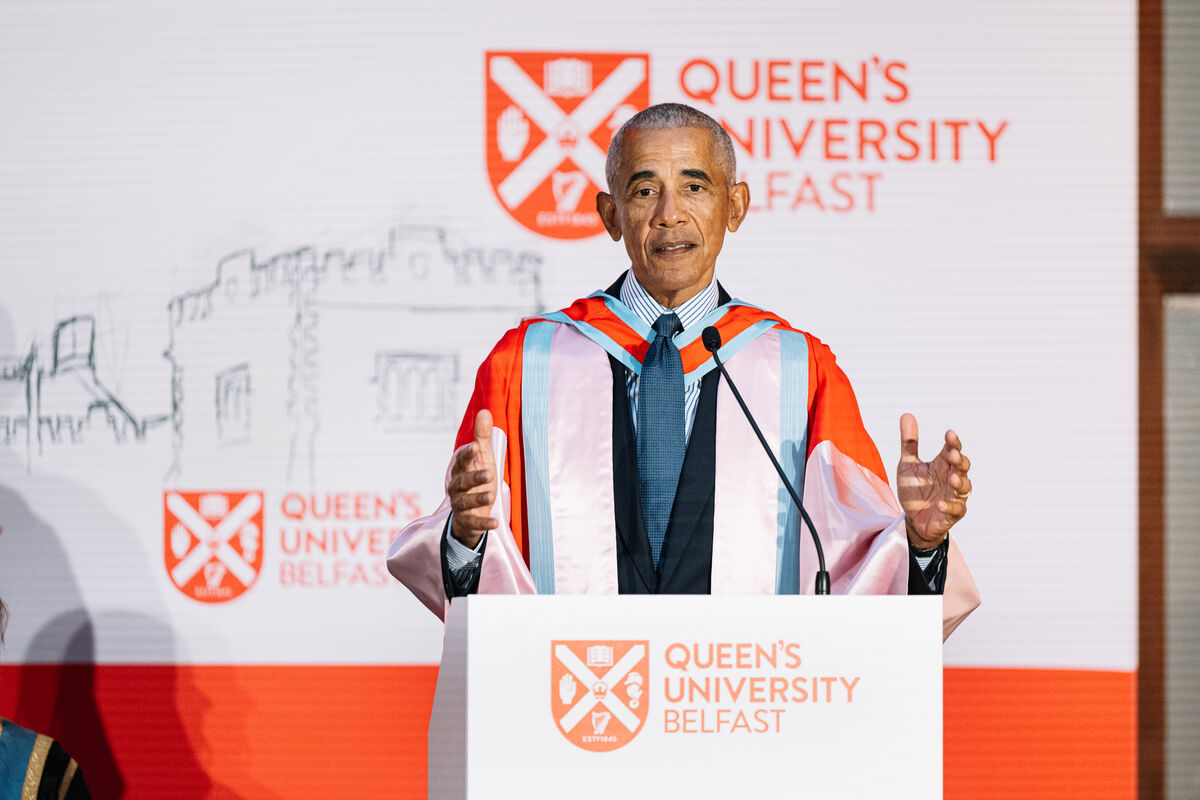
During a public conversation in Belfast, former US president Barack Obama said that Jews seeking refuge “took land off people”, adding: “And those people understandably said, ‘this is injustice and I want my land back’.”
Obama has received fierce pushback for his comments, but the backlash should not obscure the documented history of Palestinian dispossession.
Israeli historian Adam Raz’s 2024 book, , provides a carefully researched account of how ordinary Israelis and soldiers systematically looted Palestinian homes, shops, and farms during and after the 1948 Arab-Israeli War to prevent Palestinians from returning.
Looting encompassed everything from furniture, household items, and valuables to factory and farming equipment.
The book also documents how these actions were acknowledged and lamented by contemporary Israelis, with Israel’s first prime minister, David Ben-Gurion, privately condemning the theft as widespread even as it continued.
Raz bases his work on extensive archival research, including newly opened records, eyewitness accounts, diaries, and newspapers, making the evidence particularly credible.
Palestinians lost more than possessions: they lost livelihoods, communities, and access to homes and land.
An honest response to Obama must confront that history.
I see that the Department of Agriculture, Food and the Marine’s Animal Welfare Strategy for the period 2026 to 2030 is near completion and will be published in the near future.
According to the department’s website, the strategy aims “to improve animal welfare in Ireland” and “will act as a framework for engagement and collaboration to direct future activities with the aim of benefiting both animals and Irish society”.
Taken at face value, these are noble sentiments and aspirations, and most fair-minded people would share them.
But will the Government tackle animal cruelty arising from politically well-connected practices, as distinct from merely increasing fines for offences already on the Statute Book?
Past animal welfare strategies have completely overlooked a range of activities that involve intense, unnecessary, and avoidable suffering to animals.
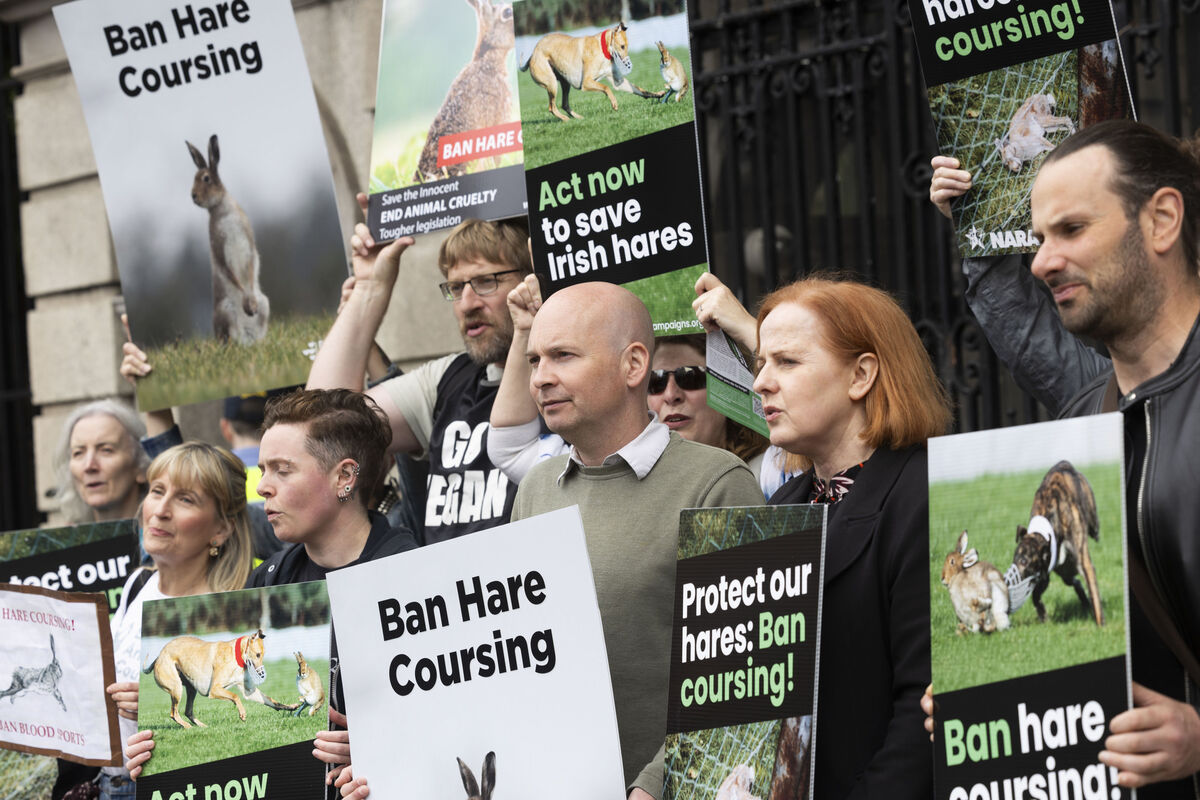
The 2026 to 2030 strategy will be toothless, and indeed an insult to the nation’s intelligence, if it fails to address hare coursing, which has been outlawed in many jurisdictions on animal welfare grounds.
Though the dogs are muzzled, they can maul the terrified hares as they twist and dodge around a field. The hares can be tossed into the air by the larger and faster animals that are set on them for fun.
I suggest that the banning of this activity would “benefit animals and Irish society”, as the department says it wants to do.
Likewise fox hunting: How can the Government say it’s committed to eliminating animal cruelty if it allows people to gallop on horseback with a pack of dogs in pursuit of a wild dog, chasing the animal until its lungs give out and the pack closes in for the kill?
To quote a masterpiece of understatement from a UK government-sponsored report: “Hunting can compromise the welfare of the hunted animal.”
The cruelty of racing greyhounds should also be addressed in the new strategy.
The dogs are forced to live unnatural lives to serve a gambling-led, State-funded industry, suffer appalling injuries on the track, and thousands of them are culled each year due to underperformance or age, not to mention the use of prohibited substances to enhance or impair performance.
And will the strategy end the live export trade? Some ferry services have already halted the transport of Irish livestock to the continent, and only Irish Ferries now operates the trade from Ireland.
Will the plight of the animals forced to endure long and distressful journeys take precedence over the demands of a powerful lobby group?
It remains to be seen if the Government will grasp these nettles, but on past experience I fear that it will again opt to fudge the issue.
I hope I’m wrong, and that it won’t kowtow to those who seem to hold our politicians in a vice-like grip.
We who campaign for animal protection have no axe to grind with genuine healthy pastimes or with farmers making an honest living, but we hold that hounding animals for the craic, viewing and using greyhounds as “commodities”, and sending calves on hellish journeys should no longer be acceptable in 21st-century Ireland.
We’re better than that, or we ought to be.