Letters to the Editor: Antisemitism materialising as pattern of institutional blind spots and missing data

'While Jews have lived in Ireland since 1079, our shared history is fraught.' File picture: Martin Schutt/dpa via AP
Walking between worlds on a razor’s edge, my identity is a constant tension.
As the son of the Irish and Jewish diasporas, I bear both an ancestral tie to the State of Israel and Irish citizenship through my father.
I hang the shamrock and the Star of David around my neck as a point of pride, but increasingly, as a heavy weight.
While Jews have lived in Ireland since 1079, our shared history is fraught.
The Second World War casts a long shadow: From Ireland’s wartime neutrality and the 91 Luftwaffe airmen buried in the Wicklow Mountains, to fringe historical elements that courted dangerous alliances.
History is messy.
Tough times aren’t solely confined to history books, either.
My father’s hometown of Limerick underwent a devastating pogrom, an economic boycott and Jewish expulsion over a century ago that erased its entire Jewish community.
Today, visiting Limerick, I find no trace of Jews.
Worse, the modern mechanisms designed to track our safety are failing.
Antisemitism is materialising as a pattern of institutional blind spots and missing data.
In 2025, the Irish Government reported 780 hate-related incidents nationwide, yet recorded zero instances of antisemitism.
According to the official Ireland Hate Crime Report, this absence of data “indicates potential gaps in the information reported”.
Contrastingly, the Jewish Representative Council of Ireland independently tracked 143 antisemitic incidents in just six months among a population of roughly 2,200 Irish Jews.
When history faces modern pressure, the political response is often indifference.
Last year, Dublin City Council weighed a proposal to rename Chaim Herzog Park, named in 1995 to honour the memory of the Belfast-born president of Israel.
Though ultimately withdrawn for technical reasons, the mere debate signaled the fragility of respecting one of Ireland’s most historically marginalised minority groups.
Simultaneously, Ireland struggles to educate the public about the Holocaust.
A disturbing poll from the Conference on Jewish Material Claims Against Germany revealed that 9% of Irish adults believed the Holocaust was fictional; 17% believed the death toll was significantly exaggerated, and 50% did not know that the Nazis murdered 6m Jews.
My dual heritage is politically charged, but it is also an inheritance to bridge people.
When my young son eventually travels to Ireland and introduces himself, my wish as a father is for him to comfortably and safely express the entirety of his identity.
Ireland is a nation that can live up to its highest ideals.
To protect one of its smallest historic minorities, Leinster House must take concrete action to curb antisemitism: This process starts by mandating robust Holocaust education, overhauling data collection protocols for antisemitic hate incidents, and ensuring that Irish-Jewish history is never forgotten.
Ireland’s inheritance tax system discriminates against the families and loved ones of citizens who do not have children.
The scale of the discrimination is stark.
A home valued at €400,000 inherited by a son or daughter attracts a Capital Acquisitions Tax bill of zero.
The very same home, if left to a brother, sister, nephew, or niece, results in a tax liability of €118,800.
If a childless citizen wishes to leave that home to a lifelong friend or devoted carer, the tax bill rises to €125,400.
The asset is identical. The tax treatment is not. The only difference is whether the deceased had children.
That is not equality before the law. It is discrimination based solely on family status.
A tax system that effectively asks one question — “did you have children?” — before deciding the level of tax is fundamentally wrong.
It is morally indefensible, inherently biased and has no place in a republic that claims to treat all citizens equally.
Equality cannot remain a promise in principle while discrimination continues in practice.
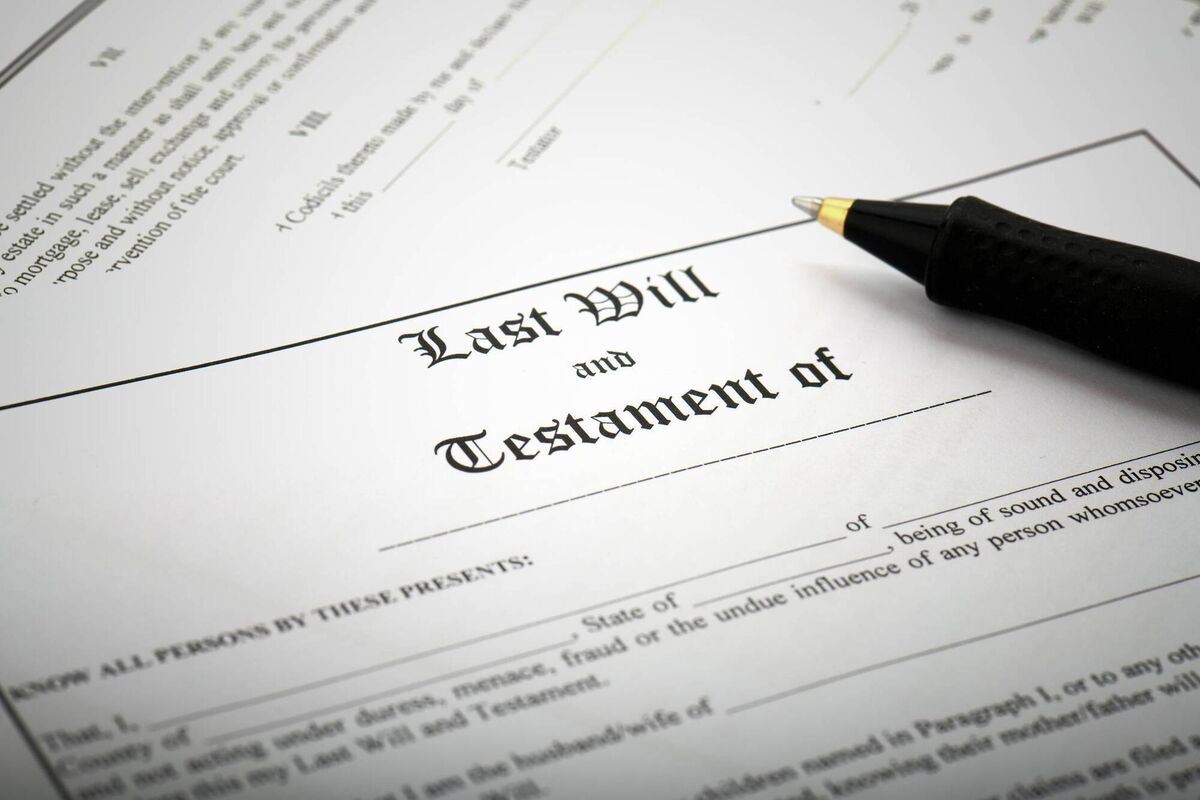
Budget negotiations will always involve competing demands for limited public resources.
Whether the State treats all citizens equally before the law, regardless of family status, is a more fundamental question than any individual spending commitment.
The opportunity must not be missed in Budget 2027.
James Sexton
Model Farm Rd, Cork
I’m writing regarding bone health. I’m a mum and carer to my son Jack who is now 21 years old. Jack has a severe/profound intellectual disability, Down syndrome, and a rare disease.
He is a full-time wheelchair user and has been on many medications since he was born. He is on steroids since he was a year old.
These combined with being a wheelchair user and having an intellectual disability mean he is at greater risk of osteoporosis.
In 2022, Jack was hospitalised for four weeks with debilitating pain but from an unknown source.
During the course of investigations it was discovered that he had a fracture in his spine.
At this point I asked if he could be started on infusions to strengthen his bones.
I was told by staff in the paediatric endocrinology department that they don’t prescribe infusions for bone density until the child/young adult breaks a big bone — eg, arm/leg.
Last year in January it was noted on a chest X-ray that he had a fracture on his clavicle. This was an incidental finding. We don’t know when either of these fractures happened. Again I asked about the infusions, but was told the same thing.
So roll on to May 2026 and my poor boy was in hospital for two weeks in dreadful pain and extremely ill when it was finally discovered that he had a broken leg.
Again there was no particular incident — which is a huge cause for concern in itself.
He remained in hospital for 11 weeks in total.
His leg was in a full-leg cast for nine weeks followed by a below-the-knee cast.
He has been casted for 12 weeks now, but due to his immunosuppression and complex needs he has to have the cast on for a further five weeks at least.
He has had it on for the entire hot summer. We both missed the summer in hospital.
After he got out of hospital on July 24, we managed to celebrate his 21st birthday and went on holidays to the sunny South East for two weeks.
While there we were using our mobile hoist for transfers and as we couldn’t fit it under the base of the bed, we had to use bed risers which meant pulling the bed out from the wall.
We used two bed rails to keep him safe but he pushed against one until it broke and fell out of bed. This resulted in yet another fracture.
So here we are — four fractures later.
The point of my letter is to tell paediatric endocrinologists far and wide that it is vital to give infusions to prevent osteoporosis in children like mine.
Prevention is better than cure: Infusions don’t cure osteoporosis but they sure help to prevent further fractures.
Thankfully Jack started infusions while in hospital and is under the care of a wonderful bone health specialist Dr Rosie Lannin, to whom I am grateful.
However, I do believe it is too little, too late.
I really feel it’s a discriminatory issue.
Had Jack not had an intellectual disability in 2022 would he have been started on infusions for his bone density? I think so.
Jack also had delayed puberty due to his medical issues/Down syndrome.
He really only started to come into puberty in late 2024. He is still only getting there. Puberty is important for bone health and endocrinology doctors wanted to start testosterone injections when he was 18 but he was just after an 8.5 month admission in hospital after being extremely ill so I refused that.
I didn’t actually realise until that point that puberty assisted bone health.
I had to weigh up the pros and cons but at that time his health had been too unstable so we didn’t do it; his endocrinologist in St James’s Hospital supported me in that decision and just weeks after we started seeing her he started puberty, naturally, himself.
So I want to make a plea to doctors to see the child or young adult before them when they suffer a fracture and think of all the other issues they already have to endure.
If these infusions to improve bone density prevent further fractures surely it’s a no-brainer to prescribe them for our vulnerable children with life limiting conditions or under palliative care.
I hope doctors will consider changing the practise of ‘waiting until they break a big bone’.
Because our kids are mostly non-verbal the fractures are often there for a while causing untold pain before/or if they are discovered.
This pain can cause so many other issues and fractures can cause clots and infection.
So surely this is the best solution to risking the health of this vulnerable sector of our society.