Letters to the Editor: Reforms to citizenship should strike a balance
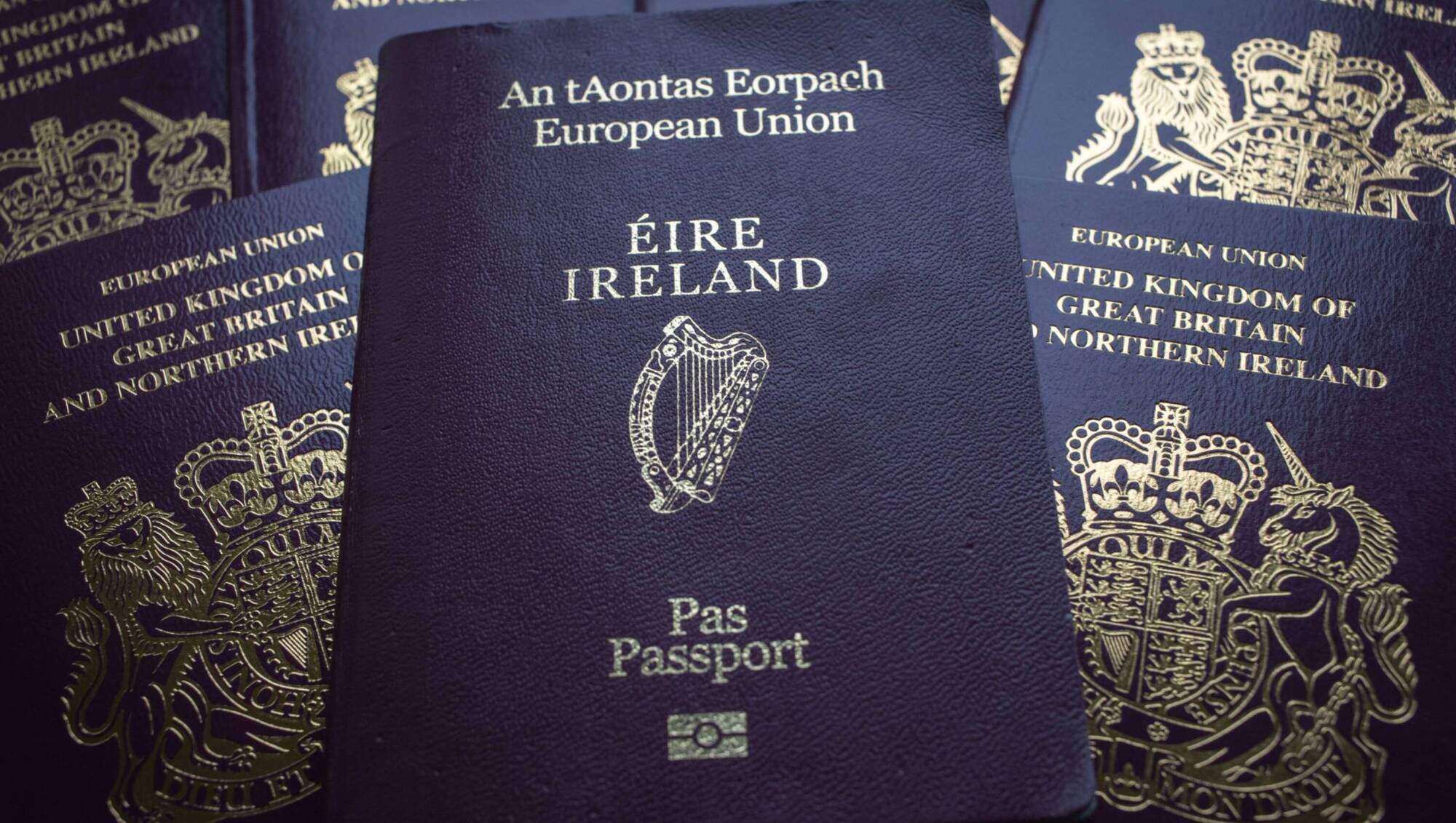
'Citizenship is more than a legal status. It carries rights, responsibilities, and a permanent place within the national community'
'Citizenship should neither be handed out automatically nor placed beyond the reach of those who have built their lives here.' Picture: Matt Cardy/Getty

'Citizenship should neither be handed out automatically nor placed beyond the reach of those who have built their lives here.' Picture: Matt Cardy/Getty

Recent reports that the Government is considering reforms to Ireland’s citizenship laws have reignited an important debate about what Irish citizenship should represent in the 21st century.

At present, most applicants for naturalisation can apply after five years of reckonable residence within the previous nine years, including one year of continuous residence immediately before application. 

Applicants must also be of good character and demonstrate an intention to continue residing in Ireland. 

Unlike many European countries, Ireland currently does not require applicants to pass a citizenship test, demonstrate English-language proficiency, prove financial self-sufficiency to a defined standard, or provide evidence of civic knowledge and integration.

While Ireland should remain a welcoming country, citizenship is more than a legal status. 

It carries rights, responsibilities, and a permanent place within the national community. 

It is therefore reasonable to expect that those seeking Irish citizenship can demonstrate a meaningful connection to the State.

In my view, reform should be both fair and proportionate. 

Extending the residency requirement from five years to eight may be excessive and risks delaying citizenship for people who have worked, paid taxes, and contributed to society for many years. 

A six or seven- year period with the last two years of continuous residence might be reasonable.

Nevertheless, there is a strong case for strengthening other aspects of the process.

Applicants should be able to demonstrate a basic proficiency in either English or Irish, sufficient to participate in everyday civic life. 

They should also show that they have complied with Irish laws, have not become a persistent burden on the State without good reason, and have made genuine efforts to integrate into Irish society through employment, education, volunteering, or community involvement.

Ireland might also consider introducing a simple citizenship and civic knowledge assessment, similar to systems that operate successfully in many other European countries. 

Such a test should focus on practical knowledge of Irish democratic institutions, rights, responsibilities, and values rather than acting as a barrier to genuine applicants.

Citizenship should neither be handed out automatically nor placed beyond the reach of those who have built their lives here. 

The challenge for Government is to strike a balance between maintaining Ireland’s tradition of openness and ensuring that citizenship retains its value and significance.

A tougher but fair system would command greater public confidence and strengthen, rather than weaken, the meaning of Irish citizenship.

Killian Brennan

Malahide Rd, Dublin 17

Climate change and food supply

In Ireland it’s unlikely that the shelves in our food stores will become empty any time soon, especially our main staple food products of meat, dairy, and fish products.

Yet, climate change is likely to make food production much more difficult, with ongoing weather patterns becoming much less predictable.

Scarcity of supply will be frustrating for shoppers.

Clearly the intense and widespread heatwave and prolonged drought that has affected most of Europe, the UK, and Ireland will have a serious effect on farming output which will directly curtail the amount of beef and dairy products available to consumers in the coming months. 

Farming reports from Europe and the UK already indicate a substantial drop in cereal crop yields, due to the prolonged heatwave and drought.

This especially applies to wheat-crop yields which are expected to drop substantially in many locations in the UK and Europe. 

As a result, it’s likely that the supply of cereal-based consumer products including bread, breakfast cereals, and a wide range of confectionary products will be affected.

It’s also possible that some vegetables, fruit items, and horticulture products will be in short supply. 

As usual, scarcity of supply will be frustrating for shoppers and will also lead to much higher prices for the weekly food supply basket.

For decades, Irish consumers were spoiled with a plentiful supply of top-quality food at reasonable prices.

To a large extent, this was due to the fact that Irish farmers are the best in Europe at producing food, especially high-quality beef and dairy products. 

However, the growing impact of climate change is likely to make it much more difficult for this to continue, which is why we should not take food supply for granted.

While food in Ireland will become more expensive, it’s highly unlikely that any Irish consumer will go hungry, given the low population ratio to supply. 

Unfortunately, the global outlook for food security is much less secure, especially in Africa and parts of Asia where continuous droughts exist.

Diarmuid Cohalan

Ballinhassig, Co Cork

We need to wake up to energy issues

In recent editions, there has been much discussion and exposure of failures to take decisive steps to provide for national sufficiency of renewable power. 

The matter has become one of international endeavour with us agreeing to pay for the eventual output.

Over years we have killed off major industries in ship building and ship ownership, disconnected services from State ownership, and fragmented housing development and infrastructure.

We haven’t yet grasped that wind power needs to be backed up by a massive battery storage facility to ensure the system is under control. 

Irish companies must be encouraged to form and get involved in national power projects.

It is a disgrace that after decades of endeavour, we are depending on elements of foreign governments to provide us with electricity.

John Jordan

Cloyne, Co Cork

No improvement in defence capacity

The provision of all necessary equipment to undertake overseas deployments safely and capably needs to be a priority for the Defence Forces, and the Department of Defence. 

Given how drone warfare has developed over the past five years as witnessed in Ukraine, the provision of counter drone systems and weapons systems needs to be a priority. 

Indeed, since the withdrawal from service of the infamous LATV vehicles and the current use of armoured utility vehicles for patrolling in Lebanon, priority should also be given to procuring suitable replacements.

Unfortunately, despite being told by the Government of record amounts being spent on defence, the pace of improvement remains glacial. 

With a part-time minister for defence and a continuing absence of political will, I don’t believe that we will see any meaningful improvement in our defence capability anytime soon.

Conor Hogarty

Blackrock, Co Dublin

Troops in Lebanon are vulnerable

Gerry Rooney, formerly of PDforra, is correct in his observations ( August 24 edition) that Irish troops overseas in Lebanon are vulnerable to Israeli threats and attempted intimidation.

While Irish presence in Unifil is approaching its end, now is not the time for resignation or complacency. 

He makes the point that much progress has been made in the context of our presidency of the EU and argues that the same defences should be available to our overseas personnel.

It is suggested that after the presidency is over in January 2027 and troops withdraw from Lebanon later in that year, the need for effective unmanned aerial vehicle and counter UAV systems will be at least as, if not more, critical to defending our neutrality and status as member of the EU in good standing.

Tim O’Connell Capt (ret’d)

Ballinteer, Dublin

x

More in this section

Revoiced

Newsletter

Had a busy week? Sign up for some of the best reads from the week gone by. Selected just for you.

Cookie Policy Privacy Policy Brand Safety FAQ Help Contact Us Terms and Conditions

© Examiner Echo Group Limited