House prices 17% above what they should be with 'significant degree over overvaluation' in market
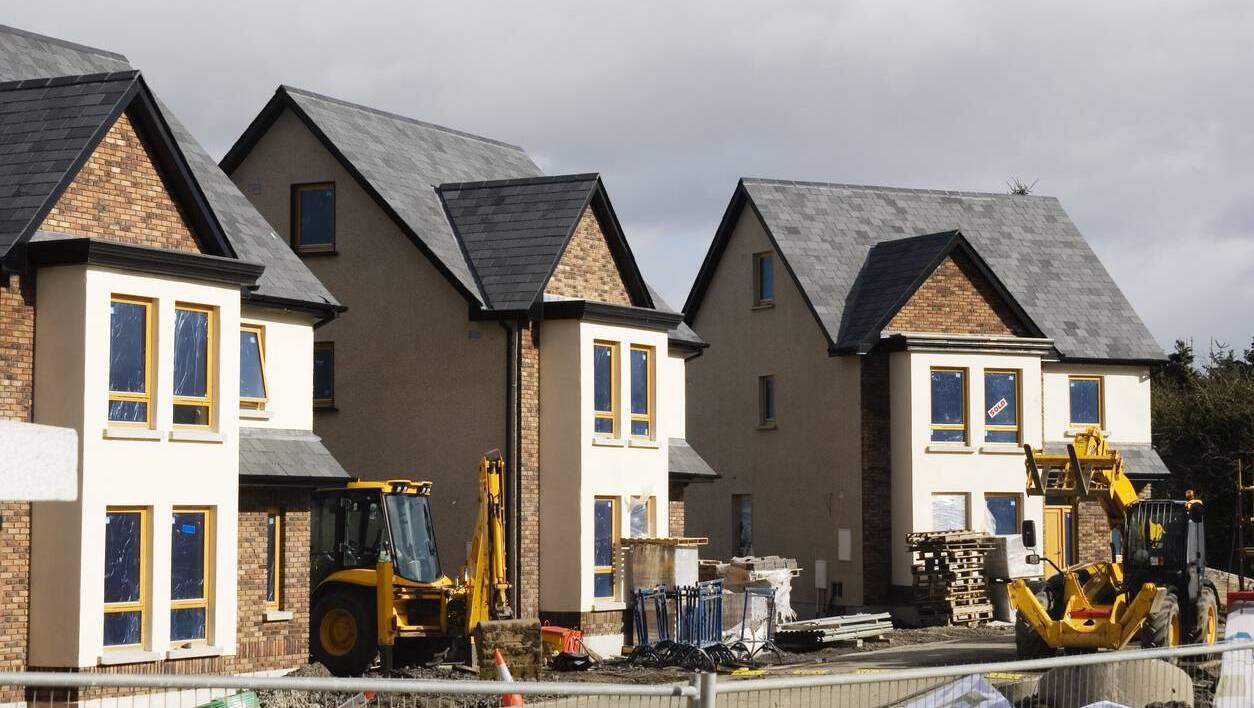
ESRI said middle-income households were currently 'bearing the greatest burden' in terms of the affordability crisis, with the ratio of house prices to income most skewed for that demographic. File picture
The uphill battle to rent or a buy a home has been laid bare in two new reports which show house prices at 17% above what they should be and rents increasing sharply.
A new study released by the Economic and Social Research Institute (ESRI) shows there is a "significant degree over overvaluation" in the property market.
It puts prices at "17% above the level that would be consistent with current levels of economic fundamentals such as incomes, interest rates and demographics".
The think tank also points out that level of overvaluation is much more pronounced than the last time it ran a similar exercise on the property market. In December 2024, prices were roughly 10% overvalued.
It also says this crisis differs fundamentally from that experienced during the Celtic Tiger.
"The key thing we wanted to get across is that this is an affordability issue, but that it isn't the same as the financial crisis," Dr Paul Egan, senior research officer with the ESRI and co-author of the report, said.
He said prior to the economic crash of 2008, house prices were overvalued by upwards of 35% in the Irish market.
By contrast, house prices in Ireland dropped stratospherically after the financial crash, bottoming out at under-valuations of roughly 20% in 2012.
Read More
"The period pre the credit crunch was driven by credit expansion — loose lending standards, 100%-plus mortgages, and those issues led to unsustainable household debt, conditions that aren't present today," Dr Egan said, noting the Central Bank mortgage lending rules introduced in direct response to the economic crash "have kept lending and credit on a much more sustainable footing".
"What we do have is an affordability problem, so prices are being pushed above what the country's economic fundamentals say they should be," he said. "Incomes haven't grown as fast as house prices, so prices aren't at the levels they should be."
Dr Egan said middle-income households were currently "bearing the greatest burden" in terms of the affordability crisis, with the ratio of house prices to income most skewed for that demographic.
Nevertheless, the report sounds a cautious note of optimism in that the current strained situation sees key crisis indicators like overburdened household debt and personal credit being far below the levels seen from 2008 onwards — suggesting the financial system is "in a considerably stronger position than it was" then.
Separately, the latest quarterly rent index from the Residential Tenancies Board shows that — despite the introduction of new market rules last March — rental prices are still surging upwards.
The average rental cost for a new tenancy over the first three months of the year was €1,839 per month, 9.1% higher than 12 months previously, despite the new rules introduced on March 1 aimed at delivering security of tenure while capping the rates at which rents can be revised upwards annually.
The rise in costs drew sharp criticism of the rental rules from across the political opposition. However, Taoiseach Micheál Martin defended the new rules, saying "for the long-term sustainability of the market, change had to occur".
"I think its supply is the fundamental challenge with cost of housing, both to purchase and to rent. Though we are making progress on the supply side, we want to make more progress this year, and I think we will in terms of housing and apartment units constructed," Mr Martin said.
Social Democrats housing spokesperson Rory Hearne claimed the new rules had caused "armageddon in the rental market" and called for housing minister James Browne to "reverse the March 1 rental law changes to avoid even further fallout”.

CONNECT WITH US TODAY



Be the first to know the latest news and updates