10 takeaways from Mayo's official guide to winning an All-Ireland
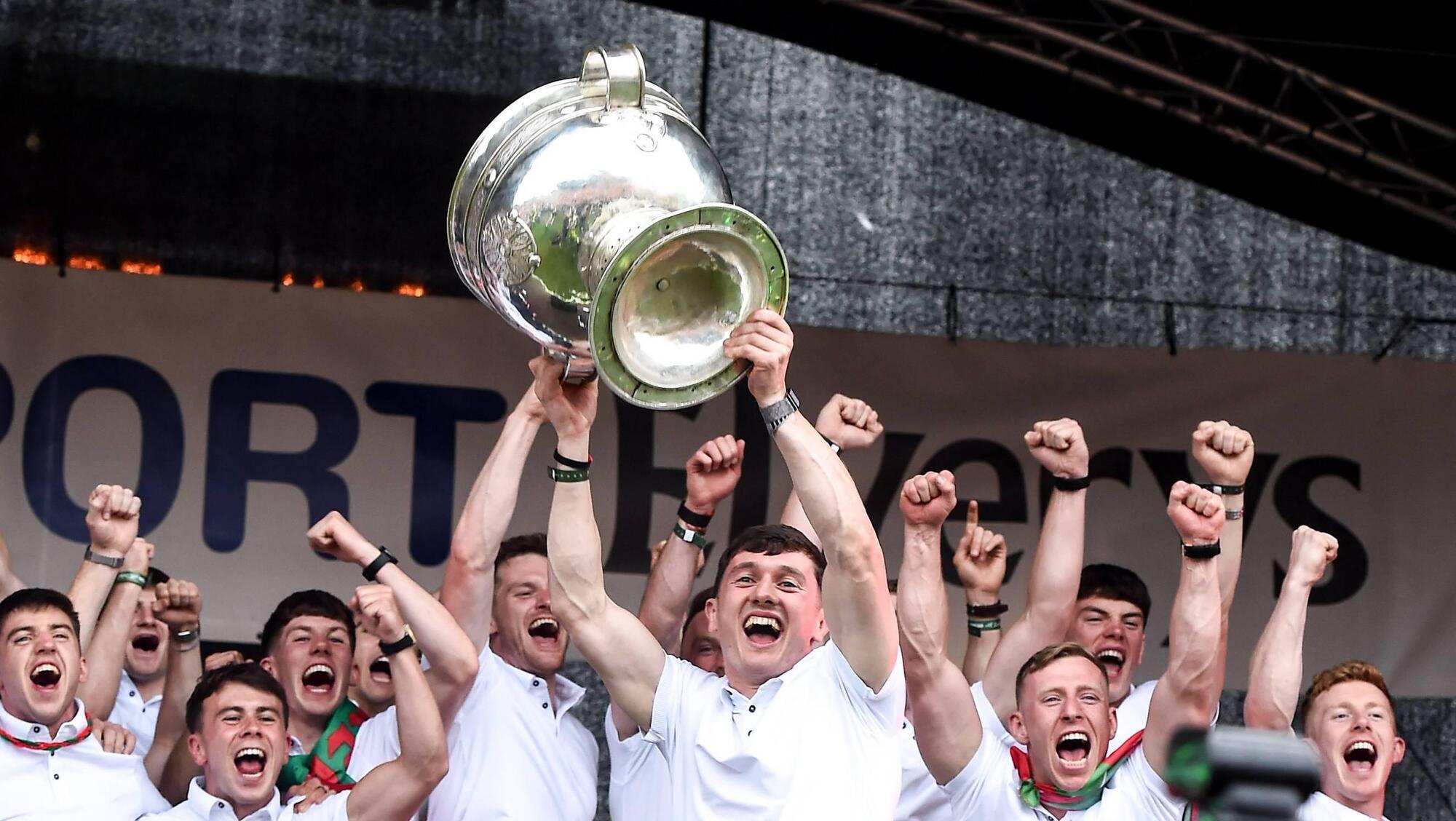
FOREVER HEROES: Jack Coyne lifts the Sam Maguire at Mayo’s homecoming in Castlebar. ‘Forever More’ tells how Mayo won their first All-Ireland and hints at what might be to come. Pic: John Sheridan/Sportsfile
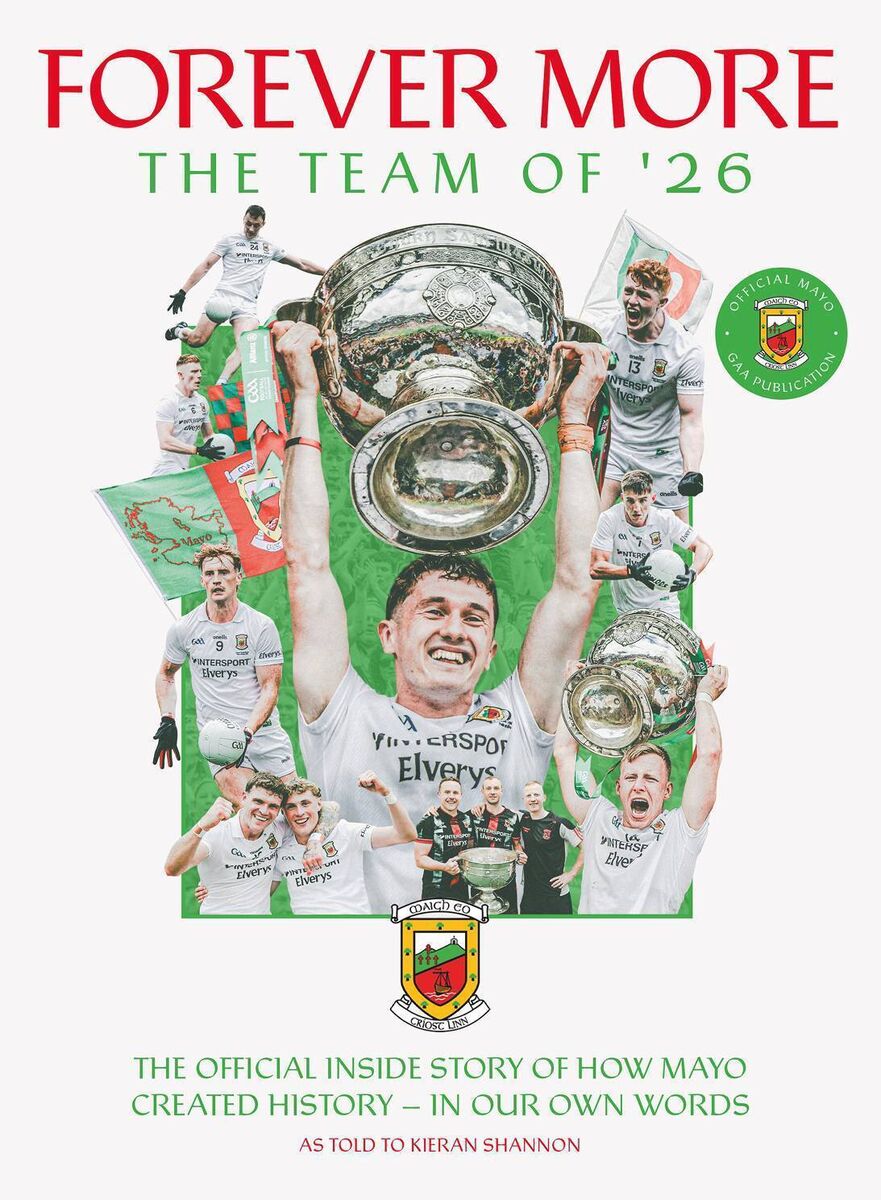
1. The openness of the Mayo players and management is so refreshing and endearing
In another book out for this Christmas, Vincent Hogan laments how over the past 20 years “a [GAA] community of storytellers” have been “gagged by managerial paranoia”, leaving everyone the poorer. Forever More is a throwback to the days of Loughnane and Griffin he so cherished, or those of Kernan and Harte and John Allen’s Cork, who the likes of this writer had the good fortune to chronicle. A tenet of Andy Moran’s management philosophy has been that his players should express their own personality and that of their people, and for him part of the Mayo character is that they’re open and welcoming and love to talk – especially about football.
And so we’re allowed to get to know them and their quirks and even fears. The candour and occasional crankiness of Donnacha MacHugh and Ryan O’Donoghue; the anguish Tommy Conroy suffered because of and since 2021; how Sam Callinan follows the way of the samurai; how Paul Towey felt the night he was an unused sub against Meath, having buried a relative earlier that day. The drawbridge has been lowered to the point Moran even shares some of the Powerpoint slides he displayed to the county board to get the job and to the team upon getting it.
Read More
In his first meeting with Jack Carney, Moran told him that he had become a handpass merchant – what had happened to the kicker from the 2020 U20s campaign? In his first phonecall with Enda Hession, Moran likewise told him he hadn’t pushed on from his days as an U20. In the first meeting with the overall group, Paddy Tally told Ryan O’Donoghue he had no left foot and wasn’t fit enough, continuously fading out of games. Similar exchanges with Bob Tuohy, Cian McHale and Tommy Conroy are also recounted; “I was like, ‘He [Moran] did not just say that [to Conroy]!” recalls a stunned Darragh Beirne.
That culture of accountability would then extend to the players openly challenging each other, most notably when Carney himself highlights the (lack of) tackling by O’Donoghue and the full-forward line against Monaghan – “pin-drop stuff” as Jack Coyne recounts. But as they came to learn and the reader does too, they weren’t so much being called out as called up. All of the aforementioned are now either All-Stars or county champions or The Man Who Scored The Point to Seal the All-Ireland – and all are All-Ireland champions.
For the first quarter of the book, a ball has yet to be kicked in competition. There was so much they had to put in place. The values workshops with sport psychologist Dr Rachel Sheehan. Re-establishing MacHale Park as their training base and natural home – installing Mayo flags, ice baths and even a library – as opposed to the Connacht centre of excellence where in 2024 both themselves and Roscommon trained and shared a canteen days out from playing each other. Getting players back from Dublin and commuting from Dublin and Limerick – at 3.30 on training days a Corduff Travel bus would leave the Lucan spa hotel and UL sports centre so no player had to drive long distance and compromise their recovery, which explains why 39 of their 42 players were available for selection for the All-Ireland final.
They went after everything, especially skills. Enda Hession recalls how there would be 10 or 12 balls flying around their gym in MacHale Park as players got in hand-passing between their S&C reps. There’s even a full chapter on a kicking session Jack Carney did in his local field on December 26 – so he could go on to kick those two-pointers on July 26.
At the start of the chapter recalling their opening All-Ireland series game against Monaghan, several players admit they were initially sceptical when Andy Moran began showing them a video of a 20-year-old American gymnast called Katelyn Ohashi perform a perfect 10.0 floor routine to a soundtrack dominated by Michael and Janet Jackson. But watch that clip now and it’s striking how much it resembles the way Mayo went on to play in Croke Park this summer: Joyous and well-drilled and uninhibited, feeding off the energy of the crowd who are lapping up what they’re seeing themselves. There are multiple such examples of how his messaging gave his players the belief to be champions – not least by allowing and reminding them to play like kids.
Jack Coyne’s ‘Stick Your Chest Out’ line did not come out of nowhere. Like every Mayo person, let alone player, he’d endured the constant snide remarks about his home place; he even reveals in the chapter on the penning of his speech that during this year’s spring campaign an opponent quipped, “In fairness, ye’re a good league team.” It was a theme newcomer John MacMonagle had powerfully addressed earlier in a pre-season meeting, how others “look down on us like shit on their shoe”. And would be mentioned again at half-time in the All-Ireland final. As Andy Moran has said, people sneered at them, laughed at them, but they’re not laughing at them anymore.
The book opens with players recounting their days supporting Mayo, in keeping with a motivational tool they used this season whereby above their dressing room cubicle they each had a photograph of when they were kids. Most of the team grew up adoring the team of the 2010s whose legacy and own greatness must now be seen in a different and its proper light.
But just as a Paul Towey talks about how he’s more delighted for an Aidan O’Shea than even himself to have landed the holy grail, and an Enda Hession and a Jack Carney still feel this group are not the equals of the team that contested all those other All-Irelands, the likes of O’Shea and Cillian O’Connor gush about the emotional intelligence of a MacMonagle, the training ground brilliance of Kobe McDonald, the dedication of an Enda Hession (O’Connor even provided a photo of Hession writing in his journal less than an hour after winning the All-Ireland).
In the fallout of losing so heavily to Roscommon, the players spoke only to each other about their devastation (“I’m sick of doing this every year, lads,” Sam Callinan told them) and shortcomings (“We went very quiet. I went very quiet.”) From that chat facilitated by Rachel Sheehan, they devised a pressure plan which, Ryan O’Donoghue explains, included him demanding the ball. By halftime in the Meath game David McBrien had taken over the dressing room, dictating how he and his teammates should set up on the opposition kickout. Moran didn’t feel threatened. He felt vindicated. Because as he’d told McBrien, O’Donoghue, Hession, Jordan Flynn and Carney on the eve of the Monaghan game, this was their team now.
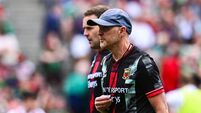
Days before he’d be announced as the Monaghan coach for 2025, Andy Moran asked his old teammate Colm Boyle to call over to his gym in Castlebar. He wanted to give him the heads up – the next time the Mayo vacancy arose, he was going for it and wanted Boyle beside him. We can now see why; it was the ever-steady Boyle who pushed for white jerseys on All-Ireland final day instead of their first-choice alternative gear (“We’re asking these boys to go out and play like lions,” he told the county board the previous autumn. “It’s hard to tell them they’re lions and send them out wearing that [the team’s navy-turquoise-pink kit].”) The contributions of Paddy Tally, Keith Higgins and Rachel Sheehan are similarly detailed.
Back when Moran was captaining Mayo to All-Ireland finals, that setup often referenced the Muhammad Ali ‘Away from the lights’ quote. The team he managed all the more lived by that creed. Go through every first-half score of theirs in the 2026 final and none just happened by accident. We get to see the work both O’Donoghue and Carney put into kicking two-pointers; the advice Darragh Beirne got as a kid from his dad on how to take frees; how Tommy Conroy, advised and supervised by Cillian O’Connor, repeatedly kicked that Hawkeye point in an empty MacHale Park.
Although the book is a document forever more of how they won their first All-Ireland, it offers a taste of what might be to come. Not every Dublin-based teacher moved back to Dublin for the 2026 season – but they’re all back now for 2027. The likes of Jack Carney still feel their achievements don’t match the team of the 2010s that so inspired him. It’s obvious from the words of the likes of Enda Hession and Darragh Beirne they’ve no intention being one-year wonders and that they’ve come to love the routine and process that they have.
This team might not even win another All-Ireland. But just as Armagh got better after 2002 and Cork were better in 2012 than they were in 2010, Mayo will be even better than they were in 2026.

CONNECT WITH US TODAY



Be the first to know the latest news and updates