Letters to the Editor: Greenway experiment must end
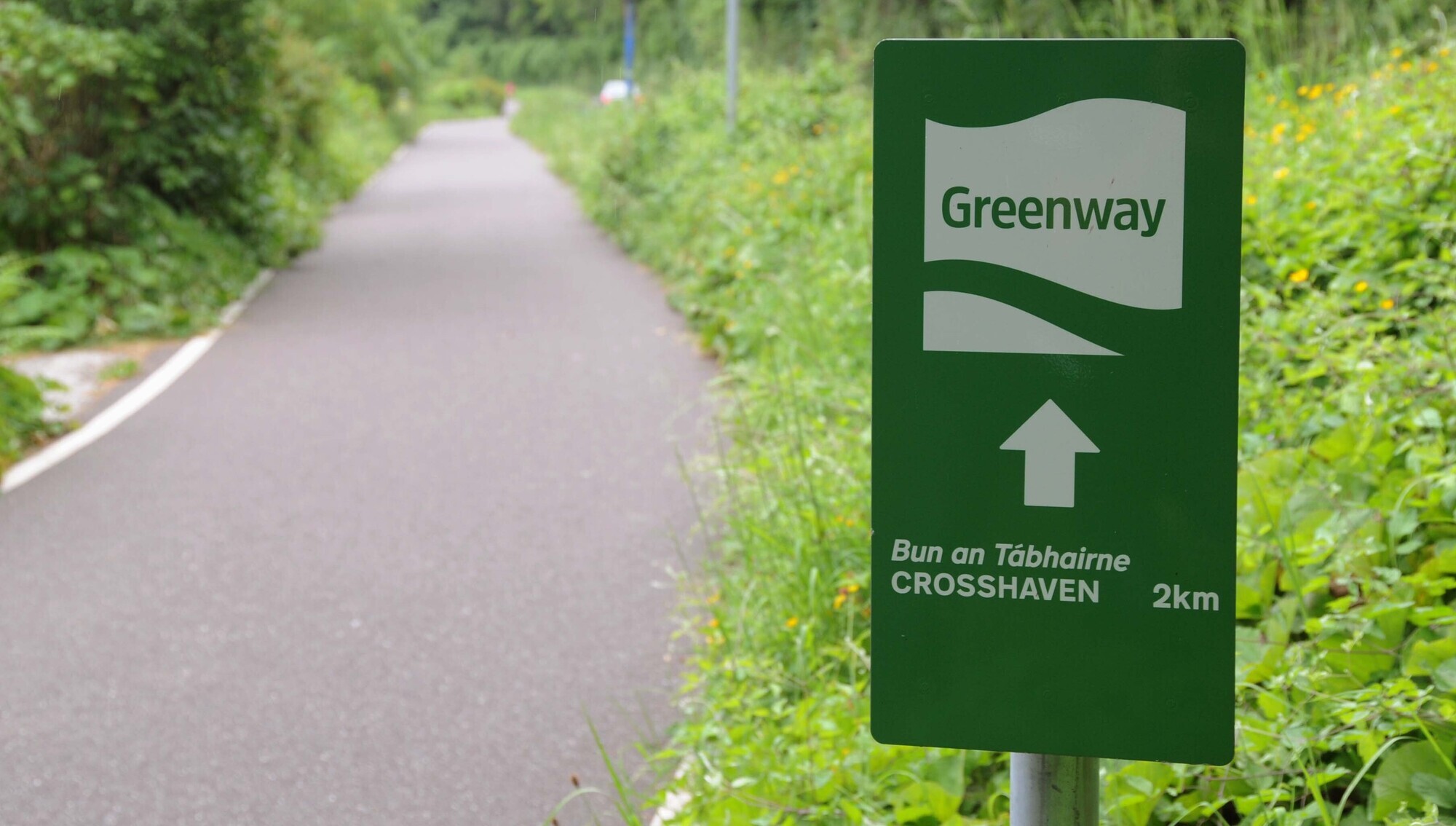
A huge amount of taxpayers money has been lavished on them for the past few years, resulting in very questionable benefits, if any to the environment, the economy, public health, and improved public transport facilities. Picture: Denis Minihane.
On reading the editorial for June 29, as a regular cyclist for both work and leisure journeys, I am positively delighted to hear that the greenways are likely to have their funding cut. A huge amount of taxpayers money has been lavished on them for the past few years, resulting in very questionable benefits, if any to the environment, the economy, public health, and improved public transport facilities.
Most greenways, with only a few exceptions, such as those along canals and coastal routes, have been built along long-disused rail routes, which due to Ireland’s increasing population and the need for sustainable low carbon transport, are all potentially needed for reopening as rail routes again, whether rural or intercity routes such as the western rail corridor, the Drogheda-Navan route, the Athlone-Mullingar link, Waterford-New Ross, or many of the routes throughout the almost rail-less North-West, needed to serve Fermanagh, Cavan, Monaghan, Armagh, Donegal, and Leitrim.
While the argument has often been cited that converting disused rail routes into greenways actually helps as a “first step” into rehabilitating these forgotten transport corridors towards an eventual goal of restoring rail services, for example between Midleton and Youghal, the main impetus behind the funding (millions to create tarmac roads in all but name) is to “facilitate tourism” or provide “safe routes” for visitors and local people. Even to someone who is not a cyclist, the idea of creating a special network of roads across the country for cyclists, as well as walkers and supposedly huge numbers of joggers who will use them, smacks of ghettoisation, ie, force all the cyclists, walkers, wheelchair/mobility scooter users etc onto their own network of glorified footpaths which will quickly deteriorate over the next decade unless more hundreds of millions of euro are lavished on their maintenance. To hell, then, with providing safer cycle lanes, footpaths, pedestrian crossings, traffic calming, safe routes in towns and suburbs, that 99% of the people, both locals and visitors will actually use.
In addition, many of these greenways run a long way from peoples’ homes or other well-frequented parts of towns and countryside, opening up real dangers of antisocial behaviour, ranging from intimidation of lone female users, to fly-tipping, graffiti, illegal unlicenced motorcycling, and many other issues which will only take more millions to tackle with funds poured into lighting, policing, and clearing up of the mess. Restoring such a route as a working railway largely obviates this as few people dare to trespass on a functioning rail route which will be provided with warning signs, CCTV and train drivers reporting anything untoward.
As a cyclist and a visitor to Midleton and Youghal in East Cork, with relatives and friends living there, I can proudly say I have not once used the wasteful and hideously expensive Midleton-Youghal greenway. The space was designed for trains, large heavy machines which needed special infrastructure such as bridges, tunnels, and graded crossings, and although they stopped at stations to serve towns, these routes are totally unsuitable for 99% of local people, who want to get between homes and workplaces, shops, schools, offices, services like doctors, libraries, cinemas, none of which are anywhere near these greenway routes. They do not even pass near any sites of interest except historic railway or industrial structures such as bridges which have to be expensively maintained or replaced entirely at costs almost equalling the restoration of such infrastructure for trains to carry the cycle/footpath, which will never be capable of even taking 1% of the passenger traffic between towns such as Midleton and Youghal that restoring a train service would.
It is indeed fortunate that Cork County Council for one, is now looking afresh at reopening the Midleton-Youghal route for trains, and so every county, especially those transport starved counties in the North-West and the West should be seriously cancelling any remaining greenway funding and channeling it towards making the most needed former routes “rail ready” again.
Reopening a former single track rail route will cost less in money and land-take than the same length of dual carriageway bypass, something that no doubt many farmers should celebrate, having for so many years being forced to sell valuable land at knockdown prices for this or that motorway scheme. For more than a decade now, it should have been clear to all that the age of easy EU-funded motorway building was over and that the greenways were just a cynical greenwash, a sop to “tourism”, and a slap in the face of locals having to dice with death on unsafe roads.
They must die now and give way to a new age of responsible nationwide rail network renewal, as stated in the rail 2050 plan, but going even further with electric and battery-powered trains for passengers and freight to all but the remotest corners of Ireland’s once extensive rail network.
Dan JJ Kahn
Sheffield, England
Contract control
I believe health minister Jennifer Carroll MacNeill should be highly commended for her recent actions in relation to “consultant contracts” and her visit to the building site of the children’s hospital.
In my opinion, this demonstrates commendable initiative, however I would also ask why both matters are not handled and dealt with by senior management of HSE and/or senior civil servants, both “well paid” groups who in my opinion should be responsible to deal with such matters, leaving the minister free to deal with policies.
Surely it should not be the responsibility of a government minister to check the number of contract staff on a building site.
Michael Moriarty
Rochestown, Cork
Occupied territories
Last week, the Oireachtas committee on the Occupied Territories Bill announced that its government deputies were withdrawing support for penalising exports of services from illegal Israeli settlements in Palestine.
Justification for this strategy, against the electoral mandate of the Irish people, coincided with the opening of the major International Jewish Congress in Dublin. New thinking was shared, with a prevalent belief that any nation based on race, skin colour, or religion will eventually be undermined by lack of social viability.
The conference was interrupted by a fragile link to Gaza, where a Gaza-born doctor described what we already knew, but have not lived. He appealed for medicine and water for children, as well as “help for their damaged minds”. At the end, he took off his dripping shades and appealed “please, please do something … no more talk” . The packed audience stood and called, into the cameras and monitors, that we would.
At the committee meeting, foreign affairs minister Helen McEntee explained the government strategy. She was aware that omitting services made Ireland un-compliant with International Court of Justice directives. She seemed to suggest it will bring us closer to most of our EU colleagues. In time they could develop a cohesive approach to saving Gaza and the West Bank. No time-scale was offered.
By contrast, the immediate reality described by the doctor in Gaza was supported. A UN inquiry concluded that large scale genocidal targeting is rife, of very young children by Israeli security forces.
On the same day, prominent Israelis including former prime ministers, senior judges and military, threatened legal action unless the Israeli government eradicated “Jewish terrorism “ against Palestinians.
In summary, the Irish Government has strayed far from the electoral mandate, on the bill that they sought and were given. Major Irish journals have held them to account, but they have demonstrably failed in terms [of] humanitarian practicality.
In such circumstances, the electorate is justified in seeking a vote, according to the conscience of each deputy on the full Occupied Territories Bill, before any substitute bill is proposed.
Philip Powell
Dún Laoghaire, Co Dublin