Letters to the Editor: Religious education can open up a sense of wonder
Several readers responded to Aoife Cassidy's opinion column about religious education in schools — and, as ever, what they have to say may surprise you
Letters to the Editor: Religious education can open up a sense of wonder

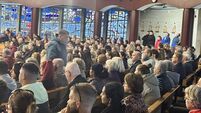
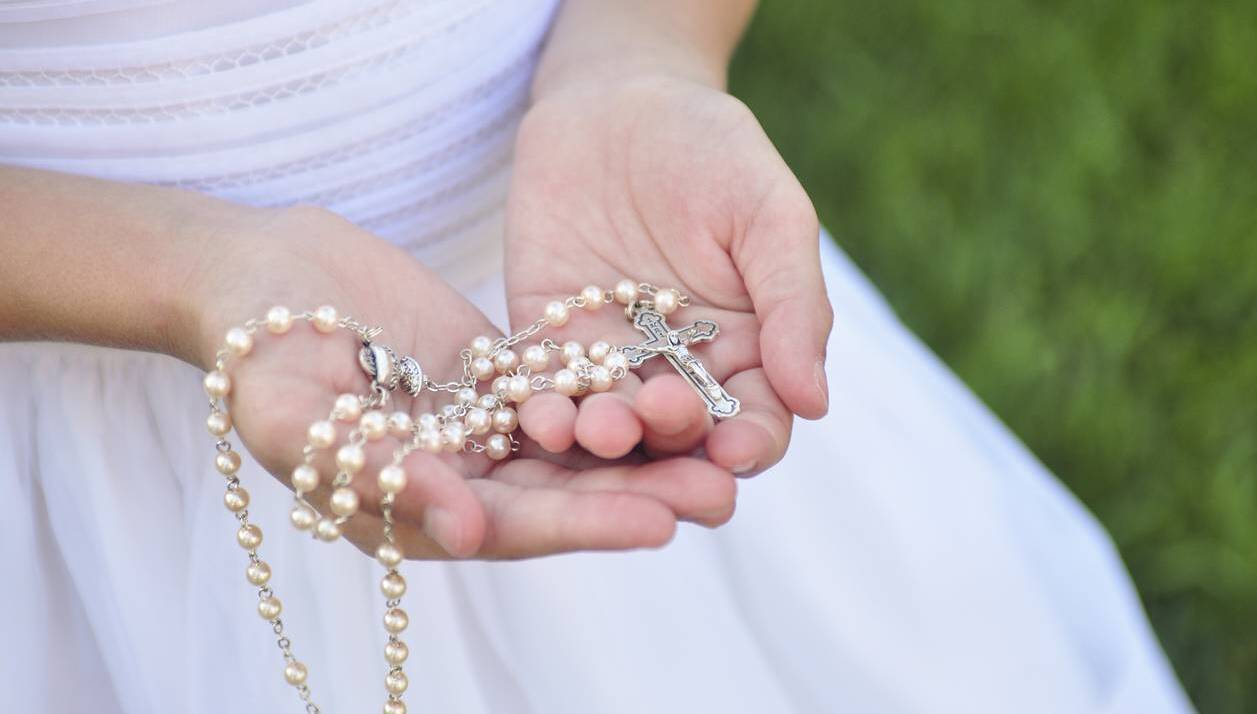
One reader says: 'The escalating case for removing religious education more generally from the school curriculum could prove to be both shallow and myopic.' Picture: iStock

Aoife Cassidy’s case for excluding preparation for the sacraments from schools makes a number of valid points: Not least the potential for exclusion and segregation — ‘School sacraments alienate pupils and take time away from teaching’ (Irish Examiner, May 20).

Giving responsibility for this aspect of a child’s spiritual development to the churches, as happens in the Archdiocese of Dublin, will encourage families to opt in to the process for positive and informed reasons, allow more in-depth preparation as part of their participation in the life of the Catholic Church, and detract from any sense that this is primarily about fashion and money.


However, the escalating case for removing religious education more generally from the school curriculum could prove to be both shallow and myopic. 

In a world that is becoming more precise and mechanical, where life is viewed in simplistic binaries, and hard data is privileged over nuance and intuitive insight, there is an increasing need to educate the emotions and the senses. 

Children who are inspired to develop their imagination, as well as their instinct for good ethical decisions, often enjoy more robust mental health into adulthood. 

This is the case being made by, among others, the Scottish psychiatrist Iain McGilchrist in his seminal work on the development of the human brain (see, for example, The Master and His Emissary: The Divided Brain and the Making of the Western World, 2009).

At a time when many people teaching third-level students are identifying high levels of academic achievement within narrowly defined subject areas, but decreasing levels of mental resilience, emotional intelligence, and the ability to “read” people and situations, a culture of educating the whole person is becoming more (not less) necessary. 

Exposure to the thought and practice of religious communities can open up a sense of wonder and gratitude, stimulate critical questioning, and develop a greater appreciation of how art, music, and poetry can complement the advancement of science and technology in human development. 

This is not about narrow adherence, let alone indoctrination. Rather, it could contribute to a person’s overall health as they discover different ways of human flourishing in a world where raw competitiveness, achievement, and acquisition are becoming normalised as the gods of ultimate fulfilment.

Simon Andrews, Western Rd, Cork

Keeping the faith

In discussions surrounding the 40% of parents who express a preference for multi-denominational education, the perspective of the 60% majority is frequently overlooked. 

As a Northern Irish Protestant, my worldview is rooted in Christian values and I deeply value the Catholic faith alongside this. I am profoundly thankful for the teachings of Jesus, which champion peace, love, compassion, forgiveness, and self-control — values that serve as essential life skills for any child.

There is an invaluable benefit to children learning the Bible and understanding the moral frameworks it provides. 

Teaching them about faith, respect, and prayer does no harm; instead, it equips them to navigate an increasingly complex and tainted world. Regarding milestones like First Holy Communion, the focus should undoubtedly remain on the spiritual step of faith rather than commercialised glamour. 

We can look to wider Britain to see the long-term societal effects of removing traditional faith practices from school assemblies and daily life.

The erosion of these structures has run parallel to a stark rise in serious youth violence and a fracturing of local communities. Parents who choose to completely opt out of these traditions may inadvertently deny their children a grounding in the very history and roots that shaped the Irish society. A strong moral foundation is one of the greatest gifts we can offer a child, and we should hesitate before dismantling it.

Tanya McCuaih, Bangor, Co Down

End sacraments in schools

I totally agree that the sacraments should be removed from schools. 

Coming from the perspective of a young practising Catholic, the situation as it stands is beyond frustrating. The sacrament of First Holy Communion is profoundly meaningful to some people, and to see it treated as an excuse for a party is upsetting.

I’ve heard of Holy Communion being trodden into the carpet, etc. I don’t expect everyone to have the same beliefs as me, but I do think people should opt out of sacraments if they don’t actually believe in them. 

It’s up to the Church to do something about the situation, but sadly most Church leaders are as cowardly and self preserving as they were in the past — it’s just dressed up differently these days.

Katie Smith, Longford

GAA’s denial of TV service

While I watched fantastic Gaelic games on our free-to-air Irish channels last weekend, the GAA will, again, deny portions of the Irish public who don’t have internet, or who can’t afford an expensive journey to Killarney this weekend, the spectacle of watching Kerry versus Donegal, because in their wisdom and greed, they will stream it on pay per view on GAA+.

While the organisation emphasises “volunteerism” and the “amateur status” of the game, this act of self sabotage by the organisation, denies avid fans the right to watch their teams play. The fact that they refused to allow RTÉ to air the Clare v Tipperary games, just to drive extra revenue, is a mistake and against the ethos of why the GAA was set up in the first place.

They need to be reminded that it is because of dedicated fans, volunteers, unpaid players, and subsidies from government (ie, taxpayers) that they have been able to maintain the organisation as a whole.

The cost of travelling to Kerry from Donegal, 440km, where the average price of petrol and diesel, at an average €1.82 and €1.96 respectively, will leave a large hole in many pockets. Then there is the cost of accommodation in Killarney which, looking at some websites is a real rip-off for just for a bed with no breakfast. The cost of a ticket and food must be factored in, leaving very little room for any extras.

When we talk of rip-off Ireland maybe the media, or government oversight committees, need to ask: Are the ordinary fans getting bang for their buck? Is the GAA really delivering for the ordinary fans?

Christy Galligan, Letterkenny, Co Donegal

Praise for the Leaving Cert

Every year around the time of the Leaving Certificate exams there is quite a lot of negative coverage of those exams.

I sat the Leaving Cert on three occasions, the first in the “normal” way as a teenager and each of the other two as a mature student. While I didn’t do well in that first exam, I did do well in the other two and got a place in college. I graduated and later became a teacher of several subjects, and I’ve done a variety of other very interesting work over the years. I wouldn’t have had all that success without completing that first Leaving Cert exam.

Just getting to and getting through the exams is a great achievement, and it’s a pity the media doesn’t emphasise that more. By the same token, it’s disappointing to see people of influence disparaging the exams process and formal education as a whole. The State exams are a great exercise in thinking, structuring, and acting in a focused way. The current state exams process also offers great experience in “seeing a project through to the end”.

There is education in every experience and every experience is an education, including the exams process in its current form. 

Whatever one’s personal opinions of exams and formal education, please respect those sitting the exams and also respect their teachers and their parents.

Tim Buckley, White St, Cork City

Supporting local journalism

I am saddened to learn the newspaper industry has gone into serious decline; people are getting their news on their mobile phone and their laptops, ergo, they may not necessarily be getting their news from established media organisations.

Many people get their news on TikTok, Instagram, Facebook, etc, and from unverified sources, where they sometimes fall victim to the propaganda trolls. One of the things the Government has done has been to make funding available to local and national commercial radio outside of RTÉ and limited funds to newspapers.

I believe that supporting national and local newspapers is vital to protecting independent journalism, thus ensuring democratic accountability, and combatting misinformation.

I am a strong advocate of championing this industry by purchasing daily or weekly editions and subscribing to digital publications allied to engaging with our marvelous journalists so as to keep trusted reporting alive in one’s community. The point of good journalism is to hold people in positions of power accountable, which at the end of the day is what we need to make our democracy work.

John O’Brien, Clonmel, Co Tipperary

Questions on migration

Two questions about Ireland’s migration debate deserve more concrete answers than they currently get.

First of all: How do you define migrant crime in actual numbers? The Irish Prison Service publishes aggregate committals by nationality. It does not publish what people are actually arguing about: Whether particular cohorts are over- or under-represented in specific offences — theft, sexual assault, public order, violence, or fraud. The Central Statistics Office has stated the nationality of suspected offenders is a “user need that is not currently met”; the Pulse data it receives from An Garda Síochána does not include nationality. On the public statistical record, “migrant crime” as a category cannot be sized. Discourse fills the gap that data has not.

Second, when commentators speak of “problems with migration”, what specifically is being referred to? Pressure on housing or accommodation services? Specific high-profile incidents? The fiscal cost of the international protection system? The citing of international protection accommodation services centres in particular communities? Each is a different problem with a different evidence base. Merging them collapses argument into mood, and makes anyone arguing in good faith, on either side, easier to dismiss.

ESRI research published in January (Research Series 225) found that the public both overestimates the non-Irish share of the prison population and underestimates the share of recent migrants arriving for work or education. This is not a letter for either side of the argument. It is a letter for being specific — and for Irish journalism to treat debate for migration, and against it, way more empirically and to have a higher standard. The absence of granular data as a story in itself.

Rian Åhlström Horgan, Mallow, Co Cork

More in this section

Revoiced

Newsletter

Had a busy week? Sign up for some of the best reads from the week gone by. Selected just for you.

Cookie Policy Privacy Policy Brand Safety FAQ Help Contact Us Terms and Conditions

© Examiner Echo Group Limited