Letters to the Editor: Death of ranunculus in our river systems

We must do is rectify this with protocols of good riparian practice
The ranunculus crowsfoot weed binds into its root system all the loose muds, sands, and silts which otherwise migrate downstream to cause all sorts of problems there, leaving lovely clean gravel between the plants for spawning. File picture

The ranunculus crowsfoot weed binds into its root system all the loose muds, sands, and silts which otherwise migrate downstream to cause all sorts of problems there, leaving lovely clean gravel between the plants for spawning. File picture

We see that Inland Fisheries Ireland (IFI) has managed to get substantial funding for the purpose of demolishing or semi-demolishing a large number of weirs around the country. These, it seems, are responsible for blocking our salmon from going upstream to spawn. What salmon?

These weirs were an integral part of the riparian ecosystem for several hundred years and helped create some of the finest salmon angling rivers in these islands.

If your river does not have an integral, upriver lake for them to go for up to six or seven months, they vitally need the deep, quiet stretches upstream of these weirs to rest up in. My family alone built seven of them on the Suir system, creating one of the finest, all-season salmon fishing rivers.

This weir game is just the latest in a series of futile actions carried out by IFI over the past 10 years, while at the same time remaining totally blind to the big issue — this being the relentless shading out of the keystone aquatic, vegetative species, the ranunculus crowsfoot weed.

This, if present, will be found teeming with invertebrate life and all the fish and bird life that flows from that.

It binds into its root system all the loose muds, sands, and silts which otherwise migrate downstream to cause all sorts of problems there, leaving lovely clean gravel between the plants for spawning.

On top of this, it will sequester any passing molecule of the wicked nitrates and phosphates, at the same time filling the water with oxygen, perfect for the dilution of downstream pollution of one sort or another. It’s remarkable that IFI’s own scientists warned about this overcover issue back in the early 1990s, but not a jot of notice was taken by those in charge.

This demise of the ranunculus goes right back to the myxomatosis of the rabbit and rural electrification in the mid 50s, prior to which the rural poor by long standing protocol with the “wicked landlords” were allowed to harvest this stream overcover for “firing”, meaning heating and cooking, no matter who owned the bank in question. 

No, the vital thing we must do is rectify this by putting in place a completely new protocol of good riparian practice, to which all relevant government departments must direct themselves. In essence, we need to see all streams less than a metre in depth, at least 66% open to the sunlight. 

You can have all the trees you want on the deeper stretches, indeed the more the better for shade and cooling. The wood biomass harvested should go to district CHP plants to help with our energy issues, as well as giving the landowner another income source.

Nicholas Grubb, Dromana, Co Waterford

Film put Dingle on the map

John G O’Dwyer’s beautiful tribute to Dingle for the making of Ryan’s Daughter is a noteworthy piece of writing — ‘Stroll through a piece of cinema history in Kerry’ (Irish Examiner, May 11).

As a fan of the legendary director who is probably most associated with what is now referred to as “epic filmmaking”, David Lean put Dingle on the world map in the late 1960s and early ’70s. But Dingle also was the place that destroyed the English director’s reputation when the critics, led by some very influential reviewers in the US at the time, castigated Ryan’s Daughter when it was released.

To be honest, they were waiting for him in the aisles after his previous film, the three-hour and 17 minute Doctor Zhivago.

But as we now know, Ryan’s Daughter, with its two Academy Awards — best cinematography for Freddie Young and best supporting actor for John Mills — is a much better film than the views of a few conceited film reviewers at the time.

Dan Linehan’s stunning photograph shows the iconic schoolhouse overlooking the Blasket Islands; it is the only piece of the film set that still stands, and is required viewing for all film buffs and nature enthusiasts.

Perhaps the authorities in Dingle and Tralee might make it easier to find as only the truly committed will be able to locate it without resorting to Google.

Tom McElligott, Listowel, Co Kerry

UK Labour Party meltdown

The British Labour Party’s leadership psychodrama is hard to watch for a variety of reasons.

1. The British press relishes factionalism, personality, and soap opera over process, principles, and policy. Sky News camped outside 10 Downing St, and Larry the cat got more coverage and consideration than the war in Iran or life after Brexit. Beth Rigby, Sam Coates, Sarah-Jane Mee, and Sophie Ridge are able journalists. I defy anyone to tell the difference between their approach to political correspondence today and TMZ’s low-cut, cable yanking, hoarse-with-excitement, call and response to actors on the red carpet at the Oscars. It made me feel grateful for Irish journalists and broadcasters

2. Keir Starmer is a strange and counter-intuitive fish. He is a shrewd politician in surprising ways but an unimpressive prime minister in the traditional sense. He is able to get and keep the job but he isn’t able to preserve the space wherein he can do it. He is a leader who lacks followers (and worse still — dependents). He is a centrist who is now unintentionally emptying the centre and polarising his party.

3. Nigel Farage and Richard Tice must be sitting down somewhere watching this with some Cornish pasties, a steak, and kidney pie, a bottle of Bollinger and a bucket of Beluga caviar from the Caspian Sea. Morning will come with cryptocurrency in its mouth and Reform UK’s well-funded wagon will roll right over Britain.

Michael Deasy, Bandon, Co Cork

Defective apartments

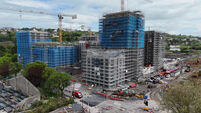
The reports regarding the Government’s progress, or lack thereof, on the defective apartment remediation scheme have sparked deep frustration and justified anger among the residents of my apartment complex. As an apartment complex of some 365 units — including a high proportion of social housing — we have lobbied for years for a fair resolution. We are now left feeling perplexed and betrayed.

The establishment of the ‘Pathfinder’ scheme was meant to offer a lifeline, promising retrospection for owners who took the initiative through their owner management company to carry out urgent remedial works to protect the structural integrity of their homes. We were given clear assurances by the Fianna Fáil minister for housing that full redress would be provided. Now, the Government appears to be rowing back on those promises. This is not just a policy shift; it is a fundamental breach of trust.

As an electorate, people need to have confidence in the word of their leadership. Families and developers alike make life-altering financial plans based on government undertakings. To change the terms of engagement now — leaving apartment owners in limbo while the necessary legislation remains overdue — is completely unacceptable.

The inescapable conclusion is that it would be absolute madness to invest in an Irish apartment today. While apartment living is a modern necessity for our growing population, who would choose this path given the current lack of protection?

The Multi-Unit Developments Act provides some framework, but it is clearly insufficient for the scale of this crisis.

Residents are living in homes with defects that were not of their making. We call on this Government to stand by the promises of its predecessors. There must be 100% redress and full retrospection for every owner affected. Anything less is a failure of governance and a dismissal of the rights of thousands of citizens.

Killian Brennan, Malahide Rd, Dublin 17

Regulating online platforms

An Oireachtas committee that examined the regulation of online platforms and online safety has not supported a social media ban for those under 16. The members of the committee on arts, media, communications, culture, and sport have instead recommended platforms turn off recommender algorithms aimed at children, as well as a ban on what’s called infinite scrolling and notifications which keep pulling users back in.

I think it’s really interesting that the committee has taken this nuanced view. I believe we have had a problem here with the political debate, which has been around the idea of a crude ban, which to me has sucked the oxygen out of the room and stopped us talking about more realistic possibilities in tackling this problem.

One would hope the committee’s report enables us to think more about things which we could implement in a technically feasible way such as the idea that we would regulate recommender algorithms, which have been used quite a bit in the promotion of far-right views, and extreme so called manosphere content. There’s scope to address such issues without needing very intrusive regulations.

Infinite scrolling refers to the fact that one can go to one’s X account or one’s Bluesky account or one’s Instagram account, and simply can keep on scrolling and there is no end to it.

The concern here is that this fuels addictive behaviour where it’s always one more scroll, one more image, and one more video. We should be looking at tailoring the algorithms so as they don’t have this quality. But one must not forget that the under-16s aren’t the only ones who engage in infinite scrolling.

John O’Brien, Clonmel, Co Tipperary

Occupied Territories Bill

You report that the Government is preparing — yet again — to “decide” on the future of the Occupied Territories Bill “soon” — ‘Government set to advance Occupied Territories Bill’ (Irish Examiner, May 9). The sense of déjà vu is palpable.

On the surface, it sounds like terrific news despite the glacial pace at which this bill is progressing. Frankly, one could be forgiven for surmising that the metro to Dublin Airport is likely to be built first.

However, it is clear that the Government is still considering the exclusion of services from the final bill, which would significantly undermine its purpose.

Again and again, we have seen the hesitation and timidity of Fianna Fáil and Fine Gael around this simple sanction against illegal Israeli settlements on occupied Palestinian territory. On this occasion, a “government source” has briefed darkly: “It’s all well and good saying we’ll just move on it now, but if there’s some unintended consequence, that’s when it’ll blow up.”

What does this mean? Gaza and its people have certainly been blown up since this bill was first introduced, or does that not matter? The Occupied Territories Bill has been before Dáil Éireann since 2018.

It is long past time to end this fearful and embarrassing inaction.

Fintan Lane, Lucan, Co Dublin.

More in this section

Revoiced

Newsletter

Had a busy week? Sign up for some of the best reads from the week gone by. Selected just for you.

Cookie Policy Privacy Policy Brand Safety FAQ Help Contact Us Terms and Conditions

© Examiner Echo Group Limited