Letters to the Editor: Inadequate support for lab-based school tests
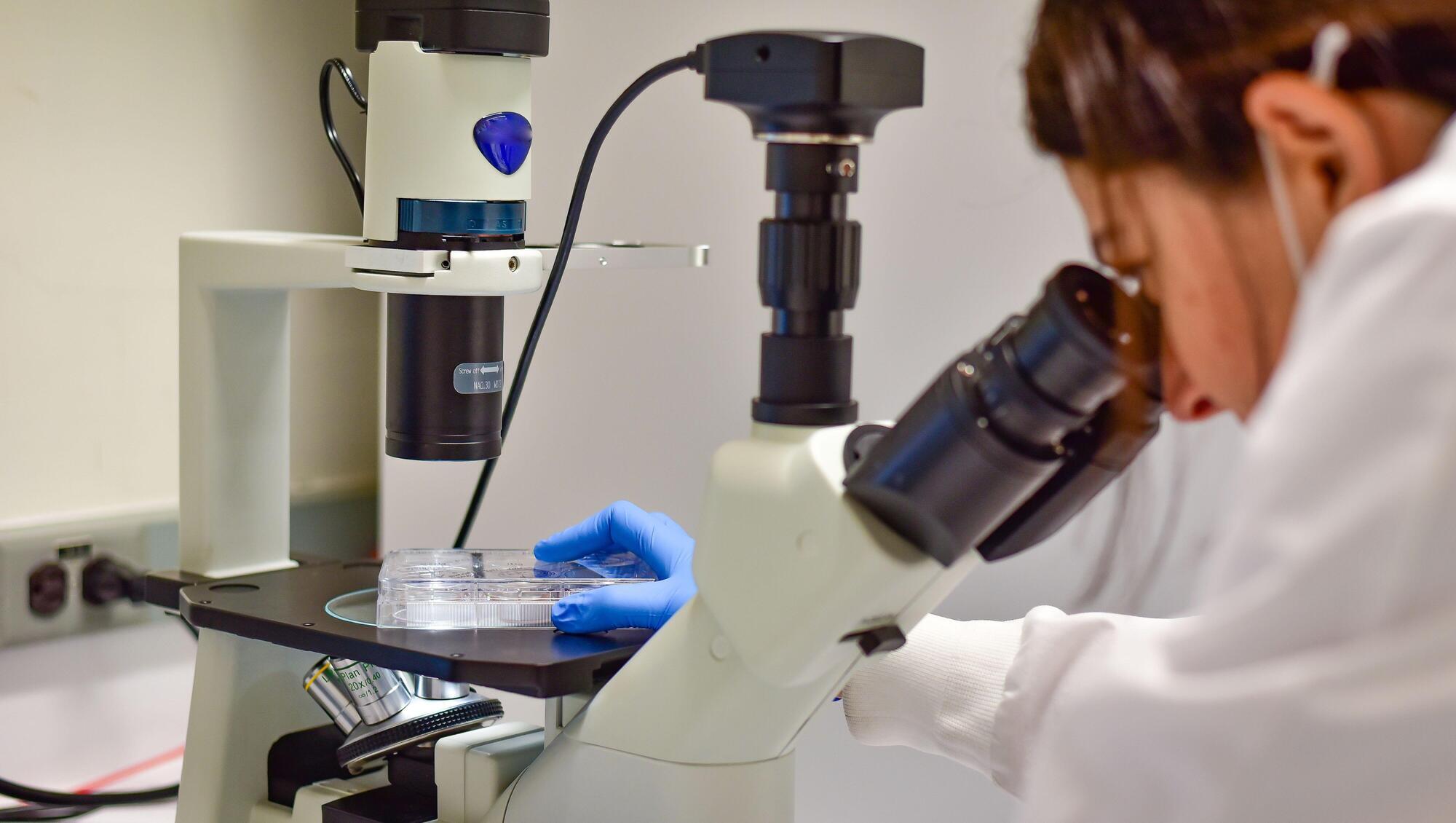
The allocation of 40% to project work in biology, chemistry, and physics also undermines the integrity of Leaving Certificate assessment
Letters to the Editor: Inadequate support for lab-based school tests

'The additional workload for science teachers in implementing the new AAC projects in biology, chemistry, and physics is enormous. Teachers will be expected to supervise, guide, and authenticate high-stakes laboratory investigations while also carrying out risk assessments and managing limited laboratory resources for large class group.' File picture

As a practicing science teacher, I wish to comment on the wholly inadequate supports on offer as published in the Department of Education’s support package for the implementation of the new Leaving Certificate curricula in biology, chemistry, and physics.

The recently published independent report by Professor Mike Watts, Brunel University London, recommended that, for health and safety reasons, there should be an immediate pause to the introduction of laboratory-based additional assessment component (AAC) research investigations in the above Leaving Certificate subjects. The Department of Education’s recent proposals made to the Association of Secondary Teachers in Ireland (Asti) gives no guarantee that such training will be provided by the Health and Safety Authority. Instead, it will be provided by Oide teams consisting of teachers on secondment from their teaching positions. Oide is not a specialist health and safety organisation.

The allocation of 40% to project work in biology, chemistry, and physics also undermines the integrity of Leaving Certificate assessment. The department’s proposals give no convincing assurance as to how authentication will be guaranteed. The recent data published by Red C point to the scale of the problem: 89% of biology teachers and 91% of chemistry teachers predict major difficulties in confirming that submitted work has been completed solely by the student rather than completed by AI or with assistance from relatives and friends.

The additional workload for science teachers in implementing the new AAC projects in biology, chemistry, and physics is enormous. Teachers will be expected to supervise, guide, and authenticate high-stakes laboratory investigations while also carrying out risk assessments and managing limited laboratory resources for large class groups. In the Red C report, 98% of biology and chemistry teachers expressed concern at the increased workload arising from laboratory-based AAC coursework.

There is also a serious risk of widening the social divide between fee-paying schools, which have access to laboratory technicians, and non-fee-paying schools which generally do not. The proposed pilot programme on laboratory support assistants by the Department of Education will not guarantee that a single school in Ireland will be provided with a qualified laboratory technician.

The department’s support package may contain some useful elements, but it remains fundamentally inadequate.

Patrick O Donnell PhD, Scoil Phobail Sliabh Luachra, Rathmore, Co Kerry

Census 1926 stokes healthy nostalgia

Nostalgia is not a thing of the past, it is ever present within those of us who waited, with impatience, for the 1926 Census of Ireland to arrive online. In common with thousands of people I eagerly searched for family and neighbours.

My first search was for my mother, the eldest of her family. I found her aged 17 years with her parents and siblings. Sadly, the census noted nine children born but only eight survived.

With ease I found my father, aged 10, together with his parents and siblings. Inspired by the census, in an unrelated search, I happened upon my own name. It was with undisguised emotion that I found that the record referred to my uncle, another Patrick, who died just six months old.

For me the census has brought my mother and father closer to each other and to when they would eventually meet and marry. Sadly, once again, a child would not survive — my sister little Ellen Mary died at just four months old.

I completed a family tree for my mother’s family after a lot of effort. Delighted with the result, I showed it to family members. A cousin complimented my work but added “that’s just a list of names to me”. I wasn’t in the least upset because I believe nostalgia is a sad pleasure that helps individuals build a coherent sense of identity.

Patrick Hunter, Mallow, Co Cork

Challenges for EU

Wu Yize’s remarkable win in the World Snooker Championship at the Crucible last week completed back-to-back wins for China in a sport dominated up to now by British and Irish players. All the commentators were in awe of Wu’s style of play and concluded that snooker was entering a new era.

The European Commission Representation’s recent event on China (May 7, 2026) confirmed for me that Wu’s win is a microcosm of how the world will be in 20 years. Notwithstanding China’s preoccupation with stability as the lynchpin of their trade policy, the spectre of Europe’s de-industrialisation haunted the speakers.

The dangers for Europe’s democracy are crystal clear. While comparisons with the 1930s may be somewhat exaggerated, the new geopolitical realities demand intensified cooperation between member states. That cooperation must deliver a far-reaching and genuinely transformative multi-annual financial framework for 2028-2034, capable of addressing the existential challenges facing the EU.

Securing an overall agreement on such a budget — focusing on Draghi’s competitiveness agenda, defence, and climate change, while resisting any erosion of our corporate tax sovereignty or of the Common Agricultural Policy funding that sustains rural Ireland — should be Ireland’s absolute priority during its upcoming EU presidency.

Declan Deasy, Castlebellingham, Co Louth

Power grid with EVs

Using gas as the electricity grid backup energy source is both expensive and unnecessary. Grid scale battery systems can be used to meet shortfalls in energy generation as has been demonstrated in Australia and California. This approach is cheap and fast. This can in turn be enhanced by rolling out a vehicle to grid (V2G) infrastructure to enable the country’s growing fleet of EVs to be used as a grid supply smoothing factor as needed. Individuals would of course be paid per kWh for their contribution.

Ireland’s political class has long been short on people with good technical knowledge. Instead of random politicians being appointed to be ministers in areas where they have no expertise perhaps we should consider electing people who have the right expertise to be ministers in their respective areas of competence

Eugene Kelly, Lismore, Co Waterford

Taiwan not in WHO

The cruise ship at the centre of the hantavirus outbreak travelled from South Africa to Cape Verde and then to Tenerife, where passengers were airlifted to their respective countries, including Ireland, for quarantine. Such extensive medical emergency planning would not have been possible without close cooperation between the countries involved, supported by the monitoring and coordination of the World Health Organization (WHO).

Disease knows no borders, which underscores the necessity of the WHO. Yet Taiwan remains excluded and therefore lacks access to the meetings, mechanisms, and vital information the WHO provides. This is even though neither the World Health Assembly’s Resolution 25.1 nor the United Nations General Assembly Resolution 2758 explicitly mentions Taiwan. Such exclusion undermines Taiwan’s steadfast efforts in combating covid-19 and implementing the WHO’s ‘Path to Elimination of Hepatitis C’ initiative, in which Taiwan is ahead of schedule. Without access to the WHO, Taiwan’s innovations and expertise cannot be shared effectively at a multilateral level.

Disease — and the deaths that accompany it — should always transcend politics. If lives are at stake, and greater cooperation forms part of the solution, then all parties should be involved as fully as possible in protecting the most vulnerable in society, whether in Ireland, Taiwan, or elsewhere.

Daniel Diann-Wen Tang, Taipei Representative Office in Ireland, Dublin 2
More in this section

Revoiced

Newsletter

Had a busy week? Sign up for some of the best reads from the week gone by. Selected just for you.

Cookie Policy Privacy Policy Brand Safety FAQ Help Contact Us Terms and Conditions

© Examiner Echo Group Limited