Letters to the Editor: I was really touched by Gareth O’Callaghan’s wise words on ageing
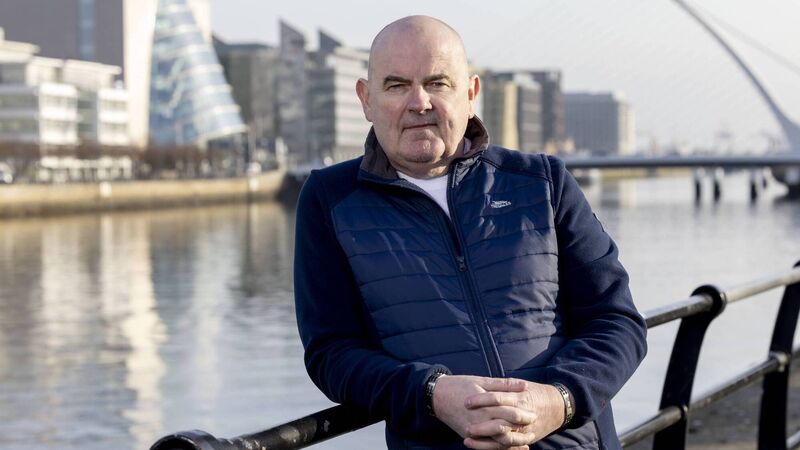
John O’Brien says he was touched by the ideas about ageing expressed by Gareth O’Callaghan in his most recent 'Irish Examiner' column. File picture: Andres Poveda
I was really touched by Gareth O’Callaghan’s column, 'At 65, I’ve learned to stop chasing happiness and start living well' (Irish Examiner, Saturday, March 23).
As I approach 65, I have to agree with Mr O’Callaghan on his wise words apropos to growing older.
He is so right when he posits the notion that time doesn’t care about wealth, or success, or age, or health.
It operates independently of anything that breathes. It’s there like a clock ticking until it has no more of itself to give. I believe that many older people are striving to make the best of the years that they have left. I find the joy of getting older is much greater self-confidence.
It’s the loss of angst about what people think of me. It’s not an arrogance, but I believe one knows who one is as one gets older.
I find all those roles that I played when I was younger are irrelevant today.
We are living longer and longer, and it’s my contention that many of us are unprepared for the challenges age brings. I really do think that everyone can benefit from making sure that they regularly see their healthcare provider.
I find having bloodwork done and making sure that I am vaccinated adds to my own personal wellbeing and contentment.
I believe that preventative actions are actually key to staying healthy and happy.
I find staying active, eating well, and being socially engaged are crucial to extending one’s health. I love reading and writing, and keeping my hand in with work assists with my overall wellbeing.
This is why it’s important for older people to develop a hobby that they can feel passionate about.
Mr O’Callaghan is on the money when he says that as we get older, we should stop chasing happiness and focus on living well.
I made a decision a few years ago to cut toxic people out of my life.
If people cannot accept who you are, then it’s time to show them the door.
I find I am able to laugh more at myself, ergo I try not to take myself too seriously.
(Gareth) also reminds us that there are almost 1m people in Ireland aged 65 or over, and that this is a fifth of the population.
It’s a privilege to be part of this demographic. I find myself grateful that I have a loving wife, four dogs, and three cats. I am more grateful for nature and the kindnesses that I receive on a daily basis from the universe.
I find the final words of Gareth O’Callaghan’s column to be absolutely beautiful and so true: “So I’ll keep investing in the beauty in life as long as time allows me, reminding myself that while 65 might be the old age of youth, it’s also the youth of old age.”
April 2 is World Autism Day, and each year the same narrative and perspective is pushed about autism: Autism is a unique ability; autism is different way of processing the world; autism is a super power; same chance and equality for all.
As a mother of two boys with profound autism, this is very far from the reality of the life that families who support individuals with this diagnosis live.
Autism affects every aspect of our loved one’s life. They require wraparound care, supervision, and support 24 hours a day. No amount of acceptance, awareness, or sensory accommodation will change this. Families like us are fighting and pleading for the bare minimum of support. Our side of the spectrum barely gets acknowledged although it requires the highest level of support.
Families all over Ireland are drowning from providing a high level of care which is simply unsustainable. Families desperate to have our voices as the forefront of this disability in order to seek actual change completely ignored at every level.
The same diagnosis that is given to an individual that has a full independent life with some sensory adaptations is not the same for our loved ones. This disability impacts every aspect of their life in a debilitating way.
Have we stretched the spectrum so far that we forgot who it was developed to support in the first place? This April, let’s bring awareness to the individuals on the spectrum who this condition was founded from.
Highlighting the need to provide adequate support not just to enjoy life but to survive life, and for their families to be able to do the same.
Campaigners arguing that the current inheritance tax system discriminates against those who are childless are ignoring the crucial fact about the Irish system: It is the beneficiary, not the estate of the donor, who pays the tax.
Hence, the tax is called capital acquisition tax. There is no tax discrimination as everyone, regardless of their status, is equally entitled to acquire or inherit a tax-free sum from their parents.
Conflict is the single largest driver of food insecurity, forcing millions from their homes and cutting families off from land, markets, and basic services. It reshapes how food is produced, moved, sold, and eaten.
In 2022, the war in Ukraine triggered a global cost-of-living crisis, and food insecurity reached record levels.
Without a rapid resolution, the conflict impacting Iran and the Gulf states could have a similar effect, potentially driving another 45m people into acute food insecurity, and impacting food and fuel prices and the availability of fertilisers globally.
When the sustainable development goals (SDGs) were adopted at the UN General Assembly in 2015, the ambition to end hunger by 2030, SDG 2, was one that was essential and which seemed achievable.
Today, however, it is estimated that this ambition will not be achieved until 2137 — more than a century away.
It is not for a lack of wealth or resources, but a matter of where and how that wealth is spent.
The UN estimates that an annual allocation of less than 4% of global military expenditure could end global hunger by 2030, a measure that would save countless lives and immeasurable suffering. Lasting peace is needed to reverse the steady increase in the number of people who are acutely food insecure. Without it, the systems that people depend upon for food will continue to unravel, and zero hunger will remain an aspiration.





Revoiced
Newsletter

Sign up to the best reads of the week from irishexaminer.com selected just for you.

Select your favourite newsletters and get the best of Irish Examiner delivered to your inbox
Most Read
Wednesday, April 1, 2026 - 12:00 PM
Wednesday, April 1, 2026 - 12:00 PM
Wednesday, April 1, 2026 - 11:00 AM