How Does Ireland Compare to the EU15 on the SDGs?
The Sustainable Development Goals (SDGs) are a blueprint to achieve a better and more sustainable future. The SDGs call on all nations to combine economic prosperity, social inclusion, and environmental sustainability, and ensure that no one is left behind.
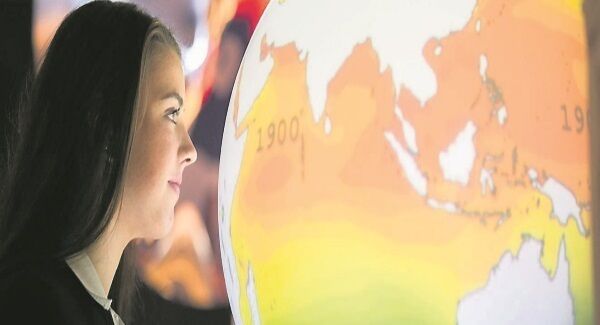
The ‘Sustainable Progress Index 2020’ is the latest in our contribution to the debate on the shape of Ireland, Europe and our world in 2030 and beyond. The aim is to inform interested parties, including Irish and European citizens, policymakers and business people, to adopt sustainable development actions.
Our central goal is to show how Ireland compares relative to the EU15. We believe that knowing where we stand, identifying the most pressing sustainability challenges, and critically examining our performance is essential if we are to ensure a sustainable future for our country.
An extensive dataset was collected for our analysis including the UN Global Indicator Set and the EU Indicator Set. The current report utilises 80 indicators across the 17 goals to arrive at our final SDG scores.
In our analysis, Ireland is compared its peers, the EU15 countries. The comparison is useful due to similarities in the EU region and also at income group level. This approach heightens the value of the assessment and should encourage policy makers to design adequate policies and strategies for achieving the SDGs by 2030.
We find that Ireland is ranked 11th out of the 15 countries on the economy dimension. Although the record on GDP per capita and unemployment is good - we score best on these indicators - the low score on the economy index is influenced by several factors including low pay, the proportion of youths not in employment, education or training (the NEET rate) and the % of GDP devoted to R&D lower the score on this dimension.
On the social index, Ireland is halfway in the ranking, in 7th place. We score highly on goals relating to education, peace and justice; less well on goals reflecting poverty, inequality, gender equality and health and well-being.
Ireland’s score last on the environment index which suggests Ireland is facing significant challenges in meeting our environmental targets. Poor performance on goals relating to responsible production and consumption, clean energy and climate change are the key factors driving the result for this dimension.
The overall Sustainable Progress Index, which includes all 17 goals, concludes that Ireland is in 10th place out of the 15 countries. Countries at the bottom are Greece, Portugal, Spain and Italy. Denmark, Sweden and the Netherlands top the rankings.
Strengths
Ireland is in the top third for just 2 SDGs. We continue to perform well on the SDG for ‘Quality Education’ (SDG 4), much as expected. From basic education to tertiary education, Ireland’s reputation for ‘quality education’ is evident, although some consideration should be given to the low rate of adult participation in learning. SDG16 ‘Peace, justice and strong institutions’ suggests Ireland is a relatively safe with reasonably good transparent, effective and accountable institutions.
Weaknesses
SDGs reflecting the environment present an unfavourable picture of Ireland. Clearly, there are pressing sustainability issues that must be addressed, as reflected by the ranking of SDG 7 ‘Affordable and clean energy’, SDG12, ‘Responsible consumption and production’, SDG13, ‘Climate action’, and SDG14, ‘Life below water’. The low score of SDG 9, ‘Industry, Innovation and Infrastructure’, also points to significant challenges ahead in this area. Significant challenges lie ahead if Ireland is to achieve its objectives on these goals.
Addressing the complexities of sustainable development requires a joined-up thinking approach. Successful implementation of the SDGs requires a balance between economic and social progress and sustaining the planet’s environment and resources as well as combatting climate change.
Somewhere in the Middle
The remaining SDGs lie in the middle of the rankings. But that does not imply we should be complacent. The objective of the 17 SDGs as part of the 2030 Agenda was to set universal goals that meet the urgent environment, political and economic challenges evident in our world. They focus on identifying global challenges relating to issues on poverty, inequality, climate, environmental degradation, prosperity, peace, and justice.
Our results imply Ireland has a long way to go to meet the aims of Agenda 2030. Continuous monitoring of all the indicators that make up the goals is required. The SDGs must be kept at the top of Ireland’s agenda: they must be used to help policy makers develop a plan for sustainable development.
The SDGs are designed to identify policies that directly help people’s wellbeing in harmony with our natural environment. They aim to provide both a pathway out of poverty and towards a sustainable future for all countries and people. The SDGs are essential for building a better world. Ireland can, and should, do better.