Gareth O'Callaghan: At 65, I’ve learned to stop chasing happiness and start living well
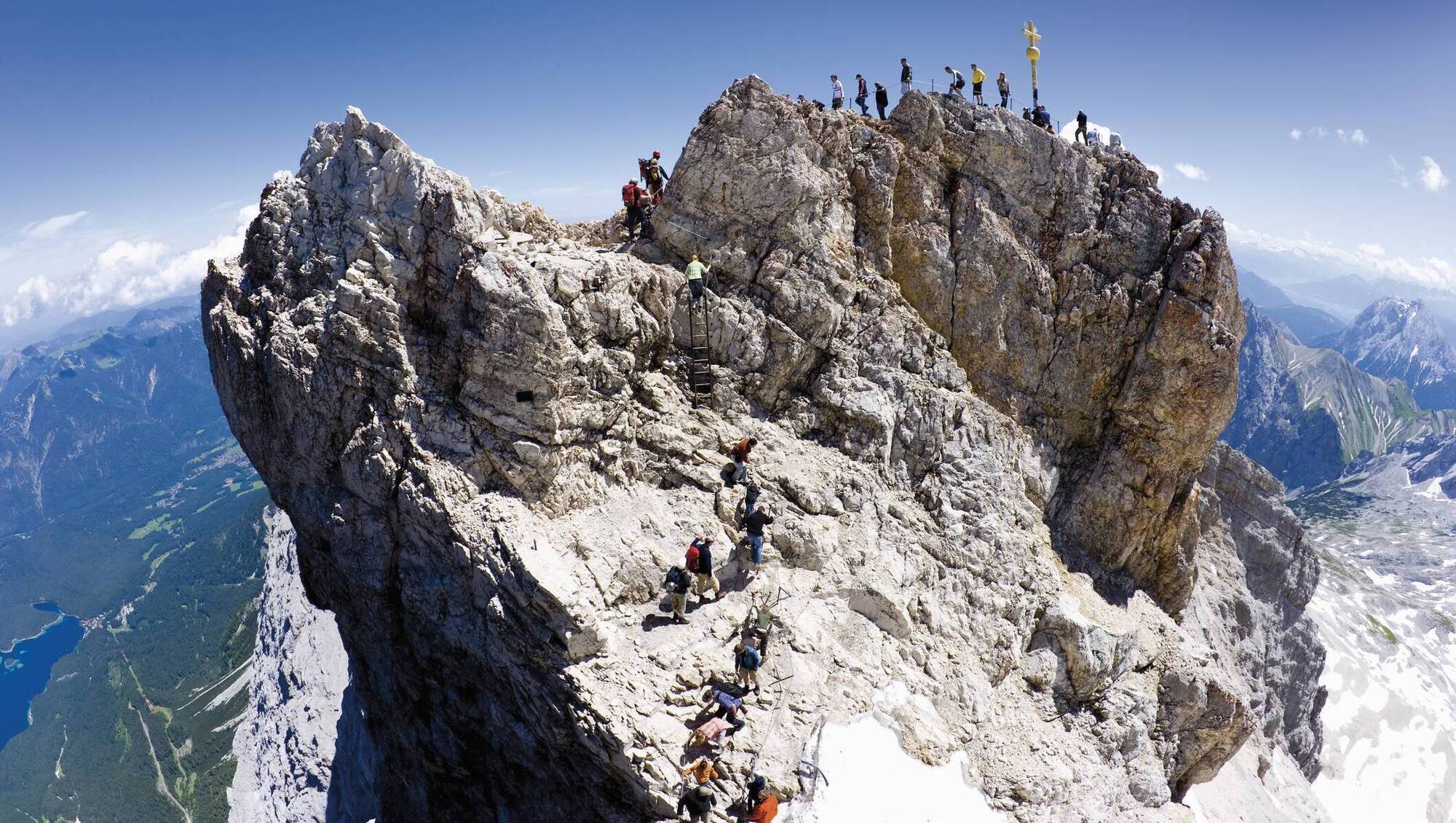
A moment of joy was when I stood on the top of the Zugspitze mountain on the border of Germany and Austria, looking out across five European countries that surrounded me.

Frank Lloyd Wright, the legendary American architect, once said: “The longer I live, the more beautiful life becomes.” As he grew older, he slowly became more aware of the beauty in life and the importance of investing in that beauty rather than ignoring it.
It’s difficult to see much sense in his sentiments these days when most of us are faced with a cost-of-living crisis, while staring at the unpredictability of what’s happening in the Middle East. Life promises us nothing except the numbers we call our age — I turned 65 last week.
Why does admitting my age feel like that moment when a garda asks you if there’s anything else you'd like to add to a statement you've just made? It's not that different to 64, except it is.
I know many of you reading this have been there and moved beyond that milestone, but for others — like me — it’s a strange event that has been sitting out there on the horizon of time, slowly moving closer into view.
I don’t believe in "thinking" old. I am now older than I was when, say, I was handed my first wage packet, which was a joyous moment, older than when I stood on the top of the Zugspitze mountain on the border of Germany and Austria, looking out across five European countries that surrounded me — another moment filled with joy.
The two experiences were vastly different. My first wage packet had nothing to do with those true moments of beauty in life, whereas standing on the tallest peak in the Bavarian Alps did. The moral of the story? Life’s beauty is a retrospective experience that drifts gently with age in its own time from material to personal meaning.
I meet with a group of friends once a year who have worked in media for decades — almost as long as we’ve known each other. Twenty five years ago, when the reunion started, the conversation over beers and wine late into the evening mostly had to do with work topics, travel, cars and accessories. Typical of age, you could at times sense a degree of one-upmanship in the conversation. It was all harmless and part of life’s experience.
During our most recent reunion, the first hour was spent remembering those of the alumni who are no longer here, followed by an individual health scrutiny, consisting of what meds each of us is on — statins, antirheumatic drugs, blood pressure tablets, receptor blockers, enzyme inhibitors, COPD inhalers, and other analeptics.
What’s ironic — despite our efforts to dodge the bullets of disease that are the enemy of ageing — is that none of us sounded any older in voice or in spirit since we first began to meet. Is that what Lloyd Wright means by the beauty in life?
Maeve Binchy summed it up so well when she said: “The great thing about getting older is that you become more mellow. Things aren’t as black and white, and you become much more tolerant. You can see the good in things much more easily rather than getting enraged as you used to do when you were young”.
But therein is the challenge — those words “when you were young”. I’m no longer young, much as I pretend that age is just a number. Does that bother me? Not so far. However, being realistic (which we all have to be sooner or later), it will bother me someday.
I can’t imagine lying on my deathbed as time is about to run out thinking: “I wish I’d made more money.” I wish I had more time, might be truer to life. Or maybe even, I wish I had gone to the doctor sooner.
I have stopped treating happiness as a goal and started treating ordinary existence as a state of mind that’s far more rewarding than spending precious time in the pages of self-help books. Chasing happiness is exhausting.
We’re conditioned to believe that if we’re not happy, there’s something wrong with us. That’s not always true.
I have a favourite chair by the window in our dining room which faces out into our garden. Every morning as it gets bright, I sit in the silence and watch the birds going about their short lives simply trying to survive.
Sitting in that chair, doing nothing productive, is a reminder to me that all any of us is doing in life ultimately is trying to survive.
I can recall an old schoolteacher using the expression: “Enough is enough.” It’s only in recent years that I have come to understand the meaning of enough, and it has nothing to do with wealth or success: Enough money to pay bills, enough health to appreciate how important it is, enough friends to keep you connected and grounded.
I never thought I would reach 65. When I look back at all the narrow escapes over the years, I’m aware there’s still some sand left in the egg-timer. How much sand I don’t know — and I don’t want to know. There are four widows for every widower. That’s a lot of men whose time ran out.
Am I happy? There’s no such word in my vocabulary. Am I content? When I look back at the years that belong in the past, I would say yes. The past can become the nemesis of contentment. Dwell on the past too much and it shortens the future.
Never become a prisoner of the past. It was just a lesson, not a life sentence.
Steve Jobs once said: “It takes a lot of hard work to make something simple.” He was wrong. He also famously said: "Do not try to do everything. Do one thing well.”
Living should be the art of making something simple — namely a life. It’s the one thing we owe ourselves to do well, because it’s all we have. Complicate it and you lose that almost mystical sense of variety and curiosity. Neglect it and it will turn on you.
My generation is different to previous ones where reaching 65 meant compulsory retirement, and few if any expectations beyond that. You were removed from the stage and you were lucky if you got a good seat in the audience. Life as you knew it was over.
What has reaching 65 taught me? I like to think I won’t know the answer to that for another 10 years. All I know is that if I rest my brain for too long, it rusts. So the obligation on me is to keep going, to keep doing what I love doing.
Would I like to be young once again? I often forget that life had its own complexities back then, while the freedom I think about that I had as a teenager has finally returned in a different guise of freedom from life’s rigmaroles.
So I’ll keep investing in the beauty in life for as long as time allows me, reminding myself that while 65 might be the old age of youth, it’s also the youth of old age.

CONNECT WITH US TODAY



Be the first to know the latest news and updates