Letters to the Editor: Ireland should step up its connection with Central Asia
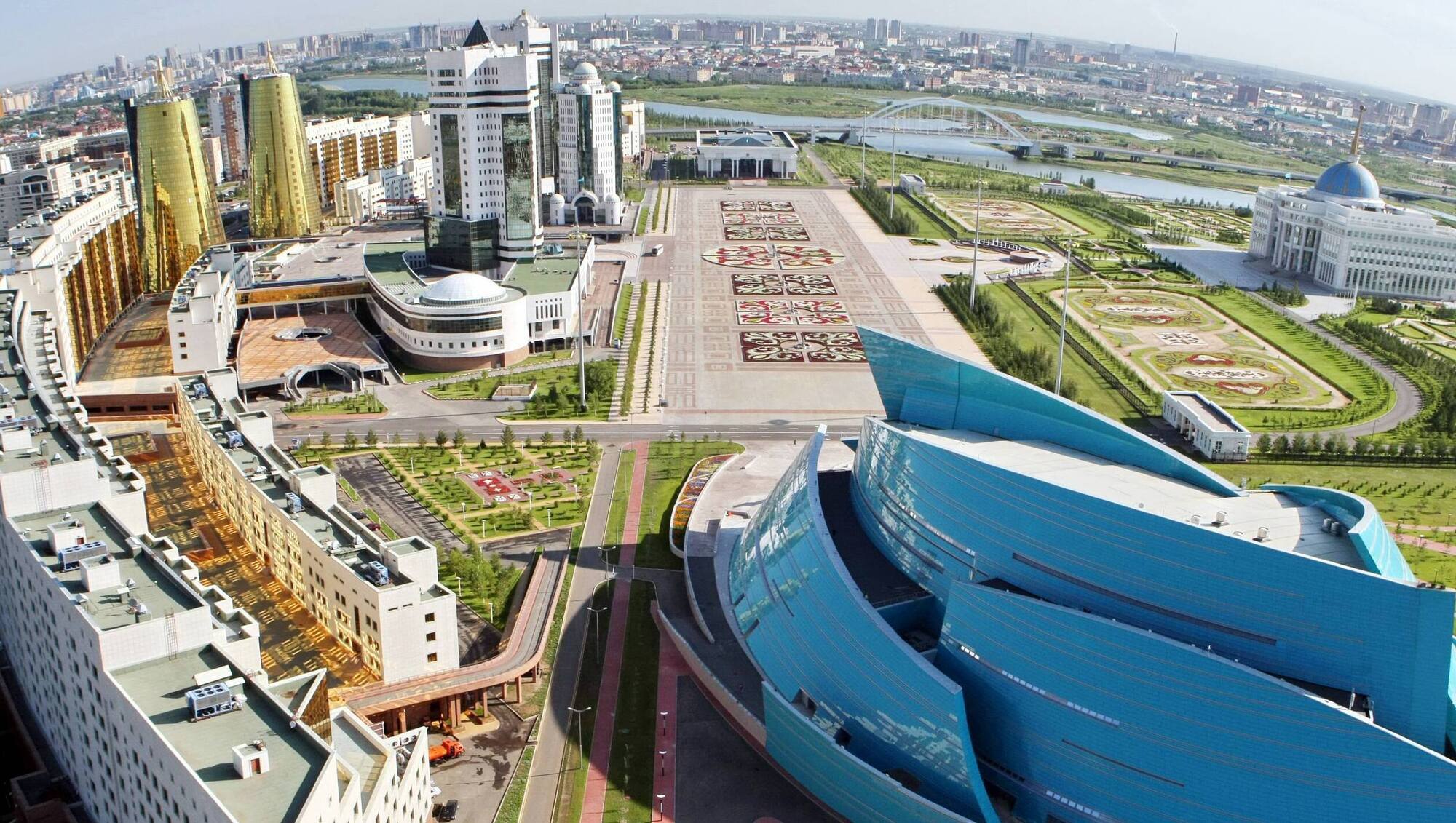
Astana, the capital of Kazakhstan, 'the largest and most powerful Central Asian state'. Picture: Stanislav Filippov/AFP/Getty
Ireland has long overlooked Central Asia, lacking any resident diplomatic representation. This neglect is understandable due to the region’s minor role in the Soviet Union, a small Irish diaspora, and modest trading figures.
Media coverage and cultural engagement are limited. However, it may be time to reassess this neglect.
Central Asia is becoming a critical geopolitical arena due to the war in Ukraine, Red Sea tensions, and global supply chain issues.
In 2013, China’s president Xi Jinping announced the ‘belt and road initiative’, emphasising infrastructure projects. Central Asia has become crucial for trade routes between China and Europe, with the Middle Corridor of the project opening the region to Western markets. Kazakhstan, the largest and most powerful Central Asian state, collaborates with European countries to meet energy needs and supply significant mineral resources. Ireland must develop an informed policy toward Central Asia, particularly Kazakhstan.
China’s economic growth drives its search for new markets, with the belt & road initiative focusing on roads, railways, pipelines, and ports worldwide. The initiative aims to stimulate China’s economy, counter protectionism, and enhance international cooperation. China’s foreign policy objectives involve government-to-government relationships, meaning Brussels cannot be Ireland’s primary agent.
China has acquired ports, built high-speed train routes, and invested in Europe to connect European and Asian markets efficiently. This network aims to reduce dependence on sea routes dominated by America and its allies. A European pivot towards Asia in trade and politics will impact Ireland. Ignoring Central Asia is risky.
For China, the belt and road initiative secures material well-being and legitimises the government. It also symbolises China’s reclaiming its “rightful” place after a century of humiliation. Although Russia supports the initiative, Central Asian countries see it as a way to reduce reliance on Russia, especially since the war in Ukraine.
Establishing a diplomatic presence in Kazakhstan would not only signal a mature worldview but also significantly benefit Irish business interests in a rapidly growing economic region. With Kazakhstan’s substantial resources, Ireland could engage in energy collaboration, thereby promoting economic and political ties. Furthermore, academic and cultural exchanges would serve to promote Irish culture, education, and heritage, further strengthening the ties and deepen understanding of each other’s cultures.
Micheál Martin is an innovative and proactive minister, so let’s look again at Central Asia.
I regularly enjoy Fergus Finlay’s column and often agree with his views. His most recent article on the US elections (‘Trump’s team are very afraid — things are about to get vicious’, Irish Examiner, July 30) is almost a case in point; he is of course right in his scathing commentary on the Trump campaign and the obnoxious racist attacks on Kamala Harris.
But he fails to mention the elephant in the room — the US vice president’s total support in practice for the genocide that continues to take place in Gaza.
The ongoing slaughter of 40,000 Palestinian men, women and children to date would simply not be possible without the continuing supply of US weapons alongside tactical military advice, logistics and support for the apartheid Israeli state. Some of this support comes through US military use of Shannon airport.
This is not some mere debating point, or minor policy detail — it is support for a genocide that is a stain on our collective humanity. It should be acknowledged and condemned by anyone prepared to write a balanced piece on the US election.
It is beyond belief that, as we are commemorating 300 days of murder and destruction against the people of Gaza and the West Bank, we get the gangster-style extrajudicial assassination of the Hamas senior political leader and ceasefire negotiator Ismail Haniyeh by an Israeli strike in Iran and that of Hezbollah’s Fuad Shukri along with five civilians in Beirut, both acts with likely approval from Israel’s US backers.
These murders threaten a full-scale escalation to a wider regional war. The killing of Haniyeh comes after the killing of his three sons, several grandchildren, and his sister and her children.
To compensate for its unpopularity in Israel — polls show a disapproval rating of 70% — and to distract from its genocidal war crimes in Gaza the Netanyahu Government now tries to inflame the whole Middle East region, sabotage any chance of a ceasefire and hostage exchange deal and draw America into a wider conflict.
We should remember that an average of 70 children per day have been murdered by Israel in Gaza over the last 300 days. Tens of Gazans are still being killed by Israel each day, journalists are wilfully targeted and murdered, schools sheltering desperate refugees are regularly bombed killing men, women, and children, thousands of Gazans are forced to flee for the umpteenth time from one unsafe area to another every day with many being killed as they flee, children are being deliberately starved to death and now there is a Polio epidemic throughout Gaza.
Yet it’s still business as usual for Western political leaders, even following the provocative and potentially destabilising assassinations in the sovereign territories of Iran and Lebanon. What other murderous and destabilising acts does the rogue state of Israel need to commit before the Irish Government sees fit to impose economic and diplomatic sanctions?
The recent Lancet medical report that the aggregated death toll in Gaza since October 2023 is estimated conservatively at several multiples of the current official numbers only solidifies the horror seen everyday on our phones and other devices.
Equally as mind-numbing as the news of these deceased who are mainly civilians, are the traumatised lives of the tens of thousands injured and maimed from the explosive equivalent of more than four Hiroshima atomic bombs dropped on the 145 square mile strip of land where they lived.
Destroyed hospitals and bakeries and blockades of food and medicines, have inordinately added to this living nightmare for adults, and in very large numbers, small children and babies, heavily traumatised, maimed and mutilated and with now severely compromised natural immune systems. Added to this is polio, cholera and other disease outbreaks, previously not seen in Gaza for decades.
Precise targeting by Israel of water treatment and sanitation plants along with sewerage pipe systems undergirds and guarantees the spread of such killer diseases.
Multiple UN Security Council resolutions, attempted arrest warrants, preliminary findings and orders of the International Court of Justice have all come and gone and have made no difference to the situation on the ground.
All have been so much “sound and fury, signifying nothing”.
Paradoxically, official western economic sanctions on Russia stand at over 16,000 but none are in place on Israel.
Regarding the wholly disproportionate number of civilian deaths and the suffering of innocent human beings, mainly women and children, it is timely to recall the words of Jewish author and Auschwitz survivor, Primo Levi in his book (1986) where he declared that, if he were a judge, he would “not hesitate to inflict the most severe punishment or even death on the many culprits who still today live undisturbed on German soil or in other countries of suspect hospitality; but I would experience horror if a single innocent were punished for a crime he did not commit”.
The so-called international community has been found radically wanting in the face of the suffering and agony of so many innocents. It is timely again to recall that Levi also opined that we all have within us the capacity to be nazis.
Settlements to disputes based on justice, and rooted in international law and equality of treatment have never been more needed in the world than now, especially in the long-suffering and tortured land of Palestine.
Seeing the release of numerous prisoners including Evan Gershkovich reminds us how important our freedom is and the need to protect it.
The specific case of Evan Gershkovich is a warning about press freedoms too. No matter what he was charged with, the reality was he was imprisoned for his journalism work, his capacity to tell us the truth and hopefully we will still be able to hear him.
The world will be a better place when there is nothing to warn us about, but until then we need the bravery of Evan and many others, and to remember those who have lost their lives warning us. There have been too many lost to us.