Letters to the Editor: More education needed on road and water safety
Readers consider road and water safety, fentanyl in Ireland, the EPA and the red meat tweet, and preserving wildlife 
Letters to the Editor: More education needed on road and water safety

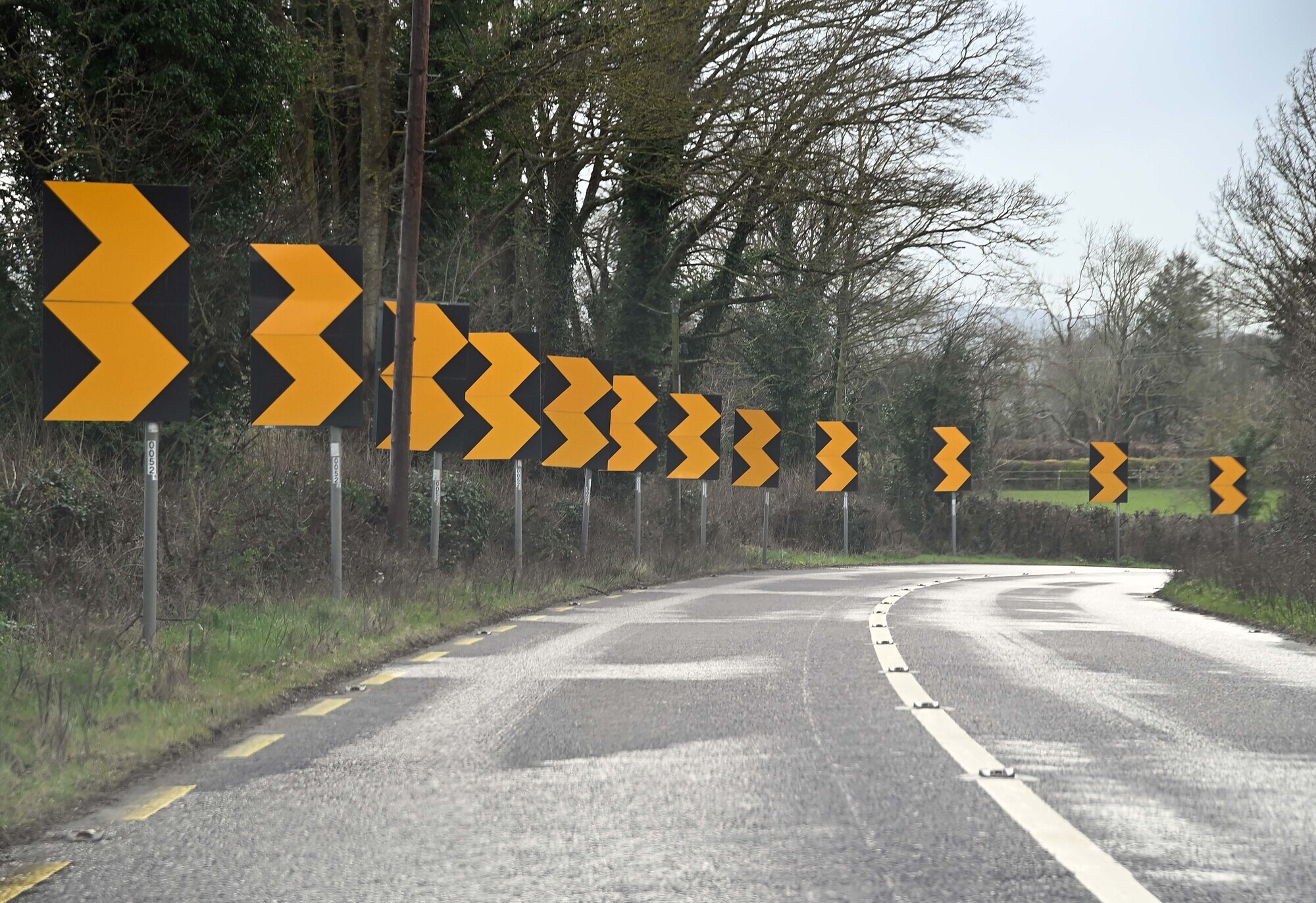
With both road and water safety, education is the way forward. Picture: Denis Minihane

As an older person with more than 50 years of driving experience and nearly 70 years of swimming and boating experience, may I try through your newspaper to help the quest to reduce tragedies in these areas.

With both road and water safety, education is the way forward. Upping the ante on the punishment culture may be less effective and out-of-date by comparison with educating drivers, swimmers, and boaters.

The Road Safety Authority (RSA) had some good ‘shock’ advertisements on TV some years ago but I don’t see them now.

Both the RSA and Water Safety Ireland have been remiss in their roles of promoting safety on the roads and water. TV and radio are good communication channels, but for younger people, social media such as TikTok, Snapchat, WhatsApp, etc, are now prevalent, and these means of communications must also be used.

In the matter of road safety, drivers need to be educated about: 

  • ‘Risk’ and the need never to take risks on overtaking;
  • What to do when things go wrong, or when a mistake has been made by either the driver or an oncoming driver;
  • How to slow down a car without going out of control.

    For example, when faced with a head-on crash situation, what does each driver do: Who goes to the right and who goes to the left and who stays where they are.

    If both drivers try to slow down immediately, even if they can’t stop in time, they can reduce the impact speed substantially. Thus two cars colliding at 100km/h each gives an impact speed of 200km/h, however, if both drivers try to slow down as quickly as possible, and one can reduce its speed to 40km/h and the other to 15km/h, the impact speed has been reduced from 200km/h to 55km/h — substantially improving the chances of the vehicle occupants surviving the accident.

    If the driver who has not made the mistake stays on course or is able to move slightly to the middle of the road without endangering other oncoming cars, the driver who has made the mistake — usually by overtaking on a blind summit — may have a chance of driving to his/her right onto the kerb, or an escape lane, but if both go to the same side of the road as a last fraction of a minute decision, a possibly fatal head-on collision is imminent.

    If passengers in a car are fooling about, it only takes a fraction of a second to distract a driver with fatal results. People who find themselves in a car where such behavior is happening, or where the driver is driving dangerously or too fast, must be educated that:

    • Their ‘risk’ of death on this journey is extremely high;
    • They must insist that the driver must stop the car and let them out;
    • They don’t continue to take the risk;
    • If the driver refuses to stop, tell the driver they are going to vomit or pee on their seats.

    Role playing examples of people saying “stop the car I want to get out now” need to be promoted on all media platforms.

    In the matter of sea and water safety, at the approach of every holiday weekend and all through the summer, Water Safety Ireland must run advice and education advertisements.

    People need to be educated:

    • In the difference between a ‘lee shore’ and ‘weather shore’;
    • In the dangers of inflatable toys, lilos, canoes, surfboards, paddleboards, and windsurfers on a weather shore;
    • Inflatable toys must never be used on a weather shore, i.e., when the wind is blowing from the land onto the sea;
    • If a child or person is spotted being blown out to sea, first, call 999 immediately and get the lifeboat out;
    • Not to swim out to try to rescue unless the inflatable is very close to the shore and you are a competent long-distance swimmer.

    Irish lifeboats are among the best in the world and can access any part of our coasts within minutes.

    The recent proliferation of surf and paddle-boards on our beaches depicts an image of ‘this is all very easy’. It is not. It is very dangerous to the untrained.

    If you want to boat or canoe, join a club. Sailing and canoeing clubs usually have good safety, and above all, club racing is the safest form of boating, because the races are always provided with safety boats.

    Before going boating, surfing, or canoeing, always check the weather forecast. Met Éireann also needs to play a part in the water safety campaign, and advise of which shores are likely to be weather shores on our coasts.

    Local authorities must provide strings of yellow buoys to mark out swimming areas on all beaches where boats are likely to access and/or where people are likely to swim, and within which jet skis and motor boats cannot come.

    Brendan P Gallagher, Enniskillen, Co Fermanagh

    Fentanyl in Ireland

    I read the article on the importation of fentanyl with a feeling of utter dread — ‘Irish gangs meet drug cartels on distribution of lethal fentanyl in Ireland’ (Irish Examiner, online, September 4).

    You see, it’s not just the fentanyl that we need to be worried about, but the additives used to prolong the “high”. Fentanyl does not last long in the system so it is mixed with xylazine which is commonly called “tranq” and it's the tranq that causes the skin to break down and huge holes appear which soon turn necrotic.

    I’ve been watching lots of news about the drug epidemic in the US, particularly Philadelphia, and I’m shocked. There has never been a more dangerous drug — heroin doesn’t come close. The mix of 30% fentanyl and 40% xylazine is what will end up on the streets (the other 30% is just fillers).

    They will always mix it because the high can then be stretched to four hours instead of one hour, though the user usually is zonked out after five minutes and sleeps for about two hours. A fix is only $ in the US because it is produced in a laboratory for a very small amount of money. The xylazine will be imported from Asia, I guess, but I also assume the Irish drug lords will find the cheapest way to obtain this. So watch out for xylazine as well as fentanyl. They go hand in hand.

    Sadie Quinlan, Cardiff, Wales

    EPA panders to bullies

    Regarding Mick Clifford’s article — ‘Faux outrage ignores what is at stake’ (Irish Examiner, September 2): It’s absolutely shameful the EPA deleted their totally accurate tweet regarding reduction of meat intake.

    What other industry or sector of Irish workers get so many schemes/subsidies, are given such white-glove treatment, or can bark ministers and public officials and bodies into line as much as the farming industry?

    Enough is enough. Let’s get data driven, stop pandering to the bullies and let the adults in the room do the strategy.

    Jay Keenan, Mayo

    Red meat tweet

    Regarding the red meat tweetgate controversary article, does anyone else find it strange that the EPA are using social media to issue their opinion on meat farming’s impact on the environment?

    The EPA are a powerful regulatory authority and I question:

    • The method of delivery of the message, is Twitter appropriate for an authority to make statements?
    • The motivation of the person to issue the tweet and are they acting on behalf of the EPA or their own personal beliefs?
    • The soundness of the data; let’s see the data backed up online and not another faux poll where the question is loaded and the respondents pre-selected or only a small percentage valid and influencing government policy. We can’t trust government-based information anymore, they seem to work backwards to get the answer they want for an opportunity to take advantage of events to rapidly enact legislation to suit their needs.
    • Context — where do we sit internationally in terms of red meat production’s impact on the environment?
    • What’s the target emissions, is the target zero emissions? Is that achievable and at what cost?

    Tom Maxster, Kenmare, Co Kerry

    Preserving wildlife

    The removal of four bird species from the list of fliers that can be shot for fun is to be welcomed. The Scaup, Goldeneye, Pochard, and Pintal can now soar across the skies over Ireland without having to contend with the blazing guns of our so-called field-sport fraternity.

    Unfortunately, 11 other creatures listed in Birdwatch Ireland’s ‘Birds of Conservation Concern Ireland’ report may still be legally killed as they flutter harmlessly above us or addle about on our rivers or lakesides.

    I hope the protection accorded to the four lucky bird species will be extended to the remaining ones before too long.

    We’re reminded every day about the sacrifices required to save Irish flora and fauna, but a mere stroke of the pen is all that’s needed to take those 11 threatened birds off death row.

    It’s also disappointing that the decision to grant clemency to only four of the 15 birds came only weeks after a state license was granted to coursing clubs, allowing them to snatch hares from the countryside.

    The Government needs to stop pandering to the small but politically well-connected hunting and shooting lobby. Instead, it should prioritise the protection of what’s left of our treasured but rapidly disappearing wildlife heritage.

    John Fitzgerald, Callan, Co Kilkenny

    x

    More in this section

    Revoiced

    Newsletter

    Sign up to the best reads of the week from irishexaminer.com selected just for you.

    Cookie Policy Privacy Policy Brand Safety FAQ Help Contact Us Terms and Conditions

    © Examiner Echo Group Limited